Introduction
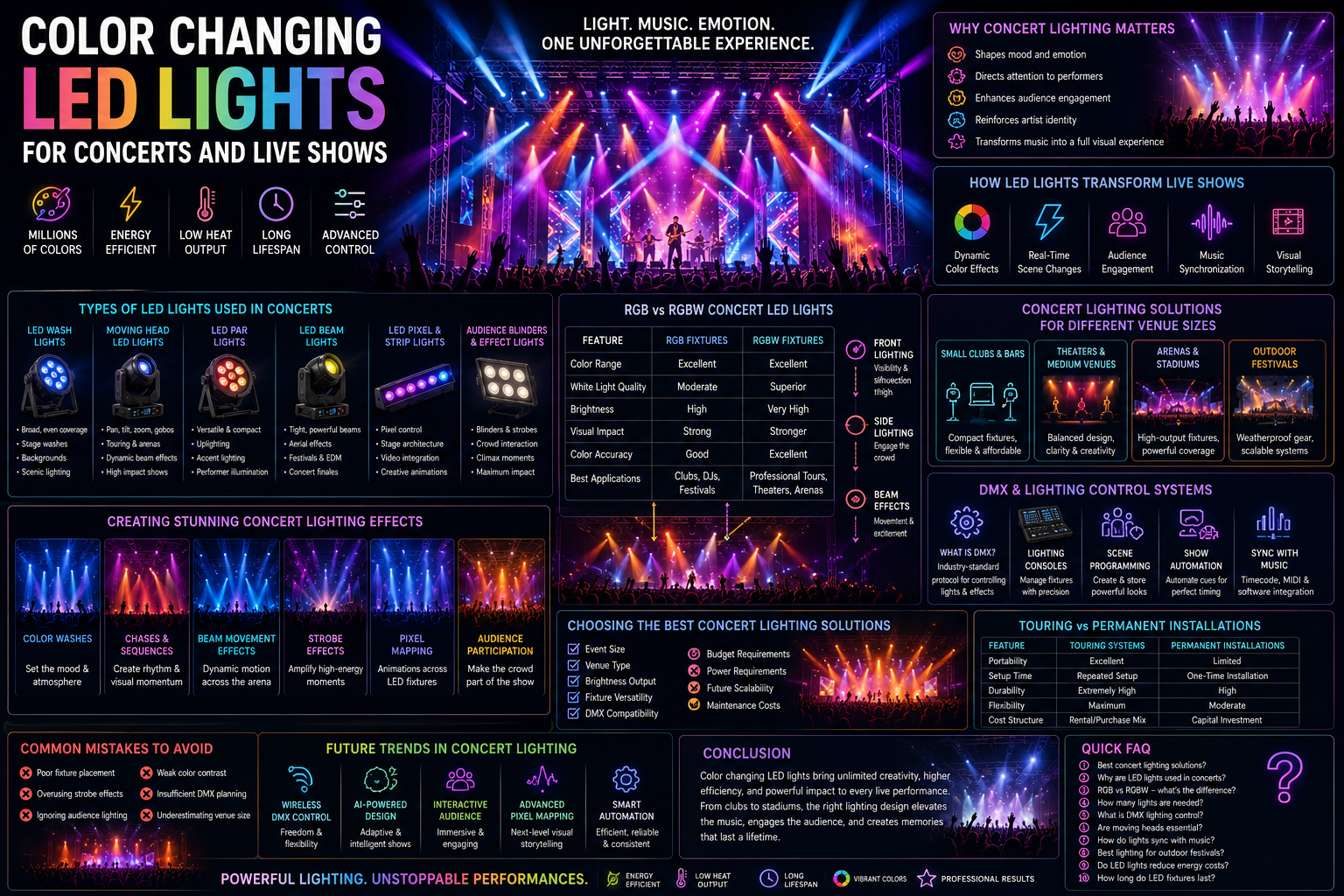
Modern concerts are no longer just about music. Today’s audiences expect a complete sensory experience that combines sound, visuals, stage production, and immersive effects into one unforgettable event. At the center of this transformation are concert lighting solutions, particularly color changing LED lights, which have revolutionized the way live performances are designed and experienced.
Whether it’s a stadium tour, music festival, theater production, nightclub performance, or corporate live event, concert LED lighting plays a vital role in shaping audience emotions and enhancing artist performances. LED technology has replaced many traditional lighting systems thanks to its exceptional energy efficiency, long lifespan, low heat output, and virtually unlimited color possibilities. Industry reports show LED fixtures now account for a significant share of professional event lighting installations because of their flexibility, reliability, and operational cost savings.
For lighting designers, event organizers, venue managers, and touring professionals, understanding how color changing LED lights work and how to choose the right fixtures can dramatically improve production quality. From synchronized color chases to breathtaking beam effects that fill entire arenas, modern LED lighting has become one of the most powerful storytelling tools available in live entertainment.
Why Concert Lighting Matters
Lighting has the unique ability to influence how an audience feels before a single note is played. Think about the difference between walking into a venue illuminated with static white light versus entering a room filled with moving beams, dynamic color transitions, and synchronized visual effects. The atmosphere changes instantly.
Professional stage lighting for concerts serves multiple purposes beyond visibility. It helps direct audience attention, reinforces the mood of each song, highlights performers, and supports the overall creative vision of the production. A slow ballad may use soft blue and purple washes to create intimacy, while a high-energy rock anthem may utilize aggressive red beams and strobe effects to amplify excitement.
Lighting also contributes significantly to branding and artist identity. Many major touring acts are recognized as much for their visual production as for their music. Modern concerts rely on coordinated lighting, video content, and special effects to deliver memorable experiences that keep audiences engaged throughout an entire performance.
In today’s competitive entertainment industry, strong lighting design is no longer optional. It has become a fundamental component of successful live event production and audience engagement.
How Color Changing LED Lights Transform Live Shows
Dynamic Color Effects
The most obvious advantage of color changing LED lights is their ability to instantly create millions of color combinations. RGB and RGBW technology allow designers to move seamlessly between vibrant, saturated colors and subtle atmospheric tones without changing physical filters or gels.
Real-Time Scene Changes
Concerts often contain dramatic shifts in tempo, mood, and intensity. LED systems enable operators to program hundreds of scenes that can be triggered instantly. A stage can transition from deep blue ambient lighting to explosive red energy within seconds, perfectly matching musical changes.
Audience Engagement
Lighting isn’t just aimed at performers anymore. Modern productions increasingly incorporate audience lighting to make spectators feel like active participants. Carefully timed audience washes, blinders, and moving effects create a shared experience that extends beyond the stage.
Music Synchronization
Advanced DMX lighting systems allow lighting cues to synchronize precisely with music. Through timecode programming, MIDI integration, and automated show control, lighting can react to every beat, chorus, and dramatic musical moment.
Visual Storytelling
Great lighting tells a story. Colors, movement, intensity, and positioning work together to communicate emotion. Just as a film director uses camera angles and editing, a lighting designer uses LED fixtures to guide audience perception throughout a performance.
Types of LED Lights Used in Concert Lighting Solutions
LED Wash Lights
LED wash lights provide broad, even coverage across stages, backdrops, and performance areas. They are ideal for creating mood, filling large spaces with color, and ensuring consistent illumination.
Common applications include:
- Stage color washes
- Background illumination
- Venue atmosphere creation
- Scenic lighting
Moving Head LED Lights
Few fixtures define modern professional concert lighting more than moving heads. These intelligent fixtures can pan, tilt, zoom, rotate gobos, and change colors dynamically during performances.
Applications include:
- Touring productions
- Arena concerts
- Music festivals
- Dynamic beam effects
LED PAR Lights
PAR fixtures remain among the most versatile tools in concert lighting design. They are compact, affordable, and highly effective for accent lighting and performer highlighting.
Applications include:
- Uplighting
- Accent lighting
- Performer illumination
- Stage enhancement
LED Beam Lights
Beam fixtures create intense, narrow shafts of light that cut through haze and atmospheric effects. They are especially popular during energetic performances where dramatic visual impact is required.
Applications include:
- Aerial effects
- Festival stages
- EDM events
- Concert finales
LED Pixel and Strip Lights
Pixel-controlled LED strips provide endless creative possibilities. Individual segments can be programmed separately, enabling video-like animations and advanced visual effects.
Applications include:
- Stage architecture
- Video integration
- Scenic decoration
- Interactive set design
Audience Blinders and Effect Lights
Audience blinders create dramatic moments by directing bursts of light toward spectators. These fixtures are frequently used during climactic sections of performances to maximize emotional impact.
RGB vs RGBW Concert LED Lights
| Feature | RGB Fixtures | RGBW Fixtures |
| Color Range | Excellent | Excellent |
| White Light Quality | Moderate | Superior |
| Brightness | High | Very High |
| Visual Impact | Strong | Stronger |
| Color Accuracy | Good | Excellent |
| Best Applications | Clubs, DJs, Festivals | Professional Tours, Theaters, Arenas |
For smaller venues and budget-conscious productions, RGB fixtures often provide sufficient performance. For professional touring productions and venues requiring accurate white light reproduction, RGBW fixtures are generally the preferred option.
Concert Lighting Design Fundamentals
Front Lighting
Front lighting ensures performers remain visible and expressive. It enhances facial visibility while maintaining audience connection.
Back Lighting
Back lighting creates separation between performers and the background. It adds depth and dramatic silhouettes that make performances appear larger and more cinematic.
Side Lighting
Side lighting introduces texture and dimension. It highlights movement, making it particularly valuable for dance performances and theatrical productions.
Audience Lighting
Modern concerts increasingly include audience lighting as part of the overall design strategy. Audience-focused fixtures transform spectators into active participants.
Beam Effects
Moving beams create excitement and movement throughout the venue. These effects are particularly effective when combined with haze or atmospheric machines.
Stage Washes
Stage washes establish the visual foundation upon which all other lighting effects are built.
Concert Lighting Solutions for Different Venue Sizes
Small Clubs and Bars
Smaller venues benefit from compact LED PARs, wash fixtures, and a limited number of moving heads. Flexibility and affordability are key priorities.
Theaters and Medium Venues
Theaters require a balance between performance visibility and creative expression. RGBW fixtures, moving heads, and controlled beam effects are commonly utilized.
Arenas and Stadiums
Large venues demand powerful fixtures capable of covering vast distances. High-output moving heads, beam fixtures, and extensive DMX networks become essential.
Outdoor Festivals
Festival environments require weather-resistant equipment, exceptional brightness, and scalable control systems. Large productions often incorporate hundreds of fixtures operating across multiple DMX universes.
DMX and Lighting Control Systems Explained
What Is DMX?
DMX512 is the industry-standard communication protocol used to control intelligent lighting fixtures. It enables operators to manage brightness, color, movement, effects, and timing from a centralized controller.
Industry data suggests DMX technology is used extensively throughout live concert touring because of its reliability and flexibility.
Lighting Consoles
Lighting consoles range from beginner-friendly controllers to advanced systems capable of managing thousands of fixtures simultaneously.
Scene Programming
Programming allows designers to create predefined looks that can be triggered instantly during performances.
Show Automation
Automation enables lighting systems to operate according to pre-programmed timelines, reducing manual intervention and improving consistency.
Synchronizing Lighting with Music
Advanced productions use timecode and software integration to ensure lighting cues align perfectly with musical performances.
Creating Stunning Concert Lighting Effects
Color Washes
Color washes establish mood and atmosphere. Soft blues may create calmness, while intense reds communicate energy and excitement.
Chases and Sequences
Sequential lighting movements create rhythm and visual momentum across the stage.
Beam Movement Effects
Moving beams provide dynamic motion and can transform static stages into visually immersive environments.
Strobe Effects
Used strategically, strobe effects amplify high-energy moments and create dramatic impact.
Pixel Mapping
Pixel mapping enables complex animations across LED fixtures, allowing lighting systems to function similarly to video displays. Modern industry trends increasingly emphasize advanced pixel control and intelligent programming capabilities.
Audience Participation Lighting
Interactive audience lighting continues to grow in popularity, creating immersive experiences that blur the line between performer and spectator.
Choosing the Best Concert Lighting Solutions
When selecting lighting equipment, consider:
Event Size
The scale of the production directly affects fixture quantity and output requirements.
Venue Type
Indoor theaters, clubs, arenas, and outdoor festivals each present unique challenges.
Brightness Output
Larger venues require significantly higher output levels to maintain visual impact.
Fixture Versatility
Multi-purpose fixtures often provide greater long-term value.
DMX Compatibility
Ensure all fixtures integrate seamlessly with your control infrastructure.
Budget Requirements
Balance upfront investment with operational efficiency and maintenance costs.
Buyer Checklist:
- Define venue size.
- Calculate coverage needs.
- Evaluate DMX compatibility.
- Determine power requirements.
- Select RGB or RGBW fixtures.
- Plan future scalability.
- Assess maintenance costs.
Touring Concert Lighting vs Permanent Venue Installations
| Feature | Touring Systems | Permanent Installations |
| Portability | Excellent | Limited |
| Setup Time | Repeated Setup Required | One-Time Installation |
| Durability | Extremely High | High |
| Flexibility | Maximum | Moderate |
| Cost Structure | Rental/Purchase Mix | Capital Investment |
Touring systems prioritize portability and adaptability, while permanent installations focus on long-term efficiency and operational simplicity.
Common Concert Lighting Mistakes to Avoid
Many productions fail to maximize their lighting potential because of avoidable mistakes.
Common issues include:
- Poor fixture placement
- Overusing strobe effects
- Ignoring audience lighting
- Weak color contrast
- Insufficient DMX planning
- Underestimating venue dimensions
Successful lighting design requires balance. Spectacular effects lose their impact when used continuously. Strategic restraint often produces stronger results than excessive complexity.
Future Trends in Concert LED Lighting
Wireless DMX
Wireless control systems continue gaining popularity, especially in festivals and temporary installations where cable management can be challenging.
AI-Powered Lighting Design
Artificial intelligence is increasingly being integrated into lighting workflows, enabling adaptive lighting responses based on music and audience interaction.
Interactive Audience Experiences
Modern audiences expect immersive experiences that involve participation rather than passive observation.
Advanced Pixel Mapping
Pixel mapping technology continues to evolve, allowing increasingly sophisticated visual storytelling across large fixture networks.
Smart Production Automation
Automation and intelligent controls are streamlining production workflows while improving consistency and efficiency.
Conclusion
Color changing LED lights have completely transformed the world of live entertainment. From intimate club performances to massive stadium tours, modern concert lighting solutions provide unmatched flexibility, efficiency, and creative potential. With technologies such as RGBW color mixing, intelligent moving heads, advanced pixel mapping, and sophisticated DMX control systems, lighting designers can create immersive visual experiences that elevate every performance.
As LED technology continues to evolve through wireless control, automation, and AI-powered programming, the future of concert lighting design looks brighter than ever. Event organizers, venue managers, and production companies that invest in professional concert LED lighting systems will be better positioned to create memorable experiences that captivate audiences and enhance artistic expression.
Internal Linking Suggestions
- Stage Lighting with Color Changing LEDs
- Best LED Lights for DJ Events and Parties
- Using Color Changing LED Lights for Weddings
- RGB vs RGBW LED Lights
- DMX Lighting Systems for Live Events
- Professional Stage Design for Music Festivals
Frequently Asked Questions
1. What are the best concert lighting solutions?
The best solutions combine LED wash lights, moving heads, beam fixtures, audience blinders, and professional DMX control systems.
2. Why are LED lights used in concerts?
LED lights provide energy efficiency, long lifespan, color flexibility, low heat output, and advanced programming capabilities.
3. What is the difference between RGB and RGBW concert lighting?
RGB fixtures use red, green, and blue LEDs, while RGBW fixtures add a dedicated white LED for superior white light quality.
4. How many lights are needed for a concert stage?
Requirements vary by venue size, stage dimensions, and production complexity.
5. What is DMX lighting control?
DMX is a digital communication protocol used to control intelligent lighting fixtures from a central console.
6. Are moving head lights essential for concerts?
While not mandatory, moving heads significantly enhance visual impact and production value.
7. How do concert lights synchronize with music?
Synchronization is achieved using DMX programming, MIDI triggers, timecode systems, and automation software.
8. What lighting is best for outdoor music festivals?
High-output LED moving heads, beam fixtures, wash lights, and weather-resistant equipment are typically preferred.
9. Can LED concert lights reduce energy costs?
Yes. LED fixtures generally consume significantly less energy than traditional lighting technologies while delivering comparable or superior performance.
10. How long do professional concert LED fixtures last?
Many professional LED fixtures are rated for 25,000 to 50,000+ operating hours.