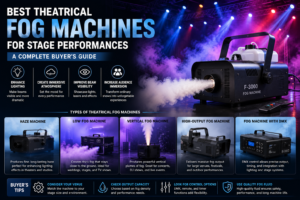
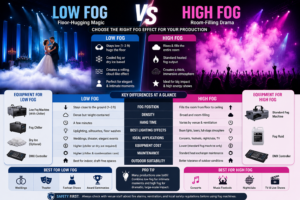
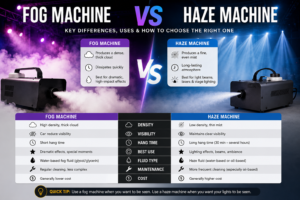
When it comes to stage lighting, the right atmosphere can completely transform a performance. The dramatic visual impact of stage light beams is often heightened by atmospheric elements like haze and fog. But while these two elements seem similar, they can have a very different impact on how your stage light beams appear to the audience. Understanding the difference between haze and fog is essential to creating the perfect ambiance for your performance.
In this blog, we will break down the key differences between haze and fog, how they interact with stage light beams, and how to choose the right one for your event. Whether you’re a lighting designer, event producer, or DJ, the right stage lighting setup can make all the difference in creating an unforgettable show.
Haze vs. Fog: What’s the Difference?
To understand how haze and fog affect stage light beams, it’s crucial to first grasp what each element is and how they differ. Both haze and fog are designed to make light more visible by scattering and diffusing light particles in the air. However, the way they do this—and the look they create—varies greatly.
Haze
- Fine Mist: Haze is a thin, subtle mist that evenly distributes light.
- Clarity: It provides a delicate atmosphere without obstructing the stage view.
- Light Interaction: Haze allows stage light beams to shine clearly, creating sharp, defined beams.
- Ideal For: Best stage beam lights for concerts and large-scale events where defined light beams are needed.
Fog
- Thick Mist: Fog is much denser than haze, often creating an immersive, dramatic effect.
- Obscured Visibility: It can partially block the view of the stage and performers.
- Light Diffusion: Fog diffuses light heavily, making stage light beams softer and less defined.
- Ideal For: Stage beam lighting for theatres or theatrical performances that require a dramatic, atmospheric mood.
How Haze and Fog Affect Your Stage Light Beams
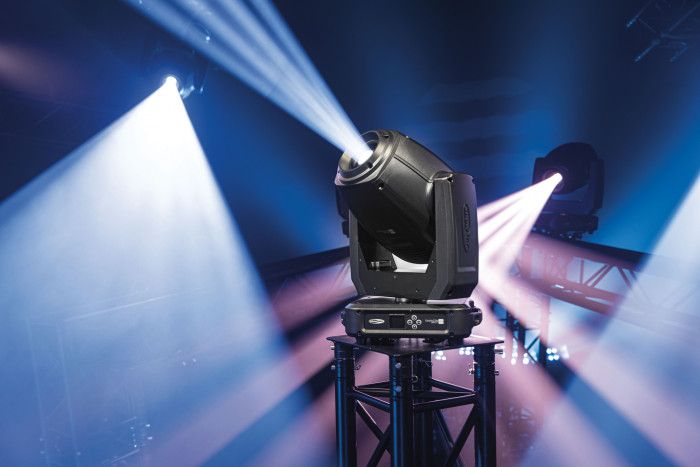
The primary factor in choosing haze or fog for your event is how they interact with the stage light beams. Both haze and fog scatter light, but in different ways.
Haze and Its Impact on Stage Light Beams
- Clear Definition: Haze creates sharp, visible stage light beams that cut through the air.
- Enhanced Movement: It’s perfect for dynamic lighting effects, especially when the beams are constantly changing positions.
- Visual Impact: It adds depth and dimension to the beams, especially with moving head beam lights for stage shows.
- Performance Type: Ideal for stage beam lights for DJs and clubs, concerts, and large performances where light definition is key.
Fog and Its Impact on Stage Light Beams
- Soft Effect: Fog makes stage light beams appear softer and more diffuse.
- Immersive Atmosphere: It can create an ethereal, dreamlike effect as beams seem to emerge from the mist.
- Excessive Use: Too much fog can obscure performers and make the beams harder to define.
- Performance Type: Best for high power stage beam lights in dramatic performances or moments where a moody atmosphere is desired.
Choosing the Right Lighting for Your Event
When selecting between haze or fog, consider the type of event you’re producing. Here are some helpful tips for different performance scenarios:
Concerts and Festivals
- Best Setup: LED beam lights for stage lighting paired with haze for sharp, visible beams.
- Fog Use: Use fog sparingly for dramatic transitions or specific moments.
Nightclubs and DJ Performances
- Ideal Lighting: Stage beam lights for DJs and clubs with haze to define light beams.
- Atmosphere: The haze enhances visual effects, perfect for dance floors and energetic performances.
Theatre Productions
- Fog Usage: Stage beam lighting for theatres works best with fog for dramatic effects and mystery.
- Visual Impact: Use fog to create a moody atmosphere, but be mindful of visibility issues.
Small Stages and Events
- Recommended Setup: Stage beam lights for small stages with haze to enhance light beams without overwhelming the space.
- Fog Consideration: Fog can become too intense in small spaces, so haze is usually the safer choice.
Helpful Tips for Using Haze and Fog with Stage Light Beams
- Consider the Space: Larger venues benefit from fog for depth, while haze keeps beams clear. Smaller venues are better suited for haze.
- Balance the Effects: Avoid overusing either haze or fog. A light application can enhance the stage light beams without overwhelming the space.
- Use a Smoke Machine with Control: If you’re using fog, controlling the output ensures the effect is just right.
- Test Your Setup: Always test your lighting effects before the performance to ensure the haze or fog creates the desired visual impact.
Final Words
Understanding the difference between haze and fog is crucial when designing a lighting setup for your performance. Whether you’re using high power stage beam lights, moving head lights, or LED beams, the right atmospheric effect can dramatically enhance the stage light beams and elevate your performance. By considering the space, the type of event, and the visual effects you want to create, you can choose the perfect setup for your lighting needs.
FAQs
1. What are the best stage beam lights for concerts?
LED beam lights and moving head beam lights are the best for concerts due to their versatility and power.
2. How do haze and fog affect LED beam lights for stage lighting?
Haze creates sharp, clear beams, while fog diffuses light, making it softer and more immersive.
3. Can I use haze in a small venue?
Yes, haze works well in small venues, enhancing stage light beams without overwhelming the space.
4. What is the best beam lighting setup for live performances?
Moving head beam lights with haze create dynamic, sharp lighting effects for live performances.
5. How can I control the fog and haze for a performance?
You can control fog and haze using DMX systems for precise intensity and duration adjustments.