Introduction
Modern buildings are no longer judged only by their structural design. The way they appear after sunset has become just as important as how they look during the day. This is where architectural LED lighting has transformed commercial, hospitality, and public infrastructure projects. Hotels, shopping malls, museums, bridges, office towers, and landmark buildings now use intelligent lighting systems to create memorable visual experiences while improving safety and reducing operating costs.
One of the biggest innovations in the lighting industry is RGB architectural lighting. Unlike traditional white fixtures, RGB technology allows buildings to display millions of colors, animated effects, and programmable lighting scenes for holidays, branding campaigns, and special events. Combined with modern control systems such as DMX512, DALI, KNX, and cloud-based management, these lighting solutions provide unmatched flexibility while consuming significantly less electricity than conventional lighting technologies. Industry analysts and the International Energy Agency continue to highlight LED lighting as one of the most effective technologies for reducing building energy consumption while supporting smart city development.
This guide explains everything architects, engineers, contractors, facility managers, and commercial property owners need to know about architectural LED lighting, from fixture selection and design principles to smart controls, sustainability, and best installation practices.
What Is Architectural LED Lighting?
Definition
Architectural LED lighting refers to lighting systems specifically designed to enhance the appearance, functionality, and identity of buildings. Unlike ordinary illumination that simply provides visibility, architectural lighting emphasizes structural elements, textures, materials, and building geometry. The objective is to create an attractive nighttime appearance while maintaining energy efficiency and visual comfort.
Professional lighting designers strategically position fixtures to highlight columns, walls, entrances, roofs, windows, and landscape features. The result is a balanced lighting composition that improves aesthetics without overwhelming the surrounding environment.
Evolution from Traditional Lighting
Traditional architectural lighting relied heavily on metal halide, fluorescent, and high-pressure sodium lamps. While these technologies provided adequate brightness, they consumed more energy, generated excessive heat, required frequent maintenance, and offered limited control over color and brightness.
The transition to LED technology changed the industry completely. LEDs deliver higher luminous efficiency, longer operational life, instant switching, and digital compatibility. Today’s smart architectural lighting systems integrate seamlessly with building management systems, allowing lighting schedules, dimming, and dynamic color scenes to be programmed remotely. According to recent industry reports, demand for smart façade lighting continues to grow because developers increasingly prioritize energy savings and intelligent automation.
Why RGB LEDs Are Popular
RGB LED technology combines red, green, and blue diodes to create millions of different colors. By adjusting the intensity of each color channel, designers can produce vibrant lighting effects that transform static buildings into dynamic landmarks.
Many premium projects now prefer RGBW architectural lighting, which adds a dedicated white LED. This provides cleaner white illumination, improved color rendering, and greater flexibility for both decorative and functional lighting. RGBW systems are becoming the preferred option for luxury hotels, corporate headquarters, museums, and commercial developments because they deliver richer color performance and superior white lighting.
Indoor vs Outdoor Architectural Lighting
Indoor architectural lighting focuses on enhancing reception areas, hotel lobbies, museums, conference centers, atriums, and shopping malls. Fixtures are selected primarily for visual comfort, color accuracy, and seamless integration with interior architecture.
Outdoor architectural lighting prioritizes durability, weather resistance, and long-distance visibility. Typical applications include building façades, bridges, monuments, towers, parks, plazas, and landscape lighting. Outdoor fixtures generally require IP65, IP66, or higher ratings to withstand rain, dust, humidity, and temperature fluctuations while maintaining reliable long-term performance.
Benefits of RGB LED Architectural Lighting
Enhanced Building Aesthetics
The most obvious advantage of RGB architectural lighting is its ability to dramatically improve a building’s appearance after dark. Properly designed lighting reveals architectural details that remain unnoticed during daylight hours. Columns, textured walls, arches, glass façades, and decorative features become visual focal points that strengthen the building’s identity.
Luxury hotels often use subtle wall washing to create elegant nighttime ambience, while corporate headquarters use carefully selected brand colors to reinforce their corporate identity. Public buildings can even celebrate national holidays by displaying themed lighting sequences without installing temporary decorations.
Dynamic Color Effects
Unlike static lighting systems, RGB LEDs create animated lighting scenes that can change throughout the evening. Buildings can smoothly transition between colors, display moving patterns, synchronize with music, or celebrate cultural events through customized programming.
Modern programmable lighting systems also enable seasonal themes, promotional campaigns, sporting events, and city-wide celebrations. Because these scenes are software controlled, facility managers can update lighting schedules without replacing fixtures or performing complex rewiring.
Brand Identity and Visual Impact
Commercial properties increasingly use lighting as part of their branding strategy. Shopping malls attract visitors through vibrant façades, hotels create premium guest experiences, and entertainment venues establish memorable nighttime identities.
Dynamic lighting has become particularly valuable for tourism, hospitality, and mixed-use developments because illuminated landmarks naturally attract photographs and social media exposure, increasing public engagement and brand recognition. Industry experts note that programmable façade lighting has become a defining feature of many modern smart-city developments.
Energy Efficiency
LED technology consumes substantially less electricity than traditional lighting while producing comparable or higher brightness. Smart dimming, occupancy scheduling, daylight sensors, and automated scene control reduce energy consumption even further.
The International Energy Agency continues to identify LED lighting as one of the most important technologies supporting global energy efficiency improvements in buildings. The next generation of intelligent lighting systems combines LED efficiency with advanced digital controls for even greater operational savings.
Common Applications of RGB Architectural Lighting
RGB LED systems are now installed across nearly every commercial sector because they combine aesthetics, flexibility, and operational efficiency.
Commercial office buildings use façade lighting to reinforce corporate branding and improve nighttime visibility. Luxury hotels employ dynamic entrance lighting and wall washing to create welcoming guest experiences. Museums illuminate historical architecture while preserving delicate structures through carefully controlled lighting levels. Bridges and monuments become iconic city landmarks through synchronized RGB effects, while shopping malls use animated lighting to attract visitors during evening hours.
Public parks, entertainment districts, and sports arenas also benefit from programmable architectural illumination that supports concerts, festivals, civic celebrations, and seasonal events. Residential luxury developments increasingly incorporate RGB landscape lighting and façade illumination to enhance curb appeal and increase property value.
Architectural Lighting Comparison Table
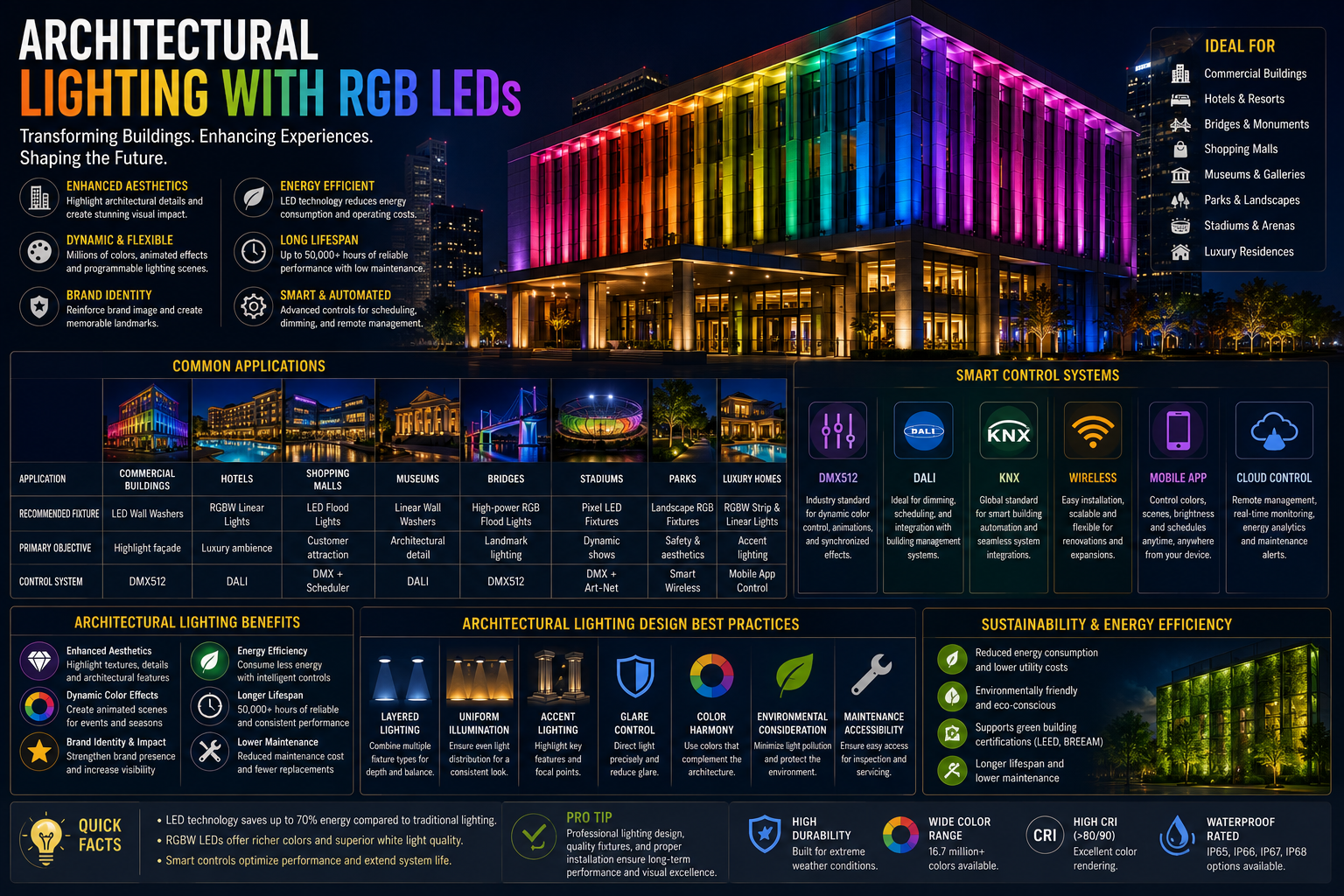
| Application | Recommended Fixture | Primary Objective | Control System |
| Commercial Buildings | LED Wall Washers | Highlight façade | DMX512 |
| Hotels | RGBW Linear Lights | Luxury ambience | DALI |
| Shopping Malls | LED Flood Lights | Customer attraction | DMX + Scheduler |
| Museums | Linear Wall Washers | Architectural detail | DALI |
| Bridges | High-power RGB Flood Lights | Landmark lighting | DMX512 |
| Stadiums | Pixel LED Fixtures | Dynamic shows | DMX + Art-Net |
| Parks | Landscape RGB Fixtures | Safety & aesthetics | Smart Wireless |
| Luxury Homes | RGBW Strip & Linear Lights | Accent lighting | Mobile App Control |
Smart Controls for Architectural Lighting
Modern architectural LED lighting has evolved far beyond simple on/off switching. Today’s commercial lighting systems are intelligent, networked, and fully programmable, allowing architects and facility managers to create dynamic lighting scenes that adapt to different occasions, seasons, and operational requirements. Smart controls improve not only aesthetics but also energy efficiency, maintenance planning, and long-term operational flexibility. Whether illuminating a hotel façade, office tower, bridge, or public landmark, selecting the right control protocol is just as important as choosing the right fixtures.
DMX512
DMX512 (Digital Multiplex) is the industry standard for controlling RGB and RGBW architectural lighting. Originally developed for stage lighting, it has become the preferred protocol for large-scale architectural installations because it supports precise control over color, brightness, animation, and timing.
A single DMX controller can manage hundreds of fixtures simultaneously, ensuring synchronized lighting effects across an entire building. Designers can create static colors, smooth fades, chasing effects, pixel mapping, and seasonal lighting programs. DMX is particularly suitable for landmarks, entertainment venues, bridges, stadiums, and commercial buildings where dynamic lighting plays a central role.
DALI
Digital Addressable Lighting Interface (DALI) is commonly used in commercial buildings that prioritize energy management and intelligent building automation. Unlike DMX, which focuses on dynamic effects, DALI excels at dimming, scheduling, and integrating with building management systems.
Hotels, office buildings, hospitals, and educational facilities frequently use DALI because it allows individual fixtures or groups of luminaires to be monitored and controlled independently. Facility managers can automate lighting based on occupancy, daylight availability, or predefined schedules, improving both comfort and energy efficiency.
KNX
KNX is a global standard for smart building automation. It connects lighting, HVAC, blinds, security systems, and energy management into one integrated platform. In architectural lighting projects, KNX allows lighting scenes to interact with other building systems, creating a seamless user experience.
For example, when a hotel enters nighttime mode, KNX can simultaneously adjust façade lighting, reduce interior lighting levels, activate landscape illumination, and optimize HVAC settings. This centralized control simplifies building operations while reducing energy consumption.
Wireless Control Systems
Wireless lighting controls have gained popularity because they eliminate much of the wiring required by traditional systems. Technologies such as Zigbee, Bluetooth Mesh, and proprietary wireless networks make installation easier in renovation projects and heritage buildings where extensive cabling may not be practical.
Wireless systems also simplify future expansion. Additional fixtures can often be added without major infrastructure changes, making them an attractive option for growing commercial developments.
Mobile App Management
Mobile applications have transformed how facility managers interact with architectural lighting systems. Instead of accessing complex control panels, users can adjust lighting scenes, colors, brightness levels, and schedules directly from smartphones or tablets.
Mobile apps are especially valuable for hotels, retail centers, and entertainment venues that frequently change lighting themes for events, promotions, or holidays. Remote access also reduces response times when adjustments are needed outside normal operating hours.
Cloud-Based Lighting Control
Cloud connectivity allows architectural lighting systems to be monitored and managed from virtually anywhere. Facility managers can oversee multiple buildings from a centralized dashboard, receive maintenance alerts, analyze energy consumption, and update lighting programs remotely.
Cloud platforms also support software updates, diagnostics, and performance monitoring, helping organizations reduce maintenance costs while maximizing system uptime.
Scheduled Lighting Scenes
Scheduling is one of the most effective ways to optimize both aesthetics and energy efficiency. Instead of maintaining the same lighting throughout the night, buildings can automatically transition between different scenes based on time, occupancy, or special events.
Typical scheduling examples include:
- Bright corporate branding during evening hours
- Reduced illumination late at night to save energy
- Holiday-themed colors during festive seasons
- Dynamic light shows for public celebrations
- Emergency lighting modes when required
Automated scheduling ensures consistent operation without requiring manual intervention every day.
Architectural Lighting Design Best Practices
A successful LED lighting design combines technical precision with artistic vision. Effective architectural lighting enhances a building’s identity without overpowering its design or creating visual discomfort. Experienced lighting designers follow several best practices to achieve balanced, efficient, and visually appealing results.
Layered Lighting
Layered lighting combines different fixture types to create depth and visual interest. Instead of relying on a single high-powered luminaire, designers integrate wall washers, flood lights, linear fixtures, and accent lights to illuminate different architectural elements. This approach produces a more natural appearance while minimizing harsh shadows.
Uniform Illumination
Uneven lighting can distract from a building’s architecture. Proper fixture spacing, beam angle selection, and photometric calculations help achieve consistent brightness across façades. Uniform illumination is particularly important for hotels, museums, and office buildings where professionalism and visual balance are essential.
Accent Lighting
Accent lighting draws attention to unique architectural features such as columns, sculptures, entrances, and decorative facades. By selectively highlighting focal points, designers create hierarchy and guide viewers’ attention without excessive brightness.
Glare Control
Excessive glare reduces visual comfort and may negatively affect pedestrians, motorists, and neighboring properties. Professional fixtures often include shields, louvers, or carefully engineered optics to direct light precisely where it is needed while minimizing unwanted spill light.
Color Harmony
Color should complement the building’s architecture rather than dominate it. Neutral white lighting is often appropriate for heritage buildings, while vibrant RGB scenes can enhance entertainment venues, sports arenas, and commercial landmarks. Maintaining consistent color themes reinforces architectural identity and brand recognition.
Environmental Considerations
Responsible lighting design minimizes light pollution and protects surrounding ecosystems. Designers should consider local regulations, nearby residential areas, wildlife habitats, and dark-sky initiatives when specifying exterior lighting. Proper aiming, shielding, and scheduling help reduce unnecessary environmental impact.
Maintenance Accessibility
Lighting systems require periodic inspection, cleaning, and occasional component replacement. Fixtures should be installed in locations that allow safe maintenance without extensive scaffolding or building disruption. Accessible installations reduce long-term operating costs and simplify servicing.
Common Architectural Lighting Mistakes to Avoid
Even high-quality fixtures can deliver disappointing results if they are poorly planned or installed. Avoiding common design mistakes helps ensure reliable performance and a professional appearance.
- Uneven façade illumination: Inconsistent fixture spacing or incorrect aiming creates bright spots and dark areas.
- Excessive brightness: Over-lighting wastes energy, increases glare, and diminishes architectural elegance.
- Incorrect beam angles: A beam that is too narrow or too wide can reduce lighting effectiveness and visual balance.
- Ignoring waterproof ratings: Outdoor fixtures without adequate IP protection are more susceptible to moisture damage and premature failure.
- Poor cable management: Exposed or disorganized wiring affects aesthetics and complicates maintenance.
- Overcomplicated control systems: Selecting unnecessarily complex controls can increase installation costs and user confusion.
- Inadequate maintenance planning: Difficult-to-access fixtures lead to higher servicing costs and longer downtime.
Professional photometric analysis, mock-up testing, and careful coordination between architects, lighting designers, and installers significantly reduce these risks.
Sustainability and Energy Efficiency
Sustainability has become a central objective in modern architecture, and architectural LED lighting plays a vital role in achieving greener buildings.
Reduced Energy Consumption
LED fixtures consume substantially less electricity than traditional lighting technologies while delivering equal or greater illumination. Intelligent dimming, occupancy sensing, and scheduling further reduce energy demand, lowering utility costs and carbon emissions.
Longer Fixture Lifespan
Quality architectural LED luminaires commonly provide operational lifespans of 50,000 hours or more. Longer service life reduces replacement frequency, labor expenses, and material waste, making LEDs a cost-effective long-term investment.
Lower Maintenance Costs
Because LEDs require fewer replacements and less routine maintenance, facility managers can reduce operational disruptions and maintenance budgets. Durable housings, advanced thermal management, and weather-resistant construction further improve reliability in demanding outdoor environments.
Environmental Benefits
Lower energy consumption directly reduces greenhouse gas emissions associated with electricity generation. Many LED fixtures are also manufactured using environmentally responsible materials and contain no mercury, unlike certain legacy lighting technologies.
Compliance with Green Building Standards
Energy-efficient lighting supports certification programs such as LEED, BREEAM, and other green building initiatives. Intelligent lighting controls, efficient luminaires, and sustainable design practices contribute valuable points toward environmental certification while enhancing occupant comfort and operational efficiency.
Conclusion
Architectural LED lighting has transformed the way buildings are experienced after dark. By combining advanced RGB and RGBW technology with intelligent control systems, architects and designers can create visually striking environments that strengthen brand identity, improve safety, and enhance the overall user experience. From hotels and office towers to bridges, museums, and public landmarks, modern lighting solutions provide unmatched flexibility, allowing buildings to adapt their appearance for different occasions while maintaining exceptional energy efficiency.
Choosing the right fixtures, beam angles, control systems, and installation strategies is essential for achieving long-term performance. Careful planning, professional design, and high-quality components ensure uniform illumination, reliable operation, and simplified maintenance throughout the system’s lifespan.
If you’re new to programmable lighting, it’s worth exploring our comprehensive Color Changing LED Lights Guide. It explains how RGB, RGBW, and smart LED technologies work, their commercial applications, and how to choose the right lighting solution for hotels, entertainment venues, retail spaces, architectural projects, and event productions. Whether you’re planning a new installation or upgrading an existing system, this guide provides the knowledge needed to make informed lighting decisions.
Frequently Asked Questions
1. What is architectural LED lighting?
Architectural LED lighting uses specialized LED fixtures to enhance the appearance, functionality, and identity of buildings through decorative and functional illumination.
2. Why use RGB LEDs in architecture?
RGB LEDs create millions of colors, dynamic lighting effects, and programmable scenes that improve aesthetics and support branding.
3. What is the difference between RGB and RGBW architectural lighting?
RGB uses red, green, and blue LEDs to create colors, while RGBW adds a dedicated white LED for brighter, cleaner white light and improved color accuracy.
4. Which LED fixtures are best for building facades?
LED wall washers, flood lights, and linear fixtures are commonly used for building façades, depending on the architectural design and lighting objectives.
5. What IP rating is recommended for outdoor architectural lighting?
IP65 is suitable for many outdoor applications, while IP66, IP67, or IP68 are recommended for harsher environments or underwater installations.
6. Is DMX necessary for architectural lighting?
DMX512 is highly recommended for projects requiring synchronized color changes, animations, and dynamic lighting effects.
7. Can architectural lighting be automated?
Yes. Modern systems support scheduling, occupancy sensing, daylight harvesting, mobile apps, and cloud-based management.
8. What beam angle is best for wall washing?
Wide beam angles between 40° and 60° are generally preferred for even wall washing, although the ideal angle depends on the building geometry.
9. How energy efficient are RGB architectural LEDs?
They consume significantly less electricity than conventional lighting while providing longer lifespans and lower maintenance costs.
10. How often should architectural lighting systems be maintained?
Routine inspections every six to twelve months are recommended, with cleaning and preventive maintenance based on environmental conditions.
11. What factors should be considered before installation?
Consider brightness, beam angle, fixture type, IP rating, control system compatibility, maintenance access, energy efficiency, and budget.
12. How do smart controls improve architectural lighting projects?
Smart controls provide automation, remote management, energy optimization, scheduling, diagnostics, and flexible customization of lighting scenes.