Introduction
The popularity of color changing LED lights has exploded over the last few years, transforming the way people illuminate homes, offices, retail stores, hotels, and entertainment venues. From subtle ambient lighting in living rooms to dynamic stage effects at live events, RGB lighting has become one of the most versatile and innovative lighting technologies available today.
When discussing the benefits of LED lights and RGB lighting advantages, it is important to understand what makes this technology unique. RGB stands for Red, Green, and Blue. By combining these three primary colors in different intensities, RGB LED lights can produce millions of unique color combinations. This level of customization gives users unprecedented control over their lighting environments.
Consumers and businesses are increasingly replacing traditional incandescent and fluorescent lighting with modern LED solutions because they offer better energy efficiency, longer lifespans, smart controls, and superior design flexibility. Whether you want to create a relaxing atmosphere at home, enhance customer experiences in a retail environment, or produce immersive visual effects at an event, color changing LED lights provide a practical and cost-effective solution.
If you want to explore how modern lighting can transform different environments, read our detailed guide on Color Changing LED Lights. It covers everything from home decoration and event lighting to commercial use, helping you choose the right setup. Discover the benefits, features, and best applications in our complete guide: Color Changing LED Lights: The Complete Guide for Homes, Events, and Commercial Spaces.
What Are Color Changing LED Lights?
Understanding RGB Technology
Color changing LED lights use RGB technology to generate a wide range of colors from a single lighting fixture. Tiny red, green, and blue diodes work together to create virtually unlimited color combinations. Advanced systems can also include additional white LEDs or expanded color spectrums for even greater lighting precision.
Unlike conventional bulbs that emit a single fixed color temperature, RGB LED lights can transition smoothly between colors, create animated effects, synchronize with music, and respond to user commands through apps or voice assistants. This flexibility has transformed lighting from a simple utility into an interactive design element.
How RGB LEDs Differ from Traditional Lighting
Traditional lighting typically offers limited control over brightness and color. A standard incandescent bulb emits one warm color temperature throughout its lifespan. RGB LED lighting, on the other hand, allows complete customization.
Users can switch between warm white lighting for reading, vibrant colors for parties, soft ambient tones for relaxation, and professional lighting scenes for business environments. This adaptability makes RGB LEDs far more versatile than older lighting technologies.
Top Benefits of Using Color Changing LED Lights
Energy Efficiency and Lower Electricity Costs
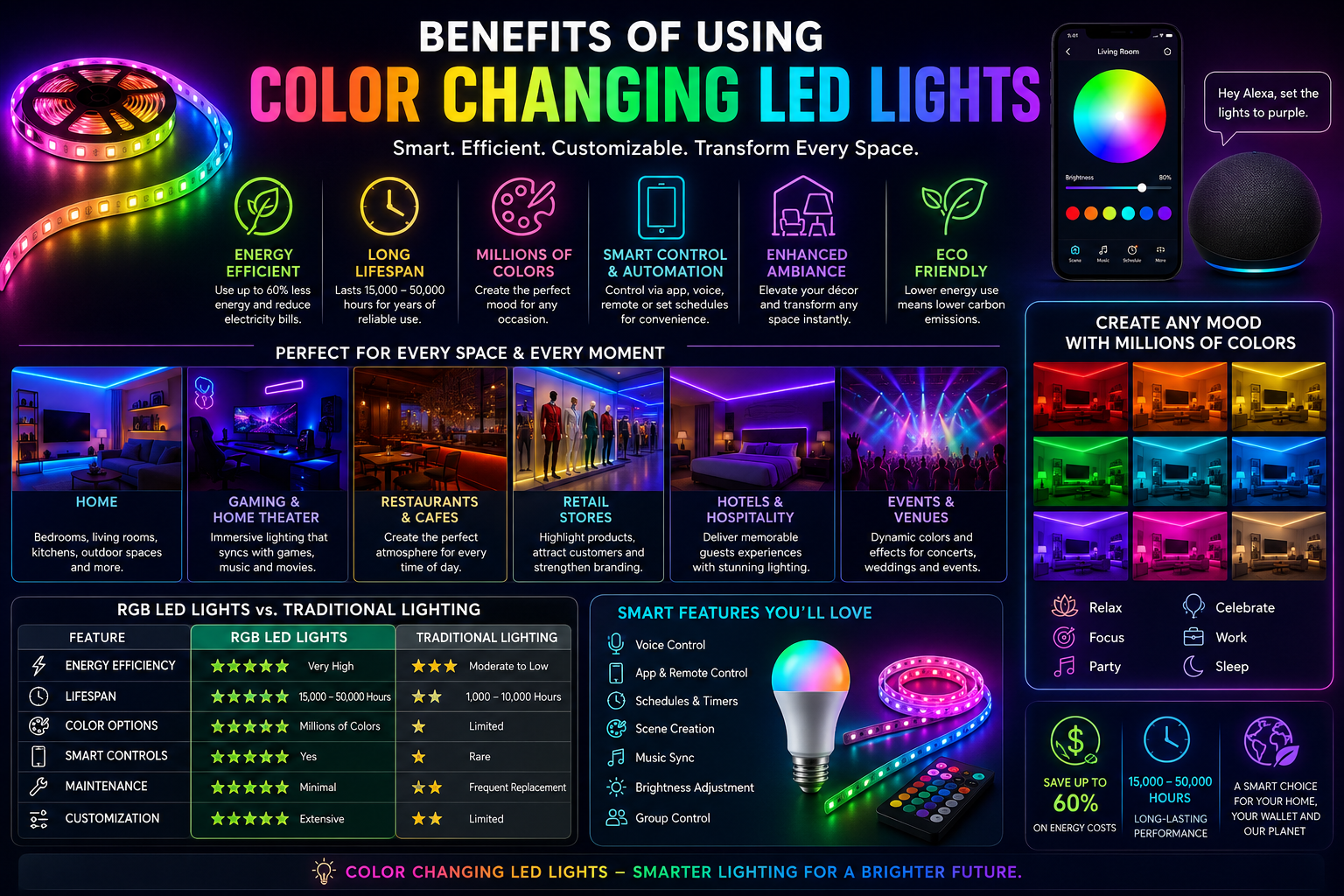
One of the biggest benefits of LED lights is their exceptional energy efficiency. LEDs consume significantly less electricity than incandescent, halogen, and many fluorescent lighting systems while delivering comparable or superior brightness. Industry reports indicate that switching to LED lighting can reduce lighting energy costs by approximately 50–60% in many residential applications.
This efficiency directly translates into lower electricity bills. Whether you are lighting a small bedroom or an entire commercial facility, reduced power consumption can generate substantial long-term savings. For businesses operating hundreds of fixtures daily, these savings become even more significant.
Energy-efficient lighting also reduces heat generation. Traditional bulbs waste a considerable portion of their energy as heat, while LEDs convert much more energy into usable light. This not only lowers cooling requirements in buildings but also improves overall system efficiency.
Customizable Colors for Every Mood and Occasion
Another major advantage of RGB LED lights is their ability to create personalized lighting experiences. Instead of being limited to a single color temperature, users can select from millions of color options.
Want a calm blue glow for relaxation? A warm amber setting for dinner? A vibrant multicolor display for a celebration? RGB lighting makes it possible with a few taps on a smartphone.
This customization is particularly valuable for:
- Holiday decorations
- Seasonal themes
- Special events
- Mood enhancement
- Interior design accents
- Wellness environments
Color psychology also plays a role. Different colors can influence mood, productivity, and emotional responses, making customizable lighting a valuable tool in both residential and commercial settings.
Long Lifespan and Reduced Maintenance
LED technology is renowned for its durability and longevity. Many RGB LED products are rated for 15,000 to 50,000 hours of operation depending on quality and application. In comparison, traditional incandescent bulbs often last only around 1,000 hours.
This extended lifespan reduces replacement frequency, maintenance costs, and operational disruptions. Homeowners appreciate fewer bulb changes, while businesses benefit from lower maintenance expenses and reduced labor costs.
The durability of LED technology also makes it ideal for hard-to-access installations, architectural lighting, outdoor applications, and commercial environments where maintenance can be expensive and time-consuming.
Smart Control and Automation Features
Modern smart LED lighting systems integrate seamlessly with today’s connected homes and businesses. Users can control lighting through mobile apps, remote controls, voice assistants, and automation platforms.
Popular smart features include:
- Voice control
- Scheduling
- Scene creation
- Remote access
- Motion activation
- Brightness adjustment
- Color customization
Smart automation increases convenience while improving energy management. Scheduled lighting routines help reduce unnecessary energy usage while ensuring optimal illumination throughout the day.
Improved Ambiance and Interior Design Flexibility
Lighting is one of the most powerful tools in interior design. RGB LED systems allow designers and homeowners to transform spaces without expensive renovations.
Accent lighting can highlight architectural details, artwork, shelving, and decorative features. LED strip lights installed under cabinets, behind televisions, along ceilings, or beneath furniture create visually stunning effects that enhance the overall atmosphere.
Unlike traditional lighting, RGB LEDs offer the flexibility to adapt the environment instantly. A room can shift from a productive workspace during the day to a relaxing retreat in the evening with a simple color change.
Versatility Across Different Applications
The versatility of color changing LED lights is one reason for their widespread adoption across multiple industries.
Common applications include:
- Residential homes
- Office buildings
- Retail stores
- Restaurants
- Hotels
- Entertainment venues
- Educational facilities
- Healthcare environments
- Event spaces
Few lighting technologies can serve such diverse needs while maintaining high levels of efficiency, customization, and performance.
Enhanced Entertainment Experiences
Entertainment environments have embraced RGB lighting like no other technology. Gaming setups, home theaters, live events, and stage productions all benefit from dynamic lighting effects.
Modern RGB systems can synchronize with music, movies, and gaming content to create immersive experiences. Lighting effects respond in real time, adding depth and excitement to visual entertainment.
For gamers, RGB lighting creates personalized setups that enhance immersion. For home theater enthusiasts, synchronized lighting improves cinematic experiences. Event organizers use dynamic RGB effects to captivate audiences and elevate productions.
Eco-Friendly Lighting Solution
Sustainability is becoming increasingly important for consumers and businesses alike. LED technology supports environmental goals through lower energy consumption, reduced waste, and longer product lifecycles.
Because LEDs require less electricity, they contribute to lower carbon emissions associated with power generation. Their extended lifespan also reduces the number of discarded bulbs entering landfills.
Choosing RGB LED lighting is not only a smart financial decision but also a responsible environmental choice.
Residential Benefits of RGB LED Lighting
Bedrooms, Living Rooms, Gaming Setups, Home Theaters, and Outdoor Spaces
In bedrooms, RGB lighting supports relaxation by allowing users to select calming colors before sleep. Warm tones create a cozy environment, while cooler tones support focus and productivity when needed.
Living rooms benefit from adaptable lighting scenes that suit different activities. Whether hosting guests, watching television, reading, or enjoying family time, RGB systems can instantly adjust the mood.
Gaming setups have become one of the most popular applications for RGB lighting. Coordinated lighting effects create immersive environments that enhance gameplay and personalization.
Home theaters utilize ambient lighting behind screens and seating areas to improve viewing comfort and reduce eye strain. Dynamic effects synchronized with movies create an engaging entertainment experience.
Outdoor spaces such as patios, gardens, decks, and pool areas also benefit from RGB technology. Homeowners can create stunning outdoor environments for gatherings, celebrations, and seasonal decorations.
Commercial Benefits of Color Changing LED Lights
Retail Stores
Retailers use RGB lighting to attract attention, highlight products, and create memorable shopping experiences. Strategic color changes can influence customer perceptions and strengthen brand identity.
Restaurants and Cafes
Restaurants frequently adjust lighting throughout the day to create different atmospheres. Bright settings support daytime dining, while softer tones enhance evening ambiance and customer comfort.
Hotels and Hospitality
Hotels use RGB lighting to create luxurious environments in lobbies, guest rooms, spas, and event spaces. Customizable lighting helps establish a memorable guest experience while supporting energy efficiency goals.
Offices and Workspaces
Modern workplaces increasingly incorporate smart lighting systems to improve comfort, productivity, and employee satisfaction. Adjustable lighting scenes support various work activities and collaborative environments.
Event Venues
Event venues rely heavily on RGB lighting for weddings, concerts, conferences, and corporate gatherings. Dynamic color control allows venues to customize environments for each event without investing in separate lighting systems.
RGB Lighting Advantages Compared to Traditional Lighting
| Feature | RGB LED Lights | Traditional Lighting |
| Energy Efficiency | Very High | Moderate to Low |
| Lifespan | 15,000–50,000 Hours | 1,000–10,000 Hours |
| Color Options | Millions of Colors | Limited |
| Smart Controls | Yes | Rare |
| Maintenance | Minimal | Frequent Replacement |
| Customization | Extensive | Limited |
RGB LED lighting clearly offers superior flexibility, efficiency, and functionality compared to traditional alternatives. While initial purchase costs may be higher, long-term savings and enhanced performance often justify the investment.
Are Color Changing LED Lights Worth the Investment?
For most users, the answer is yes. Although RGB LED systems may require a larger upfront investment, their long lifespan, lower energy consumption, reduced maintenance requirements, and advanced functionality deliver excellent long-term value.
Residential users benefit from lower electricity bills, enhanced comfort, and greater customization. Commercial users often achieve even stronger returns through reduced operating expenses and improved customer experiences.
When evaluating return on investment, it is important to consider both financial savings and lifestyle improvements. The ability to transform environments instantly adds value that traditional lighting simply cannot match.
Common Myths About RGB LED Lights
Myth: RGB Lights Are Expensive to Run
Reality: RGB LEDs consume relatively little electricity and are far more energy-efficient than traditional lighting technologies.
Myth: RGB Lighting Is Only for Decoration
Reality: RGB systems provide functional, task, ambient, accent, and entertainment lighting applications.
Myth: Color Changing LEDs Are Difficult to Install
Reality: Many LED strip lights and smart bulbs are designed for easy installation with minimal tools.
Myth: Smart LED Lights Require Technical Expertise
Reality: Most modern systems feature user-friendly apps, voice control integration, and simple setup processes.
Conclusion
The growing popularity of color changing LED lights is easy to understand when examining the many benefits of LED lights and the extensive RGB lighting advantages they offer. From significant energy savings and long lifespan to smart automation, customizable colors, and immersive experiences, RGB LED technology has transformed modern lighting.
Whether you are upgrading a home, enhancing a commercial space, improving a gaming setup, or planning an event venue, RGB LED lighting provides a flexible and future-ready solution. As smart home technology continues to evolve and sustainability becomes increasingly important, color changing LED lights are positioned to remain one of the most valuable and innovative lighting investments available today.
Frequently Asked Questions
1. What are the main benefits of LED lights?
The primary benefits include energy efficiency, long lifespan, reduced maintenance, lower operating costs, and environmental sustainability.
2. Are RGB LED lights energy efficient?
Yes. RGB LED lights use significantly less electricity than traditional incandescent and halogen lighting.
3. Do color changing LED lights increase electricity bills?
No. In most cases, they help reduce electricity costs due to their high efficiency.
4. How long do RGB LED lights last?
Most quality RGB LEDs last between 15,000 and 50,000 hours depending on usage and product quality.
5. Can RGB lighting improve room ambiance?
Yes. RGB lighting allows users to customize colors and brightness to create desired moods and atmospheres.
6. Are color changing LEDs suitable for businesses?
Absolutely. Retail stores, hotels, restaurants, offices, and event venues commonly use RGB lighting.
7. Do smart LED lights work with voice assistants?
Most modern smart LED systems support voice assistants and mobile app control.
8. Are RGB lights worth the investment?
Yes. Long-term savings and advanced functionality typically provide strong value.
9. Can RGB LED lights sync with music?
Many advanced RGB systems include music synchronization features.
10. Are LED strip lights easy to install?
Most consumer LED strip lights feature simple peel-and-stick installation.