Professional lighting has evolved dramatically over the last decade. Event organizers, production companies, DJs, and venue operators now expect lighting systems that deliver powerful visual impact while remaining flexible enough for different applications. Among the most important fixtures in modern stage production are moving head beam lights, which have become a standard component of concert stages, clubs, weddings, festivals, and corporate events.
A moving head beam light produces a concentrated beam of light that can move rapidly across a venue using motorized pan and tilt functions. Unlike static fixtures, these intelligent lights create dynamic aerial effects, dramatic sweeps, and synchronized lighting shows controlled through DMX systems and professional lighting consoles.
Whether you’re planning a nightclub installation, expanding a rental inventory, or designing a complete stage lighting rig, understanding beam fixtures is essential. This guide complements the page Beam Lights: Complete Guide to Stage, DJ & Event Lighting and provides practical insights into selecting the right moving head beam solution for your applications.
What Is a Moving Head Beam Light?
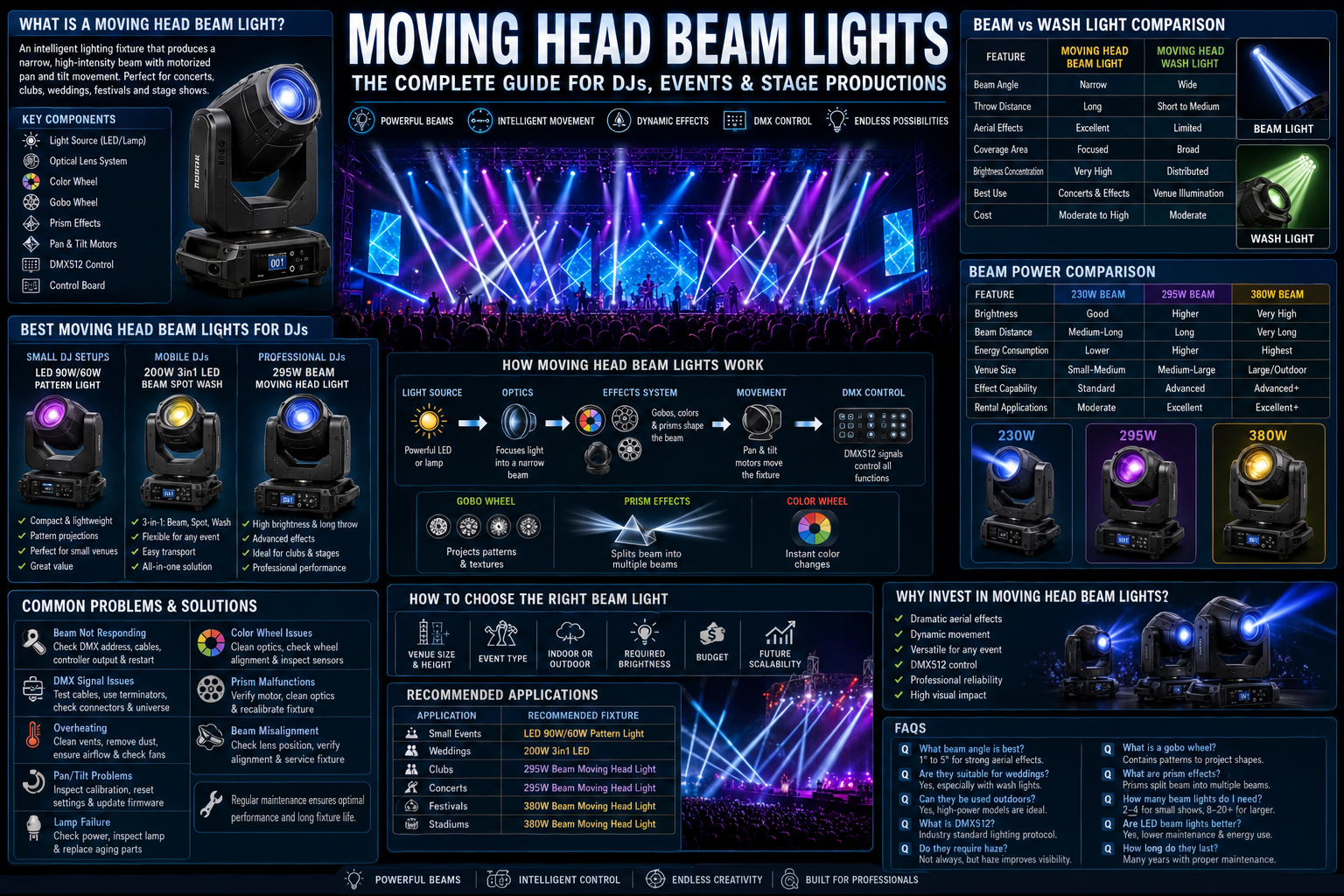
A moving head beam light is an intelligent lighting fixture that produces a narrow, high-intensity beam of light while offering motorized pan and tilt movement. It is commonly used in concerts, DJ events, theaters, festivals, and stage productions to create dramatic lighting effects and aerial beam displays.
A moving head fixture combines several technologies into one unit. The light source generates brightness, while optical systems focus the output into a tight beam angle. Motors allow movement in multiple directions, and onboard effects such as gobos, prisms, and color wheels add creativity to lighting designs.
Key components include:
- Light source (LED or discharge lamp)
- Optical lens system
- Color wheel
- Gobo wheel
- Prism effects
- Pan and tilt motors
- DMX512 control interface
- Electronic control board
When integrated into a stage lighting system, beam fixtures can transform a simple venue into an immersive visual experience. They create visible shafts of light that appear to cut through the air, especially when haze or fog is present.
Moving Head Beam vs Moving Head Wash Light
Many buyers struggle to decide between a beam moving head light and a moving head wash fixture. While both belong to intelligent lighting families, they serve different purposes.
| Feature | Moving Head Beam Light | Moving Head Wash Light |
| Beam Angle | Narrow | Wide |
| Throw Distance | Long | Short to Medium |
| Aerial Effects | Excellent | Limited |
| Coverage Area | Focused | Broad |
| Brightness Concentration | Very High | Distributed |
| Best Use | Concerts & Effects | Venue Illumination |
| Cost | Moderate to High | Moderate |
Beam fixtures excel when dramatic visual impact is required. Their concentrated output creates powerful shafts visible across large venues. Wash lights spread light evenly over performers, stages, and scenery.
For example, a concert production may use beam fixtures to create aerial effects while using wash fixtures to illuminate performers. Most professional lighting designers combine both types within the same truss system to achieve balanced visual results.
For DJs seeking maximum audience engagement, beam lights generally provide more excitement, while wash lights deliver functional illumination.
Best Moving Head Beam Lights for DJs
Small DJ Setups
Entry-level DJs and small event operators often need affordable fixtures that provide strong visual impact without excessive complexity. The LED 90W/60W Pattern Light fits this category perfectly.
Its compact design makes transportation easy, while pattern projection capabilities add attractive visual textures to walls, dance floors, and ceilings. Small weddings, birthday parties, restaurants, and lounges benefit greatly from this type of fixture.
Because smaller venues rarely require extreme brightness, investing in massive beam units may not be necessary. Pattern lights provide excellent value while delivering professional-looking effects.
Mobile DJs
Mobile entertainers require versatility above all else. Different venues demand different lighting styles, making multi-function fixtures especially valuable.
The 200W 3in1 LED combines beam, spot, and wash functions into one fixture. This flexibility allows DJs to adapt quickly to weddings, corporate events, private parties, and school functions without carrying multiple fixture types.
For operators with limited vehicle space, this type of all-in-one solution reduces transportation requirements while expanding creative possibilities.
Professional DJs
Professional nightclub and event DJs often perform in larger venues where lighting becomes a major component of the show.
The 295W Beam Moving Head Light delivers powerful output, impressive beam distance, and advanced effects suitable for high-energy performances. Its brightness allows beams to remain visible even in environments with significant ambient lighting.
For professionals seeking reliable performance and strong return on investment, 295W fixtures remain among the most popular choices in today’s event lighting equipment market.
How Moving Head Beam Lights Work
Understanding how a moving head beam light works helps buyers make informed purchasing decisions.
The process begins with the light source. Modern fixtures use advanced LED technology or powerful discharge lamps to generate intense brightness. This light passes through precision optics that compress it into a narrow beam.
Next comes the effects system. A gobo wheel contains patterns that can be projected through the beam. Rotating gobos create motion effects, while static gobos project logos, textures, and shapes.
A color wheel changes beam colors instantly. Professional fixtures often include multiple colors plus open white for maximum flexibility.
Prism effects split a single beam into multiple beams, producing larger visual displays. This feature is extremely popular in concert lighting and stage production lighting because it dramatically increases visual complexity without adding more fixtures.
Movement occurs through precision pan and tilt motors. These motors respond to commands from a lighting console using DMX512 protocols. Operators can program movements, colors, gobos, and effects into synchronized shows.
Think of a moving head fixture as a robotic spotlight with a creative toolbox built inside. It not only points light but also shapes, colors, multiplies, and animates it.
Beam 230W vs Beam 295W Comparison
Many buyers compare 230W and 295W beam fixtures before purchasing.
| Feature | 230W Beam | 295W Beam |
| Brightness | Good | Higher |
| Beam Distance | Medium-Long | Long |
| Energy Consumption | Lower | Higher |
| Venue Size | Small-Medium | Medium-Large |
| Effect Capability | Standard | Advanced |
| Rental Applications | Moderate | Excellent |
A 230W fixture is often suitable for clubs, banquet halls, and smaller production environments. It offers respectable brightness while maintaining lower operating costs.
The 295W Beam Moving Head Light, however, provides stronger lux output and longer projection distances. This increased performance becomes noticeable in larger venues and professional productions where beams must remain visible across significant distances.
Rental companies frequently choose 295W fixtures because they satisfy a wider range of client requirements while remaining cost-effective compared with larger stadium-grade solutions.
380W Beam Moving Head Light: When Is Higher Power Worth It?
There comes a point where standard beam fixtures are no longer sufficient.
Large-scale productions often require extremely bright beams capable of cutting through ambient light, video walls, and large outdoor environments. This is where the 380W Beam Moving Head Light becomes valuable.
Concert tours, music festivals, stadium productions, and outdoor event lighting setups frequently rely on higher-powered beam fixtures. Their increased output allows lighting designers to project visible beams over impressive distances.
Advantages include:
- Greater brightness
- Extended throw distance
- Stronger aerial visibility
- Better performance in outdoor environments
- Enhanced integration with large-scale stage lighting rigs
However, higher power also means greater energy consumption, increased purchase costs, and potentially larger fixture sizes. Smaller venues rarely benefit enough to justify the additional investment.
For production companies managing large events, the 380W category often provides the best balance between performance and practicality.
Common Moving Head Beam Light Problems & Solutions
Even professional beam lighting equipment occasionally experiences issues.
Troubleshooting Checklist
Beam Not Responding
✓ Verify DMX address settings
✓ Check DMX cable connections
✓ Confirm controller output
✓ Restart fixture
DMX Signal Issues
✓ Test cable integrity
✓ Use DMX terminators
✓ Inspect connectors
✓ Verify universe assignments
Overheating
✓ Clean ventilation openings
✓ Remove dust buildup
✓ Ensure proper airflow
✓ Check cooling fans
Pan/Tilt Problems
✓ Inspect motor calibration
✓ Reset fixture settings
✓ Update firmware when available
Lamp Failure
✓ Verify power supply
✓ Inspect lamp condition
✓ Replace aging components
Color Wheel Issues
✓ Clean internal optics
✓ Check wheel alignment
✓ Inspect sensors
Prism Malfunctions
✓ Verify motor operation
✓ Clean optical assemblies
✓ Recalibrate fixture
Beam Misalignment
✓ Check lens positioning
✓ Verify mechanical alignment
✓ Schedule professional servicing
Regular maintenance dramatically extends fixture lifespan and reduces downtime during critical events.
How to Choose the Right Moving Head Beam Light
Selecting the correct fixture involves more than comparing wattage.
Venue size should always be the starting point. A small wedding venue requires different lighting than a concert arena. Purchasing excessive power often wastes budget while creating operational challenges.
Ceiling height influences beam effectiveness. Higher ceilings generally benefit from stronger fixtures capable of maintaining visible beam intensity over longer distances.
Event type matters as well. DJs often prioritize dynamic movement and effects, while theaters may require precision positioning and smooth transitions.
Consider these buying factors:
- Venue dimensions
- Ceiling height
- Indoor or outdoor use
- DMX compatibility
- Required brightness
- Budget constraints
- Future scalability
Professional buyers should also evaluate service support, spare parts availability, and long-term reliability when comparing manufacturers.
Recommended Applications for Different Beam Light Types
| Application | Recommended Fixture |
| Small Events | LED 90W/60W Pattern Light |
| Weddings | 200W 3in1 LED |
| Clubs | 295W Beam Moving Head Light |
| Concerts | 295W Beam Moving Head Light |
| Festivals | 380W Beam Moving Head Light |
| Stadiums | 380W Beam Moving Head Light |
This table provides a practical starting point for buyers evaluating different fixture categories.
Smaller events prioritize affordability and flexibility. Mid-sized venues benefit from balanced performance. Large productions require maximum output and advanced capabilities.
Final Thoughts
A moving head beam light remains one of the most effective tools available for creating visually engaging stage productions. From intimate DJ performances to large-scale concert productions, these fixtures deliver dramatic effects that audiences immediately notice.
Choosing the right model depends largely on venue size, application requirements, and budget. Smaller operators often succeed with LED pattern fixtures and versatile 3-in-1 systems. Professional event companies frequently rely on 295W beam fixtures because they balance performance and cost effectively. Stadium productions and outdoor festivals often justify investment in powerful 380W solutions.
As you evaluate lighting systems, compare specifications carefully, assess beam output requirements, and consult experienced lighting professionals when designing larger installations. For additional guidance, explore related resources such as Beam Lights: Complete Guide to Stage, DJ & Event Lighting. Request quotations, compare technical specifications, and work with lighting experts to ensure your next stage lighting investment delivers maximum performance and long-term value.
What is a moving head beam light?
A moving head beam light is an intelligent lighting fixture that produces a narrow, high-intensity beam while offering motorized pan and tilt movement for dynamic stage effects.
How does a moving head beam light work?
It uses a light source, optics, gobos, color wheels, prisms, and DMX-controlled motors to create moving beam effects.
What is the difference between beam and wash lights?
Beam lights create narrow, focused effects, while wash lights provide broad illumination coverage.
Which moving head beam light is best for DJs?
Small DJs benefit from LED 90W/60W Pattern Lights, while professional DJs often prefer 295W Beam Moving Head Lights.
Is a 295W beam light powerful enough?
Yes. A 295W beam fixture is suitable for most professional indoor events, clubs, concerts, and rental applications.
When should I choose a 380W beam light?
Choose a 380W beam light for festivals, stadiums, outdoor productions, and long-throw lighting applications.
FAQs
1. What beam angle is best for moving head beam lights?
A narrow beam angle between 1° and 5° typically provides the strongest aerial effects.
2. Are moving head beam lights suitable for weddings?
Yes, especially when combined with wash lighting and decorative effects.
3. Can beam lights be used outdoors?
Yes, particularly high-powered models designed for outdoor production environments.
4. What is DMX512?
DMX512 is the industry-standard communication protocol used to control intelligent lighting fixtures.
5. Do beam lights require haze machines?
Not always, but haze significantly enhances beam visibility.
6. What is a gobo wheel?
A gobo wheel contains patterns used to project shapes and textures.
7. What are prism effects?
Prisms split a beam into multiple beams for larger visual displays.
8. How many beam lights does a DJ need?
Small setups may use 2–4 fixtures, while larger productions may require 8–20 or more.
9. Are LED beam lights better than lamp-based fixtures?
LED fixtures offer lower maintenance and energy consumption.
10. How long do professional beam fixtures last?
With proper maintenance, professional fixtures can operate reliably for many years.