Understanding Stage Lighting and Effects
Stage lighting and effects are the invisible artists behind every memorable performance. Whether you are watching a stadium concert, a theater production, a corporate presentation, a worship event, or a music festival, lighting is constantly shaping your emotions and directing your attention. Many people assume lighting exists simply to help the audience see performers, but its role is much deeper. Lighting establishes atmosphere, creates visual rhythm, highlights important moments, and supports storytelling in ways that audiences often feel without consciously noticing.
Imagine a stage without lighting stage effects. Even the most talented performers would struggle to create a powerful visual impact. Lighting acts like the soundtrack of the eyes. It can make a stage feel intimate, mysterious, energetic, futuristic, romantic, or dramatic within seconds. The combination of carefully positioned fixtures, intelligent controls, colors, and special effects allows designers to transform ordinary spaces into extraordinary experiences. This is why stage lighting has become one of the most critical elements of modern entertainment production.
The increasing demand for immersive live experiences has fueled significant growth in the stage lighting industry. Recent market analyses indicate that the global stage lighting market continues expanding due to rising investments in concerts, theaters, esports events, virtual productions, and corporate experiences. LED technology, automated fixtures, and intelligent control systems are leading this transformation.
The Evolution of Stage Lighting Technology
The history of stage lighting is a fascinating journey of innovation. Early theatrical productions relied on candles, oil lamps, and gas-powered illumination. These systems were difficult to control and often posed serious safety risks. As electricity became widespread, incandescent fixtures revolutionized performance spaces by offering brighter and more reliable illumination. Yet even those systems had limitations regarding energy efficiency, heat generation, and color flexibility.
The arrival of LED technology changed everything. Modern LED fixtures consume less energy, generate less heat, and offer nearly limitless color possibilities. Lighting designers can instantly switch between colors, create smooth transitions, and program complex visual sequences without changing physical gels or filters. This flexibility has dramatically improved both creative possibilities and operational efficiency. Industry reports indicate that LED adoption now dominates modern venue upgrades worldwide.
The next major leap came through intelligent lighting systems. Moving heads, automated fixtures, and digital control consoles gave designers unprecedented creative control. Instead of manually adjusting each light, programmers could create synchronized lighting cues that react to music, movement, and dramatic moments. Today’s advanced productions combine lighting with video walls, projection mapping, lasers, and immersive technologies to blur the line between reality and visual spectacle. Recent research even explores AI-driven systems capable of generating lighting designs that closely resemble the work of experienced lighting professionals.
Core Functions of Stage Lighting
Stage lighting serves several critical functions that extend far beyond simple illumination. The first and most obvious purpose is visibility. Audiences need to clearly see performers, speakers, dancers, musicians, and visual elements on stage. Without adequate visibility, even the most impressive production can lose its impact. Proper front lighting, side lighting, and backlighting work together to ensure performers remain clearly visible from every audience angle.
Focus is another essential function. Lighting acts like a visual spotlight that guides audience attention. When a soloist steps forward during a concert, a focused beam naturally draws every eye toward that performer. During a theatrical production, lighting can subtly direct attention from one part of the stage to another without requiring any verbal explanation. This ability to control visual focus makes lighting an invaluable storytelling tool.
Perhaps the most powerful function of stage lighting is emotional influence. Colors, brightness levels, movement patterns, and transitions can instantly change the mood of a performance. Warm amber tones create intimacy and comfort, while deep blues suggest mystery or sadness. Fast-moving beams and vibrant colors generate excitement and energy, making audiences feel immersed in the experience. Like a painter working with light instead of paint, the lighting designer shapes emotional responses throughout the event.
Essential Types of Stage Lighting Fixtures
Professional stage productions rely on a wide variety of fixtures, each designed for specific purposes. Understanding these fixtures helps explain how lighting designers create such diverse visual experiences.
| Fixture Type | Primary Function | Best Application |
| Spotlight | Focused illumination | Solo performers, speeches |
| Followspot | Tracking movement | Live concerts, theater |
| PAR Light | Broad lighting wash | Stage coverage |
| Floodlight | Wide illumination | Background lighting |
| Moving Head | Dynamic effects | Concerts, festivals |
| LED Wash Light | Color coverage | Events and productions |
Spotlights and followspots are among the most recognizable lighting instruments. These fixtures create concentrated beams that highlight specific performers or stage areas. Followspots are operated manually or digitally to track moving performers throughout a production. They ensure that key performers remain visually prominent regardless of their location on stage.
PAR lights and floodlights provide broader illumination. Instead of focusing on individual performers, these fixtures create general coverage across larger areas. They are often used to establish base lighting levels and support overall visibility. Modern LED versions offer extensive color flexibility and reduced power consumption.
Beam of light represents one of the most exciting developments in entertainment lighting. These intelligent fixtures can pan, tilt, zoom, change colors, rotate gobos, and generate dynamic beam effects. Their versatility allows a single fixture to perform tasks that previously required multiple dedicated instruments. Concert tours, esports arenas, and major live events frequently rely on moving heads to create dramatic visual spectacles.
Stage Lighting Effects That Transform Performances
Lighting effects elevate productions from visually appealing to truly unforgettable. Color remains one of the most powerful tools available to lighting designers. Modern RGBW LED fixtures allow virtually unlimited color combinations, enabling designers to match themes, reinforce emotions, and synchronize visual elements with music or storytelling.
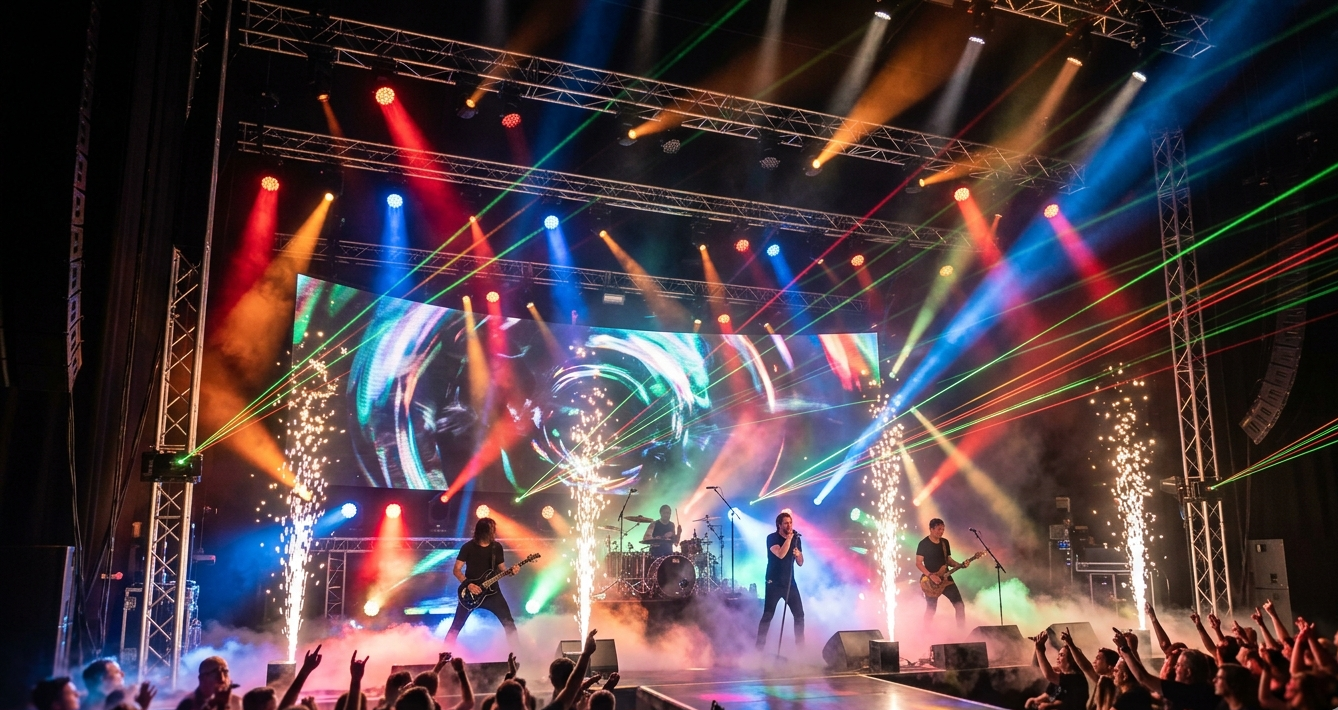
Beam effects create some of the most dramatic moments in live entertainment. Sharp beams cutting through haze can transform an ordinary stage into a futuristic landscape. Moving beam patterns, sweeping aerial effects, and synchronized color changes generate excitement and maintain audience engagement throughout performances. These effects are especially popular in concerts, festivals, and high-energy corporate events.
Strobes and lasers introduce additional layers of visual excitement. Strobes create rapid flashes that enhance dramatic moments, while lasers generate highly focused beams capable of producing intricate patterns and visual illusions. When used strategically, these tools create memorable audience experiences without overwhelming the performance itself.
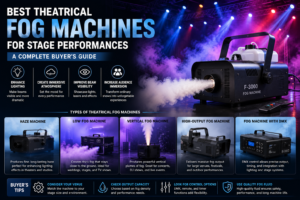
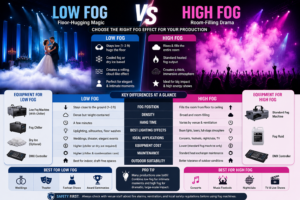
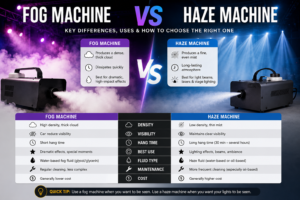
Atmospheric effects such as haze and fog deserve special attention. Many people underestimate their importance, yet they play a crucial role in making light visible. Without haze, many beam effects would remain largely invisible in the air. Professional productions often use carefully controlled haze systems to reveal light paths while maintaining clear visibility for performers and audiences. High-profile events frequently integrate haze systems specifically to maximize the visual impact of advanced lighting designs.
Lighting Control Systems and Programming
Behind every spectacular lighting show is a sophisticated control system. The backbone of modern lighting communication is DMX, a protocol that allows controllers to communicate with multiple fixtures simultaneously. DMX enables operators to control intensity, color, movement, effects, and timing across entire lighting rigs from a centralized console.
Modern lighting consoles have evolved into powerful creative platforms. Instead of simply turning lights on and off, today’s consoles can store thousands of cues, automate complex sequences, synchronize with music, and integrate with video systems. Large-scale productions often employ dedicated programmers who spend weeks designing and refining lighting cues before an event begins.
Programming is where technical expertise meets artistic vision. Designers create visual journeys that support performances from beginning to end. Every transition, color change, and movement is carefully planned to enhance audience engagement. The best lighting designs feel natural and effortless, even though they often involve enormous technical complexity behind the scenes.
Recent technological developments are introducing AI-assisted programming tools capable of generating lighting suggestions based on music analysis and performance characteristics. Research suggests that these systems may significantly reduce programming time while maintaining high creative standards.
Designing a Professional Lighting Setup
Successful stage lighting begins with careful planning. Every venue presents unique challenges and opportunities. A small theater requires a different approach than a massive stadium or convention center. Designers must consider stage dimensions, audience positions, ceiling height, power availability, and production goals before selecting equipment.
Venue size significantly influences fixture placement and quantity. Smaller venues often prioritize flexibility and efficiency, while larger productions may require hundreds of fixtures working together. Designers must balance coverage, visibility, visual impact, and budget considerations. Effective planning ensures that lighting supports the performance rather than distracting from it.
Safety remains a critical aspect of lighting design. Fixtures are often suspended above performers and audiences, making proper rigging essential. Electrical systems must comply with safety standards, and equipment must be regularly inspected and maintained. Professional lighting teams follow rigorous safety procedures to minimize risks while delivering exceptional visual experiences.
Creative ambition should always work alongside practical considerations. The most impressive designs are not necessarily the most complex. Often, carefully chosen fixtures and thoughtful programming achieve greater impact than excessive equipment. Successful lighting design is about intention, not simply quantity.
Emerging Trends in Stage Lighting and Effects
The stage lighting industry continues to evolve rapidly. One of the most significant trends is the growing adoption of immersive lighting environments. Reports indicate increasing demand for intelligent fixtures, wireless control systems, and immersive visual experiences across entertainment venues worldwide.
Artificial intelligence is beginning to influence lighting design workflows. Researchers have developed systems capable of generating lighting cues based on music analysis and performance characteristics. While human creativity remains irreplaceable, AI tools may help designers accelerate programming processes and explore new creative possibilities.
Virtual production represents another transformative trend. Advanced LED walls combined with sophisticated lighting systems are enabling filmmakers, broadcasters, and event producers to create highly realistic environments without traditional physical sets. Massive virtual production stages now use giant LED volumes that integrate seamlessly with dynamic lighting systems, creating immersive experiences that were previously impossible.
Wireless DMX technology is also becoming increasingly common. These systems reduce cabling requirements, speed up installations, and provide greater flexibility for temporary events. Industry data suggests growing adoption of wireless lighting control solutions as venues modernize their infrastructure.
Choosing the Right Stage Lighting Equipment
Selecting the right stage lighting equipment requires a clear understanding of production goals. A theater production may prioritize subtle mood creation and precise focus, while a music festival demands powerful effects and dynamic movement. Equipment choices should always align with the intended audience experience.
Budget considerations play a major role in equipment selection. Fortunately, modern LED technology has made professional-quality lighting more accessible than ever. Even smaller venues can now achieve impressive results using compact LED fixtures and affordable control systems. Community theaters, schools, houses of worship, and independent event organizers increasingly benefit from technologies that were once reserved for major productions.
When evaluating equipment, consider factors such as brightness, color quality, reliability, control options, energy efficiency, and maintenance requirements. Investing in versatile fixtures often provides greater long-term value than purchasing specialized equipment with limited applications.
The future of stage lighting points toward greater integration, automation, sustainability, and immersion. Venues around the world continue upgrading to intelligent LED systems that offer improved performance, reduced energy consumption, and expanded creative possibilities. As audience expectations continue to rise, lighting technology will remain a central force in shaping unforgettable live experiences.
Conclusion
Stage lighting and effects are far more than technical accessories. They are powerful storytelling tools that shape perception, create emotion, and transform ordinary performances into extraordinary experiences. From basic visibility to immersive visual environments, lighting influences every aspect of how audiences engage with live events.
The industry continues evolving through LED innovation, intelligent fixtures, AI-assisted programming, wireless control systems, and virtual production technologies. Whether you are designing a small theater production or a massive concert tour, understanding the principles of stage lighting provides a foundation for creating memorable and impactful experiences.
As technology advances, one truth remains constant: great lighting is not about equipment alone. It is about using light creatively to connect performers and audiences through unforgettable visual storytelling.
FAQs
1. What is the primary purpose of stage lighting?
The primary purpose of stage lighting is to ensure visibility while directing audience attention, creating mood, enhancing storytelling, and supporting the overall visual experience of a performance.
2. Why are LED lights preferred for stage productions?
LED lights offer energy efficiency, lower heat output, longer lifespan, extensive color options, and greater flexibility compared to traditional lighting technologies.
3. What is DMX in stage lighting?
DMX is a communication protocol that allows lighting controllers to manage multiple fixtures, controlling brightness, color, movement, and special effects from a central console.
4. How do haze machines improve lighting effects?
Haze makes light beams visible in the air, enhancing the appearance of moving lights, lasers, and aerial effects while maintaining clear visibility for performers and audiences.
5. What are intelligent lighting fixtures?
Intelligent fixtures are automated lighting instruments capable of movement, color changes, beam shaping, and programmable effects, making them highly versatile for modern productions.