Introduction to Color Changing LED Lights
Color changing LED lights have transformed the lighting industry, giving homeowners, businesses, event planners, and designers unprecedented control over ambiance, mood, and visual impact. What once required expensive theatrical equipment can now be achieved with a smartphone, voice command, or wireless controller. Whether you’re creating a relaxing bedroom atmosphere, illuminating a retail store, or designing a spectacular concert stage, modern LED technology offers endless possibilities.
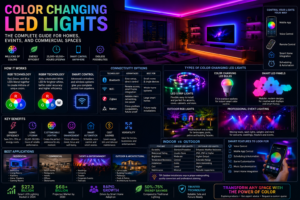
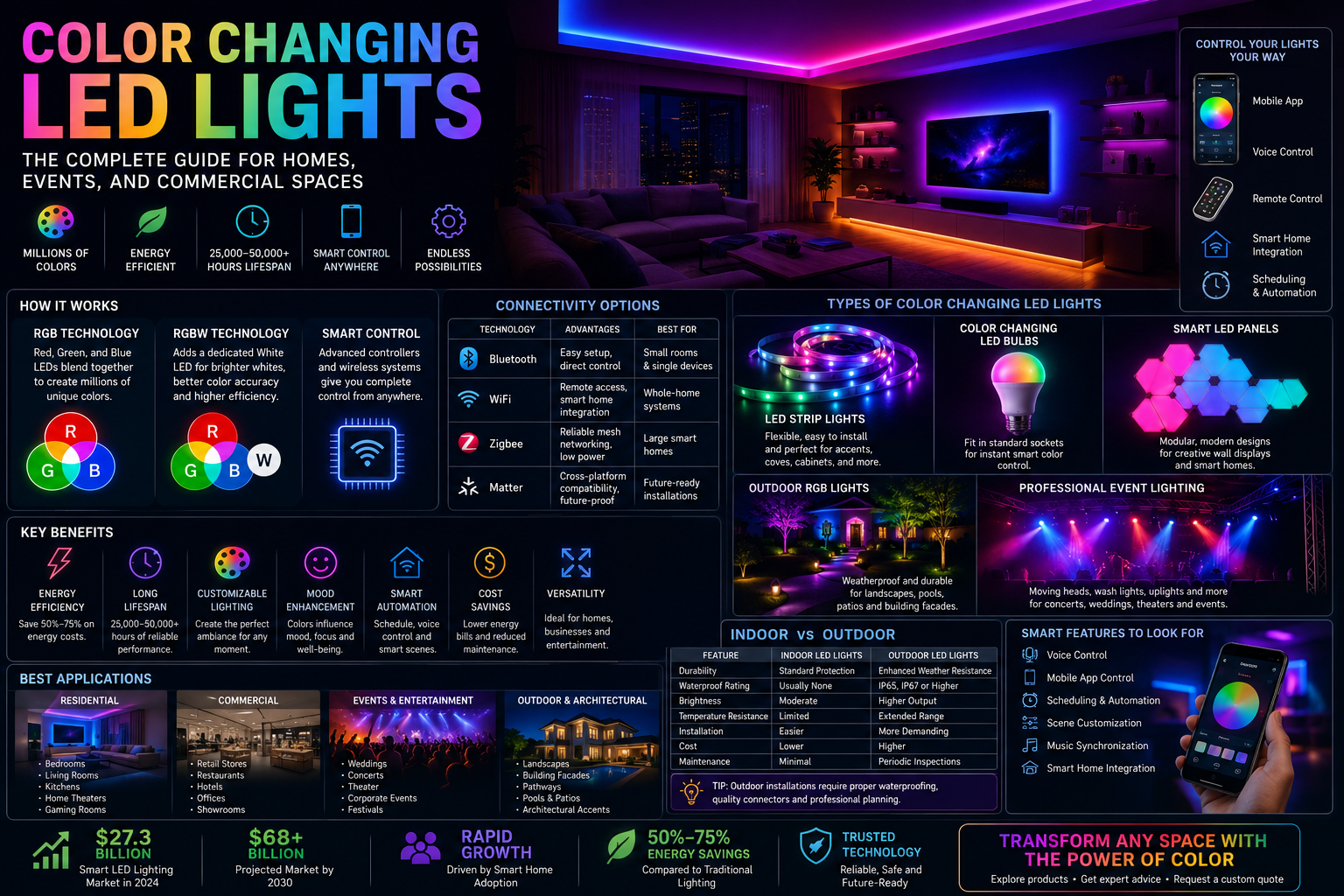
The popularity of RGB LED lights, smart LED lights, and intelligent lighting systems continues to grow rapidly. Industry research estimates that the global smart LED lighting market reached approximately $27.3 billion in 2024 and is projected to exceed $68 billion by 2030, fueled by smart home adoption, energy efficiency initiatives, and demand for customizable lighting experiences.
Today’s lighting solutions are far more advanced than simple bulbs. They integrate with home automation systems, respond to music, synchronize with entertainment systems, and provide millions of color combinations. From residential applications to commercial installations and professional event production, color changing LED technology has become a cornerstone of modern lighting design.
What Are Color Changing LED Lights?
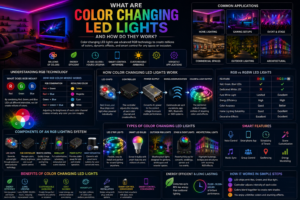
Color changing LED lights are lighting systems that can produce multiple colors using specialized light-emitting diode technology. Unlike traditional bulbs that emit a single fixed color temperature, these advanced systems allow users to switch between colors, create dynamic effects, and customize lighting environments in real time.
Understanding RGB Technology
At the heart of most color changing lighting systems is RGB technology. RGB stands for:
- Red
- Green
- Blue
By combining varying intensities of these three primary colors, LEDs can generate millions of unique colors. This process is similar to how digital screens create images by blending red, green, and blue pixels.
How LED Color Mixing Works
Each LED contains individual red, green, and blue diodes. A controller adjusts the brightness of each diode independently. When red and green are illuminated together, yellow appears. Blue and green create cyan. Red and blue create magenta. Combining all three at full intensity produces white light.
This sophisticated color-mixing capability separates RGB lighting from conventional LEDs. Standard LEDs generally emit a fixed white light, while color changing LEDs provide nearly unlimited customization possibilities for decorative, functional, and architectural applications.
How Color Changing LED Lights Work
RGB Technology
RGB lighting systems use three dedicated LED chips that emit red, green, and blue wavelengths. Sophisticated controllers regulate output levels to achieve specific colors and dynamic effects.
Benefits include:
- Millions of color options
- Energy-efficient operation
- Programmable lighting scenes
- Dynamic transitions and animations
RGBW Technology
RGBW LED lights include an additional white LED chip alongside the RGB diodes. This extra white channel provides several advantages:
- Brighter white illumination
- Improved color accuracy
- Better task lighting performance
- Enhanced energy efficiency for white-light applications
RGBW systems are particularly valuable in residential and commercial settings where both colorful ambiance and practical illumination are required.
Smart LED Control Systems
Modern smart lighting systems provide advanced control capabilities through:
- Mobile applications
- Touch panels
- Remote controls
- Voice assistants
- Smart home platforms
Users can adjust brightness, colors, schedules, and automation routines from virtually anywhere.
Wireless Connectivity Options
Today’s lighting systems typically use:
| Technology | Advantages | Best For |
| Bluetooth LED Lights | Easy setup, direct control | Small rooms |
| WiFi LED Lights | Remote access, smart home integration | Whole-home systems |
| Zigbee | Reliable mesh networking | Large smart homes |
| Matter | Cross-platform compatibility | Future-proof installations |
Wireless control has become a major driver of adoption as consumers seek convenience and seamless automation.
Types of Color Changing LED Lights
LED Strip Lights
LED strip lights remain one of the most popular forms of RGB lighting. These flexible circuit boards contain numerous LEDs mounted along adhesive-backed strips.
Common uses include:
- Under-cabinet lighting
- Cove lighting
- Gaming setups
- Accent lighting
- Architectural highlights
Industry reports indicate that LED strips account for one of the largest segments of the RGB lighting market due to their flexibility and affordability.
Color Changing LED Bulbs
These bulbs fit into standard sockets while offering smart functionality and color-changing capabilities.
Ideal applications:
- Bedrooms
- Living rooms
- Lamps
- Home offices
- Decorative fixtures
They provide a simple upgrade path without requiring rewiring.
Smart LED Panels
LED panels deliver modern aesthetics and advanced functionality. Many models feature geometric designs and modular configurations.
Benefits include:
- Creative wall displays
- Interactive lighting effects
- Smart home integration
- Premium visual appeal
Outdoor RGB Lighting
Outdoor color changing LED lights are designed for exposure to weather conditions and environmental stress.
Applications include:
- Landscape lighting
- Garden pathways
- Building facades
- Pools and patios
- Architectural illumination
Professional Event Lighting Fixtures
Professional fixtures offer powerful outputs and advanced control protocols.
Popular options include:
- Moving heads
- Wash lights
- Uplights
- Stage pars
- Architectural projectors
These systems are commonly used in concerts, corporate events, weddings, and theatrical productions.
Benefits of Color Changing LED Lights
The widespread adoption of color changing LED technology is driven by several compelling benefits.
Energy Efficiency
LEDs consume dramatically less electricity than traditional incandescent and halogen lighting. Many installations achieve energy savings of 50% to 75% while maintaining excellent brightness levels.
Long Lifespan
Quality LED products frequently deliver:
- 25,000 to 50,000+ hours of operation
- Reduced replacement frequency
- Lower maintenance costs
The lighting industry often uses the L70 standard, indicating the point at which LED output decreases to 70% of its original brightness.
Customizable Lighting
Users can instantly adapt lighting for:
- Relaxation
- Entertainment
- Productivity
- Celebrations
- Branding
Mood Enhancement
Color psychology plays a significant role in environmental design. Warm colors create comfort, while cool tones encourage focus and concentration.
Smart Automation
Automation features enable:
- Scheduled lighting changes
- Occupancy-based control
- Voice activation
- Energy optimization
Cost Savings
Reduced energy consumption combined with longer lifespans results in significant lifetime savings despite higher upfront costs.
Exceptional Versatility
Few technologies can match the versatility of color changing LEDs across residential, commercial, entertainment, and industrial applications.
Best Applications for Color Changing LED Lights
Residential Lighting
Homeowners increasingly embrace LED mood lighting to personalize living spaces.
Bedrooms
Soft color transitions can promote relaxation and improve sleep environments.
Living Rooms
Custom scenes support movie nights, gatherings, or everyday comfort.
Kitchens
Accent lighting enhances aesthetics while maintaining functional illumination.
Home Theaters
RGB systems create immersive viewing experiences by extending visual effects beyond the screen.
Gaming Rooms
Dynamic RGB lighting has become a staple in modern gaming environments, delivering synchronized visual experiences.
Commercial Lighting
Businesses use commercial LED lighting to influence customer behavior and strengthen brand identity.
Retail Stores
Color-changing displays attract attention and highlight featured products.
Restaurants
Adjustable lighting supports different dining experiences throughout the day.
Hotels
Dynamic lighting creates memorable guest experiences while supporting operational flexibility.
Offices
Smart lighting systems contribute to employee comfort and energy management.
Event and Entertainment Lighting
The entertainment industry depends heavily on professional LED lighting systems.
Applications include:
- Weddings
- Concerts
- Theater productions
- DJ performances
- Corporate presentations
- Festivals
Dynamic color effects dramatically enhance audience engagement and visual storytelling.
Indoor vs Outdoor Color Changing LED Lights
Choosing between indoor and outdoor systems requires understanding several critical differences.
| Feature | Indoor LED Lights | Outdoor LED Lights |
| Durability | Standard protection | Enhanced weather resistance |
| Waterproof Rating | Usually none | IP65, IP67, or higher |
| Brightness | Moderate | Higher output |
| Temperature Resistance | Limited | Extended range |
| Installation Complexity | Easier | More demanding |
| Cost | Lower | Higher |
| Maintenance | Minimal | Periodic inspections |
Outdoor installations require specialized housings, weatherproof connectors, and environmental protection measures to ensure long-term reliability.
Smart Features to Look For
Modern smart home lighting systems offer far more than simple color control.
Voice Control
Integration with voice assistants allows hands-free operation using natural language commands.
Mobile App Control
Apps enable users to:
- Change colors
- Adjust brightness
- Create schedules
- Monitor usage
Scheduling
Automated schedules support:
- Wake-up routines
- Security lighting
- Energy management
Scene Customization
Users can save preferred lighting combinations for different activities.
Music Synchronization
Lighting systems can react dynamically to audio signals, creating immersive entertainment experiences.
Smart Home Integration
Advanced platforms connect lighting with:
- Sensors
- Security systems
- HVAC controls
- Smart appliances
This interconnected approach supports sophisticated automation scenarios.
How to Choose the Right Color Changing LED Lights
Selecting the ideal system depends on several factors.
Room Size
Larger spaces require higher lumen outputs and broader coverage.
Brightness Requirements
Determine whether lighting serves decorative, ambient, or task-oriented purposes.
Color Accuracy
Premium products deliver richer colors and better white-light performance.
Installation Type
Consider whether you need:
- Bulbs
- Strips
- Panels
- Architectural fixtures
Budget
Balance initial investment against long-term savings and performance.
Connectivity Options
Choose between Bluetooth, WiFi, Zigbee, or Matter-compatible systems based on existing smart home infrastructure.
Installation Guide
Step 1: Plan the Layout
Map fixture locations and identify power sources before installation begins.
Step 2: Calculate Power Requirements
Verify that power supplies can handle total system wattage.
Step 3: Install Mounting Components
Secure strips, fixtures, channels, or mounting brackets according to manufacturer specifications.
Step 4: Connect Controllers
Install RGB controllers, smart hubs, or wireless gateways as required.
Step 5: Configure Smart Features
Complete app setup, firmware updates, and device pairing.
Step 6: Test Functionality
Verify:
- Color changes
- Brightness control
- Automation routines
- Wireless connectivity
Proper planning significantly improves performance and longevity.
Common Problems and Troubleshooting
Lights Not Changing Colors
Potential causes:
- Faulty controller
- Loose connections
- Software issues
Connectivity Problems
Check:
- WiFi signal strength
- Bluetooth range
- Firmware updates
Flickering
Common causes include:
- Incompatible dimmers
- Poor power supplies
- Loose wiring
Power Supply Issues
Undersized power supplies frequently cause instability and reduced brightness.
Controller Malfunctions
Resetting or updating firmware often resolves controller-related issues.
Maintenance Tips
Routine maintenance helps maximize performance and lifespan.
Cleaning
Remove dust regularly using soft cloths and non-abrasive cleaners.
Storage
Store unused fixtures in dry, temperature-controlled environments.
Wiring Inspection
Periodically check:
- Connectors
- Cable integrity
- Mounting hardware
Firmware Updates
Manufacturers frequently release updates that improve performance and security.
Lifespan Optimization
Avoid excessive heat exposure and use properly rated power supplies to maximize longevity.
Future Trends in Color Changing LED Lighting
The future of LED lighting is becoming increasingly intelligent and interactive.
AI-Powered Lighting
Artificial intelligence will automatically adjust lighting based on occupancy, behavior, and environmental conditions.
Advanced Automation
Future systems will anticipate user needs instead of merely responding to commands.
Energy-Saving Innovations
Manufacturers continue improving LED efficiency, reducing energy consumption while increasing output.
Smart Building Integration
Commercial facilities are integrating lighting with comprehensive building management systems.
Interactive Lighting Experiences
Lighting will increasingly interact with:
- Music
- Video
- Gaming environments
- Virtual reality platforms
Market forecasts suggest continued rapid growth as smart lighting becomes a core component of connected environments.
Frequently Asked Questions
1. Are color changing LED lights energy efficient?
Yes. Most LED systems use 50% to 75% less energy than traditional incandescent lighting while delivering superior control and functionality.
2. How long do RGB LED lights last?
Quality RGB LEDs typically last between 25,000 and 50,000 hours or more.
3. Can LED lights be controlled with a smartphone?
Yes. Most modern smart LED systems offer dedicated mobile apps.
4. Are outdoor RGB lights waterproof?
Many outdoor models carry IP65, IP67, or higher waterproof ratings.
5. What is the difference between RGB and RGBW lights?
RGBW lights include an additional white LED chip for improved white-light quality and efficiency.
6. Do color changing LEDs consume more electricity?
Not significantly. Energy use depends on brightness and color settings but remains highly efficient compared to traditional lighting.
7. Can smart LED lights work without WiFi?
Many Bluetooth-enabled products operate without WiFi.
8. Are LED strip lights easy to install?
Most consumer-grade strips feature adhesive backing and straightforward installation.
9. Can color changing LEDs sync with music?
Yes. Many smart lighting systems include built-in music synchronization features.
10. Are smart LED lights worth the investment?
For most users, the combination of efficiency, customization, automation, and longevity provides excellent value.
11. What brightness level should I choose?
Brightness depends on room size and intended use. Lumens are the best measurement to evaluate.
12. Can LED lights be integrated with smart homes?
Absolutely. Many systems support major smart home ecosystems.
13. Do RGB LEDs produce true white light?
RGB systems can create white light, but RGBW systems generally provide superior white illumination.
14. How often should LED systems be maintained?
Visual inspections and cleaning every few months are usually sufficient.
15. What are the best applications for color changing LEDs?
Popular applications include residential lighting, retail displays, hospitality venues, gaming rooms, and professional event production.
Conclusion
Color changing LED lights have evolved from decorative novelty products into powerful lighting solutions capable of transforming homes, businesses, entertainment venues, and architectural environments. Their combination of energy efficiency, long lifespan, advanced customization, wireless control, and smart automation makes them one of the most versatile lighting technologies available today.
Whether you’re installing RGB LED lights in a bedroom, deploying outdoor color changing LED lights for landscape design, upgrading to smart LED lights throughout your home, or implementing professional LED lighting for events, the technology offers exceptional flexibility and long-term value.
As AI-driven automation, smart building integration, and advanced control systems continue to develop, color changing LED lighting will play an even larger role in shaping how people experience and interact with their environments. If you’re planning a lighting upgrade, now is an excellent time to explore available products, request a professional consultation, or obtain a customized lighting quote tailored to your specific project goals.