Introduction
Color changing LED lights have transformed the way people illuminate homes, offices, entertainment venues, and commercial spaces. Unlike traditional lighting systems that produce a single color or fixed white light, modern RGB LED lights can generate millions of colors from a single fixture. Whether you want a relaxing atmosphere in your bedroom, vibrant lighting for a gaming setup, or dynamic effects for a concert stage, these advanced lighting solutions provide unmatched flexibility and control.
The growing popularity of smart LED lights is driven by improvements in LED technology, wireless connectivity, and smart home integration. Today’s lighting systems allow users to control colors, brightness levels, schedules, and lighting scenes directly from smartphones, voice assistants, or dedicated controllers. This combination of convenience and creativity has made RGB lighting one of the most sought-after innovations in modern illumination.
As homes and businesses continue to adopt energy-efficient lighting solutions, understanding how color-changing LED lights work can help you make better purchasing decisions and maximize the benefits of modern lighting technology.
What Are Color Changing LED Lights?
Basic Definition
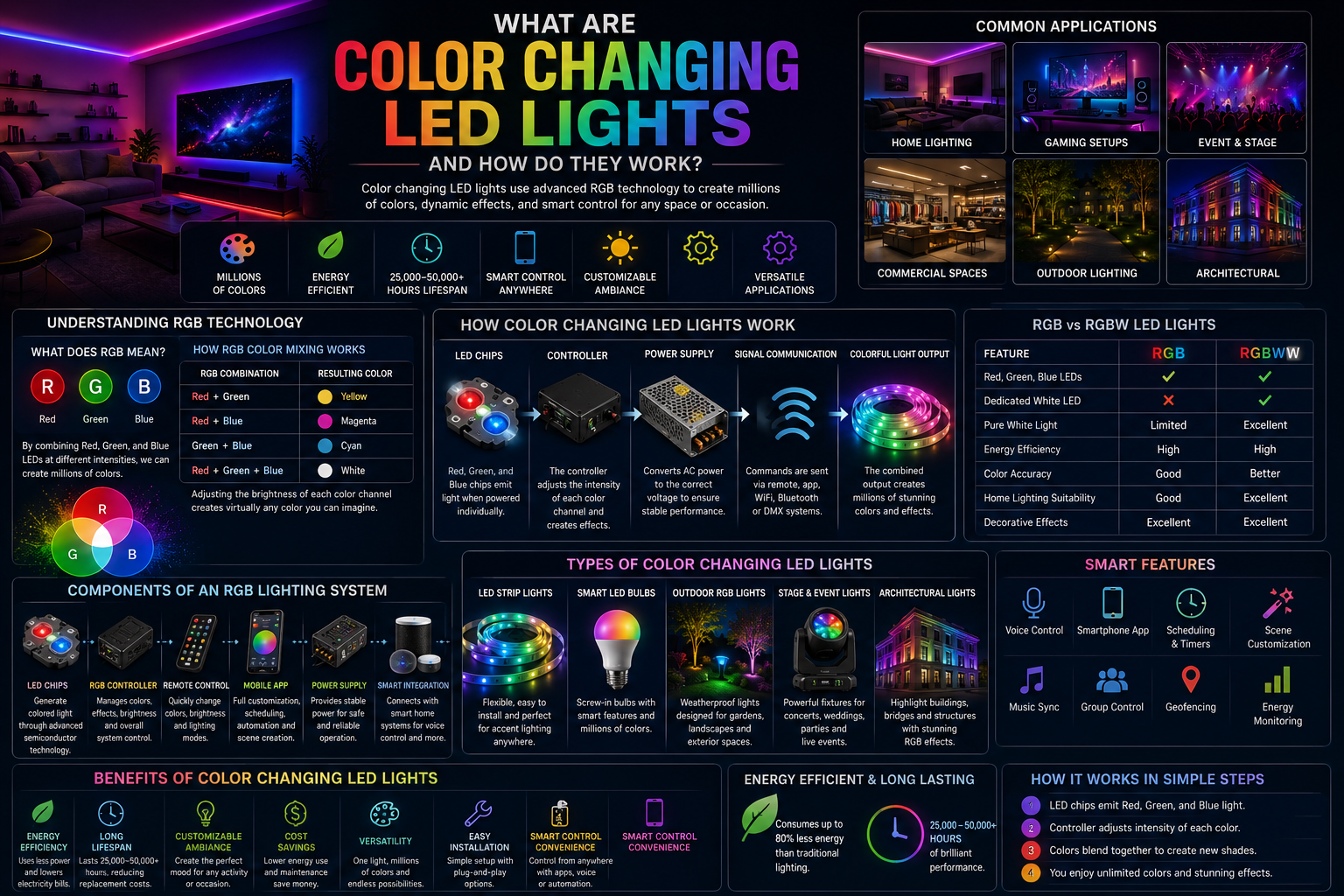
Color changing LED lights are lighting fixtures that can produce multiple colors by combining different colored LED chips within a single unit. These lights typically use red, green, and blue LEDs to create a wide spectrum of colors through a process known as additive color mixing. By adjusting the intensity of each color channel, the system can generate virtually any visible color.
Unlike conventional incandescent or fluorescent lighting, color changing LEDs rely on semiconductor technology to emit light efficiently. The ability to switch colors instantly makes them ideal for decorative, architectural, residential, and entertainment applications.
After learning how color changing LED lights work, continue with Color Changing LED Lights: The Complete Guide for Homes, Events, and Commercial Spaces to discover installation methods, buying factors, and practical use cases.
Common Applications
Today, color changing LED lights are used in countless environments because of their versatility and ease of customization. Popular applications include:
- LED strip lights for accent lighting
- Smart bulbs for homes
- Gaming room setups
- Commercial displays
- Event and stage lighting
- Hotel and restaurant ambiance
- Outdoor landscape lighting
- Architectural façade illumination
The adaptability of RGB lighting allows users to create unique moods and visual experiences without changing fixtures or installing multiple light sources.
Understanding RGB LED Technology
What Does RGB Mean?
RGB stands for:
- R = Red
- G = Green
- B = Blue
These three primary colors form the foundation of modern color-changing LED technology. Each LED fixture contains separate red, green, and blue LED chips that can be controlled independently. By varying the brightness of each chip, the lighting system creates different colors that appear blended to the human eye.
RGB technology is widely used not only in lighting but also in televisions, computer monitors, smartphones, and digital displays. The same color-mixing principles apply across all these technologies.
How RGB Color Mixing Works
RGB lighting uses additive color mixing. Instead of mixing pigments like paint, it combines light wavelengths to produce new colors.
| RGB Combination | Resulting Color |
| Red + Green | Yellow |
| Red + Blue | Magenta |
| Green + Blue | Cyan |
| Red + Green + Blue | White |
By adjusting intensity levels from 0% to 100% for each color channel, RGB systems can create millions of color variations. For example, increasing red while reducing blue may produce orange tones, while combining blue and green at equal levels creates cyan.
This remarkable flexibility explains why RGB lighting has become a standard solution for mood lighting, decorative installations, and entertainment effects.
How Do Color Changing LED Lights Work?
LED Chips
At the core of every color-changing lighting system are LED chips. These microscopic semiconductor devices generate light when electricity passes through them. In RGB fixtures, separate red, green, and blue chips are positioned together to create combined color outputs.
Each chip emits a specific wavelength of light. When activated simultaneously at different intensity levels, the emitted colors blend seamlessly. Modern LED chips are highly efficient and produce very little heat compared to traditional lighting technologies.
Controllers
The controller acts as the brain of the lighting system. It determines how much power each color channel receives and manages color transitions, brightness adjustments, and lighting effects.
Controllers can operate through:
- Handheld remotes
- Wall-mounted panels
- Smartphone applications
- Voice assistants
- DMX systems for professional lighting
Advanced controllers allow users to create custom scenes, automate schedules, and synchronize lighting with music or events.
Power Supply
Every LED system requires a stable power source. The power supply converts incoming electrical current into the voltage required by the LED fixture. Proper power management ensures consistent color output, optimal brightness, and long-term reliability.
Selecting the correct power supply is especially important for larger LED strip installations, where voltage drops can affect performance.
Signal Communication
Modern RGB lighting systems rely on signal communication to transmit commands between controllers and fixtures. Depending on the system, communication may occur through:
- Infrared signals
- Radio frequency signals
- Bluetooth connections
- WiFi networks
- DMX control protocols
These communication methods enable real-time color changes and remote operation, making RGB lighting highly convenient and user-friendly.
Components of a Color Changing LED Lighting System
A complete RGB lighting setup consists of several interconnected components working together to produce dynamic lighting effects.
LED Chips: Generate colored light through semiconductor technology.
RGB Controllers: Manage color output, effects, and brightness adjustments.
Remote Controls: Provide quick access to color and mode changes.
Mobile Applications: Offer advanced customization and automation features.
Power Supplies: Deliver stable electrical power to the lighting system.
Smart Home Integrations: Connect lighting systems to broader automation platforms for voice control and scheduling.
Each component plays a critical role in ensuring smooth operation and a seamless lighting experience.
RGB vs RGBW LED Lights
RGB lighting is excellent for colorful effects, but RGBW systems introduce an additional white LED chip for enhanced functionality.
| Feature | RGB | RGBW |
| Red, Green, Blue LEDs | Yes | Yes |
| Dedicated White LED | No | Yes |
| Pure White Light | Limited | Excellent |
| Energy Efficiency | High | High |
| Color Accuracy | Good | Better |
| Home Lighting Suitability | Good | Excellent |
| Decorative Effects | Excellent | Excellent |
RGBW LED lights are often preferred for residential and commercial environments where both vibrant colors and high-quality white illumination are required.
RGB systems remain popular for entertainment, gaming, and decorative applications where color effects are the primary focus.
Types of Color Changing LED Lights
LED Strip Lights
LED strip lights are among the most popular forms of RGB lighting. These flexible strips can be installed under cabinets, behind televisions, along ceilings, and around architectural features.
Their ease of installation and affordability make them ideal for homeowners seeking customizable lighting without major renovations.
Smart LED Bulbs
Smart LED bulbs combine RGB technology with wireless connectivity. Users can control colors, brightness, and schedules through mobile applications or voice assistants.
These bulbs are excellent for bedrooms, living rooms, and smart home environments where convenience is a priority.
Outdoor RGB Lights
Outdoor RGB fixtures are specifically designed to withstand environmental conditions such as rain, dust, and temperature fluctuations.
Common applications include:
- Garden lighting
- Landscape illumination
- Pool lighting
- Building facades
- Outdoor entertainment areas
Stage and Event Lighting
Professional event lighting systems utilize advanced RGB technology to create dramatic visual effects. Concerts, weddings, festivals, and theatrical productions depend heavily on programmable lighting systems for atmosphere and audience engagement.
These fixtures often integrate DMX control systems for precise synchronization and advanced programming capabilities.
Architectural Lighting Fixtures
Architectural RGB lighting enhances building aesthetics by highlighting structural elements and creating eye-catching visual displays.
Many modern skyscrapers, bridges, hotels, and commercial developments use programmable LED lighting to establish distinctive identities and improve nighttime visibility.
Smart Features in Modern Color Changing LED Lights
Modern smart lighting systems have evolved far beyond simple color control. Today’s solutions offer advanced features that enhance convenience, personalization, and automation.
Popular smart features include:
- Smartphone control
- Voice assistant compatibility
- Scheduling and timers
- Scene customization
- Music synchronization
- Geofencing automation
- Group lighting management
- Energy monitoring
Many smart LED lights integrate seamlessly with popular smart home ecosystems, allowing users to control lighting alongside security systems, thermostats, and entertainment devices.
Music synchronization has become particularly popular in gaming rooms, home theaters, and entertainment spaces, where lights react dynamically to audio signals.
Benefits of Color Changing LED Lights
The advantages of color changing LED lights extend beyond aesthetics. They provide practical benefits that make them a valuable investment for both residential and commercial users.
Energy Efficiency: LEDs consume significantly less electricity than traditional incandescent bulbs.
Long Lifespan: Many LED products operate for tens of thousands of hours before requiring replacement.
Customizable Ambiance: Users can instantly modify room atmospheres for relaxation, productivity, entertainment, or special occasions.
Cost Savings: Reduced energy consumption and maintenance requirements lower long-term operating costs.
Versatility: A single fixture can provide multiple colors, effects, and brightness levels.
Easy Installation: Many LED products feature plug-and-play installation methods.
Smart Control Convenience: Remote access and automation improve user experience and flexibility.
These benefits explain why LED lighting technology continues to dominate modern lighting markets worldwide.
Common Applications of RGB LED Lights
Residential Spaces
Homeowners use RGB lighting to enhance comfort and personalization throughout living spaces.
Popular residential applications include:
- Bedrooms
- Living rooms
- Gaming setups
- Home theaters
- Kitchens
- Outdoor patios
The ability to change colors according to mood or activity creates a highly adaptable living environment.
Commercial Spaces
Businesses leverage RGB lighting to attract customers and strengthen brand identity.
Common commercial uses include:
- Restaurants
- Retail stores
- Hotels
- Shopping centers
- Corporate offices
- Exhibition spaces
Strategic lighting design can influence customer behavior, improve ambiance, and create memorable experiences.
Entertainment Industry
The entertainment sector relies heavily on dynamic RGB lighting for visual storytelling and audience engagement.
Applications include:
- Concerts
- Weddings
- Festivals
- Nightclubs
- Television studios
- Theaters
Advanced lighting systems help create immersive environments that enhance performances and events.
Are Color Changing LED Lights Energy Efficient?
One of the biggest advantages of color changing LED lights is their exceptional energy efficiency. Traditional incandescent bulbs waste a large percentage of energy as heat, whereas LEDs convert most electrical energy directly into visible light.
Many RGB LED systems consume only a fraction of the power required by older lighting technologies while delivering superior brightness and functionality. This efficiency translates into lower electricity bills and reduced environmental impact.
LEDs also offer impressive longevity. Quality products commonly last between 25,000 and 50,000 hours or more, significantly reducing replacement and maintenance costs. Even with advanced features such as color changing, wireless connectivity, and automation, modern LED lighting remains one of the most energy-efficient lighting solutions available today.
For homeowners, businesses, and event organizers seeking sustainable lighting options, RGB LED technology represents a practical and cost-effective investment.
Conclusion
Color changing LED lights have revolutionized modern illumination by combining energy efficiency, customization, and smart technology into a single solution. Through the use of RGB LED lights, users can create millions of colors, dynamic lighting effects, and personalized environments for virtually any application.
From LED strip lights and smart bulbs to professional stage fixtures and architectural installations, RGB technology continues to expand the possibilities of lighting design. Features such as smartphone control, voice integration, scheduling, and automation make modern lighting systems more powerful and convenient than ever before.
Whether you are upgrading a smart home, enhancing a commercial space, or designing an entertainment venue, color changing LED lights provide unmatched flexibility, efficiency, and visual impact.
Frequently Asked Questions
1. What are color changing LED lights?
Color changing LED lights are lighting fixtures that use RGB technology to create multiple colors from a single light source.
2. How do RGB LED lights create different colors?
They combine red, green, and blue LED outputs at varying intensity levels to produce millions of color combinations.
3. Do RGB LED lights use more electricity?
No. RGB LED lights remain highly energy efficient and generally consume much less power than traditional lighting technologies.
4. What is the difference between RGB and RGBW?
RGBW systems include an additional white LED chip that produces cleaner and brighter white light.
5. Can I control LED lights with my phone?
Yes. Many smart LED lights support smartphone applications for color control, scheduling, and automation.
6. Are RGB LED lights suitable for outdoor use?
Yes. Outdoor-rated RGB fixtures are specifically designed to withstand weather conditions.
7. How long do color changing LED lights last?
Most quality LED products last between 25,000 and 50,000 hours or more.
8. Can smart LED lights work without WiFi?
Many smart lights can operate through Bluetooth or manual controls even when WiFi is unavailable.
9. Are LED strip lights easy to install?
Yes. Most LED strips feature adhesive backing and simple plug-and-play installation.
10. Are RGB LED lights good for gaming rooms?
Absolutely. RGB lighting is widely used in gaming environments because it enhances immersion and visual appeal.