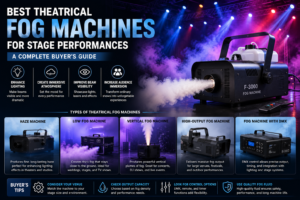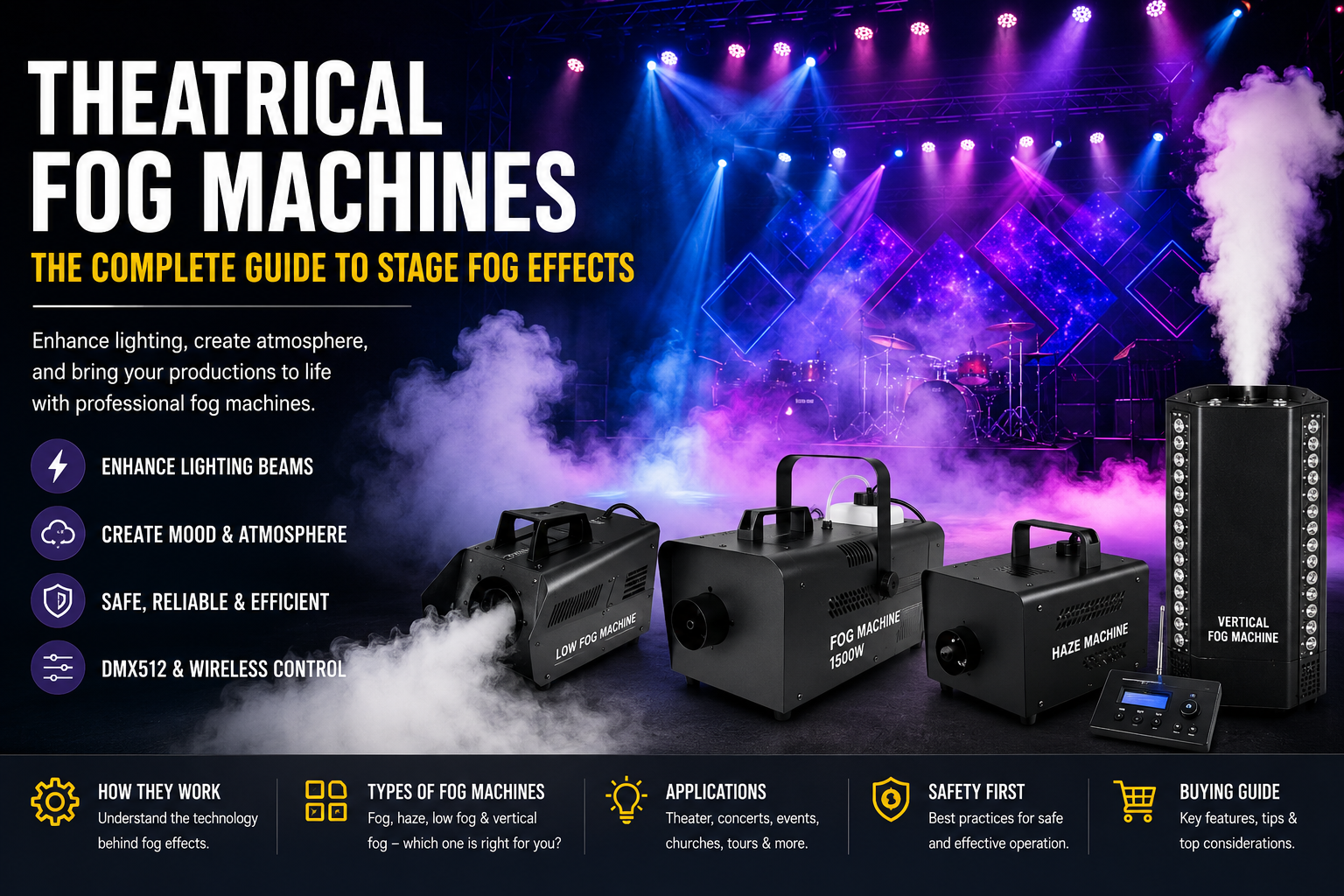
Creating unforgettable stage productions is about more than lighting and sound. Atmospheric effects help transform ordinary performances into immersive visual experiences, adding depth, drama, and emotion to every scene. Whether you’re producing a theatrical play, concert, corporate event, church service, television broadcast, or theme park attraction, selecting the right fog machine is essential for achieving professional-quality effects.
Understanding the various types of fog machines allows event professionals to match the right equipment with their venue, lighting system, and production goals. Some machines produce thick clouds that quickly fill a stage, while others generate a fine haze that enhances lighting beams without overwhelming performers. Specialized machines create ground-hugging fog for dramatic entrances or vertical bursts of smoke that synchronize perfectly with music and lighting cues.
Modern theatrical fog machines have also become smarter and more versatile. Many feature DMX integration, wireless control, adjustable output, rapid warm-up times, and energy-efficient heating systems. Choosing the correct machine not only improves visual performance but also reduces maintenance costs, fluid consumption, and operational downtime.
In this guide, you’ll learn about the major types of theatrical fog machines, how each one works, where each performs best, their advantages and limitations, and practical tips for selecting the ideal solution for your venue or production.
Why Understanding the Types of Fog Machines Matters
Not every production requires the same atmospheric effect. A concert stage demands different visual effects than a wedding venue or television studio. Understanding the strengths of each fog machine helps create better performances while avoiding unnecessary equipment costs and maintenance issues.
Different Performance Requirements
Every event creates a unique atmosphere, and the fog effect should support the overall production rather than distract from it.
For example:
- Large concerts often require high-output professional fog machines that can quickly fill expansive stages.
- Theater productions typically rely on controlled atmospheric effects that complement storytelling and scene transitions.
- Wedding venues frequently use low fog machines to create elegant “dancing on clouds” effects.
- Television studios usually prefer haze machines that subtly enhance lighting without obstructing cameras.
Selecting equipment based on the production type ensures consistent results while maximizing the impact of lighting and special effects.
Indoor vs Outdoor Applications
Venue conditions play a major role in determining which fog machine performs best.
Indoor environments retain fog longer because there is minimal airflow. Standard fog machines and haze machines perform efficiently in theaters, conference halls, churches, and event venues where ventilation can be managed.
Outdoor venues, however, present additional challenges. Wind disperses fog quickly, often requiring higher-output machines or specialized equipment such as vertical fog machines or CO₂ effect systems. These machines produce more concentrated effects that remain visually impressive even in open-air environments.
Considering venue size, ceiling height, ventilation, and weather conditions helps ensure reliable atmospheric performance.
Lighting Compatibility
Atmospheric effects and lighting are designed to work together. Without particles suspended in the air, moving beams from intelligent lighting fixtures are often difficult to see.
Different fog machines enhance lighting in different ways:
- Haze machines create a thin atmospheric layer that reveals beam effects without reducing visibility.
- Standard fog machines generate dense clouds for dramatic entrances, scene changes, and theatrical moments.
- Vertical fog machines synchronize with LED lighting systems to create colorful smoke columns during concerts and festivals.
- Low fog machines remain close to the floor, creating cinematic visual effects without interfering with overhead lighting.
Lighting designers often select fog equipment based on fixture types such as moving heads, beam lights, wash lights, spotlights, and laser systems.
Budget Considerations
Fog machines are available across a wide range of price points, making it important to balance performance with long-term value.
Entry-level stage fog machines are suitable for schools, community theaters, DJs, and small event companies. They offer reliable performance for occasional use while remaining affordable.
Professional touring productions and rental companies typically invest in higher-capacity machines with advanced features such as:
- DMX512 control
- Wireless remote operation
- Variable output adjustment
- Fast reheating systems
- Continuous operation capabilities
- Durable metal construction
Although professional equipment requires a larger upfront investment, it often provides lower operating costs, greater reliability, and longer service life.
Maintenance Requirements
Maintenance requirements vary significantly between different types of fog machines.
Machines using water-based fluids generally require routine cleaning to prevent mineral deposits and fluid residue from affecting heating elements and pumps.
Oil-based haze machines demand careful maintenance to prevent buildup inside the compressor and output system while maintaining consistent haze quality.
Ignoring maintenance may lead to:
- Reduced fog output
- Longer warm-up times
- Heater block clogging
- Pump failures
- Shortened equipment lifespan
- Increased repair costs
Following manufacturer maintenance schedules and using compatible fluids helps maintain consistent performance and reduces unexpected downtime during live events.
Why Choosing the Right Fog Machine Saves Money
Selecting the appropriate fog machine is not simply about achieving the desired visual effect—it also impacts operational efficiency and long-term costs.
A machine that is too powerful for a small venue may consume unnecessary fluid and create excessive fog, while an underpowered machine may struggle to deliver the desired atmosphere in larger spaces. Matching the machine’s output to the venue reduces waste, minimizes maintenance, and improves overall production quality.
Additionally, investing in features such as DMX control, adjustable output, and energy-efficient heating systems can streamline operation and reduce labor during live performances.
Standard Fog Machines
Standard fog machines remain the most widely used atmospheric effect equipment across the entertainment industry. Their versatility, affordability, and ease of use make them a popular choice for theaters, schools, DJs, rental companies, and event organizers.
By heating specially formulated water-based fog fluid, these machines produce dense clouds of vapor that enhance lighting effects, create dramatic entrances, and add visual depth to performances.
Because they are available in a wide range of output capacities, standard stage smoke machines can accommodate everything from small community productions to large indoor venues.
How They Work
A standard fog machine operates by pumping fog fluid into a heated chamber. Once the fluid reaches the required temperature, it rapidly vaporizes and exits through the nozzle as a dense cloud of fog.
Most modern machines include:
- High-efficiency heating elements
- Fluid pumps
- Electronic temperature monitoring
- Automatic reheating systems
- Safety shutoff protection
Many professional models also support DMX control, allowing operators to synchronize fog output with lighting consoles, music, and automated stage effects.
Key Features
Standard fog machines offer a balance of performance and affordability.
Common features include:
- Adjustable fog output
- Fast warm-up times
- Water-based fluid compatibility
- Wired and wireless remote control
- DMX512 support
- Compact and portable designs
- Multiple output capacities for different venue sizes
Professional models often include LCD displays, programmable timers, onboard control panels, and customizable output settings for greater flexibility during live productions.
Advantages
Standard fog machines provide several benefits for entertainment professionals:
- Affordable entry point for atmospheric effects
- Easy operation with minimal training
- Compatible with most stage lighting systems
- Creates dramatic visual scenes quickly
- Wide variety of models for different venue sizes
- Reliable performance for indoor productions
- Suitable for both temporary and permanent installations
Their versatility makes them one of the most popular choices for stage production equipment.
Limitations
Despite their versatility, standard fog machines are not suitable for every application.
Some limitations include:
- Fog dissipates relatively quickly in well-ventilated areas.
- Dense output may temporarily reduce visibility if overused.
- Frequent reheating may interrupt continuous operation on lower-end models.
- Outdoor performance is affected by wind and weather conditions.
Understanding these limitations helps operators choose the right equipment for specific production environments.
Best Applications
Standard fog machines perform exceptionally well in a variety of indoor settings, including:
- School performances
- Community theaters
- Small and medium-sized theaters
- DJ events
- Church productions
- Halloween attractions
- Dance performances
- Corporate presentations
- Local concerts
- Training simulations
- Indoor special events
Their combination of affordability, reliability, and compatibility with modern entertainment lighting systems makes them an excellent choice for organizations seeking professional atmospheric effects without the complexity of specialized equipment.
Low Fog Machines
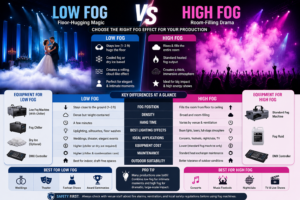
Unlike traditional fog machines that release clouds that rise and disperse throughout the venue, a low fog machine produces a dense layer of fog that remains close to the floor. This creates the illusion of performers walking on clouds, making it one of the most popular atmospheric effects for weddings, theatrical productions, and luxury events.
Low fog effects add elegance and drama without filling the entire room with smoke, making them ideal for productions where visibility and audience comfort are important.
How Low Fog Effects Are Created
A low fog machine works by cooling heated fog before it exits the machine. The cooler fog becomes denser than the surrounding air, allowing it to stay close to the ground instead of rising.
Professional systems create this effect using one of several methods:
- Ice or dry ice cooling chambers
- Built-in refrigeration technology
- External fog chillers
- Specialized low-temperature fog fluid (on compatible systems)
High-end refrigerated low fog machines are especially popular because they provide consistent effects without requiring large amounts of ice during long performances.
Advantages
Low fog machines offer several benefits for professional productions:
- Creates an elegant “walking on clouds” effect
- Keeps fog below knee height, preserving audience visibility
- Produces cinematic entrances and exits
- Enhances stage depth without obscuring scenery
- Works well with warm white and colored lighting
- Leaves less lingering fog than standard machines
- Suitable for photography and video recording
Because the fog stays near the floor, lighting designers can highlight performers without filling the entire venue with dense atmospheric effects.
Common Uses
Low fog machines are commonly used in:
- Wedding first dances
- Musical theater productions
- Ballet performances
- Fashion shows
- Luxury hotel events
- Awards ceremonies
- Television specials
- Corporate gala dinners
- Product launches
- Theme park attractions
These events benefit from the dramatic yet elegant appearance of ground-hugging fog.
Maintenance Tips
To keep a low fog machine performing reliably:
- Use only the recommended fog fluid.
- Clean the heater block regularly to prevent residue buildup.
- Empty water or condensation trays after use.
- If using ice-based systems, remove remaining ice and dry the cooling chamber.
- Inspect hoses, seals, and pumps before each event.
- Store the machine in a clean, dry environment.
Routine maintenance ensures consistent fog density and helps extend equipment life.
Haze Machines
A haze machine creates a fine, nearly invisible mist that remains suspended in the air for an extended period. Unlike dense fog, haze is designed to reveal beams of light rather than produce thick clouds.
Professional lighting designers rely on haze because it dramatically improves the visibility of moving head beams, lasers, spotlights, and other intelligent lighting fixtures without distracting the audience.
What Makes Haze Different from Fog?
Although both haze and fog are atmospheric effects, they serve different purposes.
Traditional fog machines produce thick clouds that appear immediately and dissipate relatively quickly.
Haze machines generate microscopic particles that spread evenly throughout the venue, creating a subtle atmosphere that enhances lighting while maintaining clear sightlines.
This makes haze the preferred choice for venues where continuous atmospheric enhancement is required.
Continuous Atmospheric Effects
One of the biggest advantages of haze machines is their ability to maintain a consistent atmospheric environment.
Rather than releasing large bursts of fog, haze machines continuously emit small amounts of haze, allowing operators to maintain the desired density throughout an event.
This consistency is especially valuable during:
- Live concerts
- Television broadcasts
- Award ceremonies
- Conferences
- Worship services
- Permanent theater installations
Continuous output minimizes distractions while ensuring lighting effects remain visible from beginning to end.
Beam Enhancement
Professional lighting systems achieve their greatest visual impact when haze is present.
Haze allows audiences to clearly see:
- Moving head beams
- Aerial effects
- Laser graphics
- Gobo projections
- Wash light textures
- Follow spots
- Color transitions
Without atmospheric particles in the air, many lighting effects lose depth and become far less dramatic.
Best Lighting Fixtures for Haze
Haze works particularly well with modern entertainment lighting, including:
- Moving head beam lights
- Profile fixtures
- Spotlights
- LED wash lights
- Laser projectors
- Pixel mapping systems
- Follow spots
- Intelligent lighting fixtures
Concert lighting designers almost always use haze because it allows every beam to become part of the visual experience.
Best Applications
Haze machines are widely used in:
- Concert tours
- Television studios
- Large theaters
- Churches
- Corporate conferences
- Broadcast productions
- Esports arenas
- Museums
- Exhibition halls
- Live entertainment venues
Wherever lighting is a central part of the show, haze significantly improves the audience’s visual experience.
Vertical Fog Machines
A vertical fog machine creates powerful columns of fog that shoot upward like theatrical smoke cannons. Many modern units also feature integrated RGB or RGBW LEDs that illuminate the fog as it exits the machine, creating vibrant bursts of colored smoke synchronized with music and lighting.
These machines are designed for high-energy productions where dramatic visual impact is essential.
How Vertical Fog Machines Work
Vertical fog machines operate similarly to standard fog machines but use high-pressure pumps and specially designed nozzles to project fog vertically.
Many models allow users to switch between:
- Vertical output
- Horizontal output
- Angled output (on selected models)
This flexibility makes them suitable for a wide range of stage layouts and event designs.
RGB LED Integration
A defining feature of modern vertical fog machines is their built-in LED lighting.
Integrated LEDs can produce:
- Red
- Green
- Blue
- White
- Amber
- UV effects
- Multi-color combinations
As the fog exits the nozzle, the LEDs illuminate the plume, creating colorful columns that appear synchronized with stage lighting.
DMX control allows these effects to be programmed alongside moving lights, strobes, and music cues.
High-Impact Visual Effects
Vertical fog machines create exciting moments during live performances.
Popular effects include:
- Concert drops
- DJ build-ups
- Festival countdowns
- Artist entrances
- Pyrotechnic-style visuals without flames
- Dance choreography highlights
- Award ceremony reveals
Because the fog shoots upward rather than spreading across the stage, these machines provide dramatic effects while minimizing long-lasting atmospheric buildup.
Indoor and Outdoor Uses
Vertical fog machines perform well in both indoor and outdoor environments.
Common applications include:
- Music festivals
- Stadium concerts
- Nightclubs
- Theme parks
- Product launches
- Sporting events
- Fashion shows
- Television broadcasts
- Outdoor celebrations
High-output models are particularly effective outdoors, where wind can quickly disperse conventional fog.
Stage Smoke Machines
The term stage smoke machine is often used broadly to describe machines that produce visible atmospheric effects for entertainment. Depending on the manufacturer or region, it may refer to a standard fog machine or a specialized machine designed to create dense smoke for theatrical productions.
Regardless of terminology, stage smoke machines remain essential tools for creating mood, depth, and dramatic transitions.
What Is a Stage Smoke Machine?
A stage smoke machine is an atmospheric effects device that generates visible vapor using specially formulated fluid and a heating system.
These machines are commonly found in:
- Theaters
- Concert venues
- Schools
- Churches
- Theme parks
- Television studios
- Rental companies
- Event production businesses
Their primary purpose is to enhance lighting, create dramatic visual effects, and support storytelling.
Differences from Standard Fog Machines
Although the terms are often used interchangeably, stage smoke machines may differ from standard fog machines in several ways:
| Feature | Standard Fog Machine | Stage Smoke Machine |
| Primary Purpose | General atmospheric effects | Professional stage productions |
| Output Control | Basic to advanced | Often more precise |
| DMX Compatibility | Optional | Common on professional models |
| Construction | Consumer to professional | Typically heavy-duty |
| Performance | Occasional use | Frequent live production use |
Professional stage smoke machines are built to withstand demanding production schedules and frequent transportation.
Best Performance Scenarios
Stage smoke machines excel during:
- Dramatic scene changes
- Character entrances
- Fantasy productions
- Haunted attractions
- Dance performances
- Musical finales
- Live concerts
- Worship events
- Film production
- Television specials
Their ability to create atmosphere instantly makes them indispensable for stage designers.
Safety Considerations
Safe operation is essential when using any theatrical fog or smoke machine.
Best practices include:
- Use only manufacturer-approved fluids.
- Ensure adequate venue ventilation.
- Avoid directing hot output toward performers or audience members.
- Position machines away from exits and emergency pathways.
- Test compatibility with venue smoke detection systems.
- Train operators on proper startup and shutdown procedures.
- Perform regular inspections and maintenance.
When used correctly, professional fog and smoke machines provide safe, reliable atmospheric effects for a wide range of indoor and outdoor productions.
Water-Based vs. Oil-Based Fog Machines
One of the most important decisions when selecting a professional fog machine is choosing between a water-based fog machine and an oil-based haze machine. While both create atmospheric effects, they are designed for different applications and produce distinctly different results.
Water-based systems are the most common choice for theaters, schools, churches, and event venues because they create dense fog that dissipates relatively quickly. Oil-based systems, on the other hand, generate an ultra-fine haze that can remain suspended in the air for extended periods, making them ideal for concerts, television studios, and large productions where lighting effects are a primary focus.
Understanding the strengths and limitations of each technology helps ensure you select the right equipment for your venue and production goals.
Water-Based Systems
Water-based fog machines use a specially formulated mixture of purified water and glycol or glycerin. The fluid passes through a heated chamber, where it vaporizes and exits the nozzle as a thick cloud of fog.
These machines are widely used because they are affordable, easy to operate, and suitable for most indoor productions.
Benefits
- Produces dense, dramatic fog
- Quick visual impact
- Ideal for theatrical scenes and special effects
- Compatible with most standard stage productions
- Lower equipment cost
- Wide range of machine sizes
- Generally easier to maintain than oil-based systems
Best Applications
- School productions
- Community theaters
- Churches
- DJ events
- Haunted attractions
- Indoor concerts
- Corporate events
- Weddings
- Dance performances
Oil-Based Haze Systems
Oil-based haze machines work differently. Instead of creating thick clouds, they atomize a refined mineral oil into microscopic particles that remain suspended in the air for long periods.
The result is a nearly invisible haze that dramatically enhances lighting beams while maintaining clear visibility for performers and audiences.
Benefits
- Extremely fine atmospheric haze
- Long suspension time
- Excellent beam visibility
- Minimal fog accumulation
- Consistent atmospheric conditions
- Ideal for professional lighting design
Best Applications
- Concert tours
- Television studios
- Broadcast productions
- Convention centers
- Large theaters
- Theme parks
- Permanent entertainment venues
Water-Based vs. Oil-Based Comparison Table
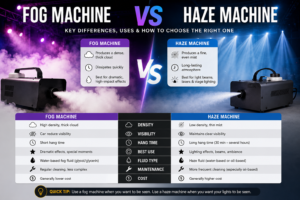
| Feature | Water-Based Fog Machine | Oil-Based Haze Machine |
| Primary Effect | Thick fog | Fine atmospheric haze |
| Fog Density | High | Very Light |
| Dissipation Time | Short to Medium | Long |
| Lighting Enhancement | Good | Excellent |
| Indoor Suitability | Excellent | Excellent |
| Outdoor Performance | Moderate | Limited in windy conditions |
| Warm-Up Time | Fast | Fast to Moderate |
| Cleaning Requirements | Low to Moderate | Moderate |
| Fluid Cost | Lower | Higher |
| Equipment Cost | Lower | Higher |
| Best For | Theaters, DJs, weddings | Concerts, TV studios, touring productions |
Expert Tip: If your goal is to make moving head beams, lasers, and spotlights stand out throughout an entire performance, an oil-based haze machine is often the preferred choice. If you need dramatic clouds of smoke for entrances or scene changes, a water-based fog machine is the better option.
Comparing Different Types of Fog Machines
Each type of fog machine creates a unique atmospheric effect and is suited to different production environments. Comparing their characteristics side by side makes it easier to choose the right equipment for your venue.
Fog Machine Comparison Table
| Fog Machine Type | Fog Density | Duration | Best Applications | Maintenance | Typical Users |
| Standard Fog Machine | High | Short | Schools, theaters, DJs | Low | Event organizers, schools |
| Low Fog Machine | Very High (Ground Level) | Medium | Weddings, theater, luxury events | Medium | Wedding planners, theaters |
| Haze Machine | Very Light | Long | Concerts, TV studios, conferences | Medium | Lighting designers, touring companies |
| Vertical Fog Machine | High Burst | Short | Festivals, concerts, product launches | Low | DJs, concert production companies |
| Stage Smoke Machine | Medium to High | Medium | Live shows, drama, musicals | Low | Theaters, churches, rental companies |
| CO₂ Effect Machine | Instant Burst | Seconds | EDM shows, festivals, stadium events | Low | Large concert productions |
How to Choose the Right Fog Machine
Choosing the right fog machine for stage productions involves more than selecting the highest output model. Factors such as venue size, event type, lighting design, control options, and maintenance requirements all influence long-term performance.
The following considerations can help you make an informed purchasing decision.
Venue Size
Venue size has a direct impact on the output capacity you need.
Small Venues
Suitable for:
- School auditoriums
- Small churches
- Community theaters
- DJ booths
Recommended equipment:
- Compact water-based fog machine
- Small haze machine
Medium Venues
Suitable for:
- Banquet halls
- Conference centers
- Medium theaters
- Nightclubs
Recommended equipment:
- Professional fog machine
- Medium-output haze machine
- Vertical fog machine
Large Venues
Suitable for:
- Stadiums
- Arenas
- Outdoor festivals
- Major concerts
Recommended equipment:
- High-output fog machines
- Touring haze systems
- Multiple synchronized units
- CO₂ effect machines
Event Type
Different productions require different atmospheric effects.
| Event | Recommended Machine |
| Theater | Standard fog machine |
| Wedding | Low fog machine |
| Concert | Haze machine + vertical fog machine |
| DJ Show | Fog machine |
| Television | Haze machine |
| Church | Light haze machine |
| Theme Park | Fog + low fog |
| Corporate Event | Haze machine |
Budget
Budget should include more than the initial purchase price.
Also consider:
- Fog fluid costs
- Maintenance
- Replacement parts
- Transportation
- Storage
- Accessories
- DMX controllers
- Flight cases
Investing in higher-quality equipment often reduces long-term operating costs and improves reliability.
DMX Compatibility
Professional productions benefit significantly from DMX control.
Look for features such as:
- DMX512 support
- Adjustable output levels
- Timer programming
- Multiple control channels
- Integration with lighting consoles
- Synchronization with music and cues
DMX compatibility allows fog effects to become a seamless part of the overall production.
Warm-Up Time
Warm-up time affects operational efficiency.
Typical ranges include:
- Small machines: 2–4 minutes
- Professional machines: 4–8 minutes
- Touring units: Continuous operation after initial warm-up
Fast reheating ensures the machine is ready whenever cues require atmospheric effects.
Output Volume
Manufacturers typically specify output in cubic feet (or cubic meters) per minute.
Higher output is not always better.
Choose output based on:
- Ceiling height
- Stage dimensions
- Ventilation
- Audience distance
- Performance duration
Oversized machines can quickly overwhelm small venues.
Portability
Rental companies and touring productions should consider portability.
Features to look for include:
- Lightweight construction
- Carry handles
- Rugged metal housing
- Protective flight cases
- Compact dimensions
- Quick setup
Portable machines reduce setup time and simplify transportation.
Fluid Consumption
Fluid efficiency directly affects operating costs.
High-output machines generally consume more fluid, but advanced models often include adjustable output settings that reduce waste during less demanding scenes.
Monitoring fluid consumption helps improve budgeting for recurring productions.
Professional Fog Machine Buyer’s Checklist
Use this checklist before purchasing a theatrical fog machine.
| ✔ Checklist Item | Why It Matters |
| Choose the correct machine type | Matches your production needs |
| Consider venue size | Prevents over- or under-powered equipment |
| Verify DMX compatibility | Enables professional control |
| Check warm-up time | Reduces performance delays |
| Review output capacity | Ensures adequate atmospheric coverage |
| Compare fluid consumption | Lowers operating costs |
| Evaluate maintenance requirements | Improves long-term reliability |
| Select compatible fog fluid | Prevents equipment damage |
| Consider portability | Easier transportation and setup |
| Purchase from a reputable manufacturer | Better quality, warranty, and support |
Buying Advice: Focus on overall performance, reliability, and compatibility with your lighting system rather than choosing solely based on the highest fog output or lowest price.
Common Mistakes When Choosing a Fog Machine
Purchasing a fog machine may seem straightforward, but selecting the wrong type can lead to disappointing effects, unnecessary maintenance, and higher operating costs. Understanding the most common mistakes helps ensure you invest in equipment that matches your venue, production style, and lighting design.
Buying Excessive Output for a Small Venue
One of the most common mistakes is choosing the highest-output machine available without considering the venue size.
A fog machine designed for a concert arena can quickly overwhelm a school auditorium or small theater, reducing visibility for performers and audiences. Excessive fog also increases fluid consumption and may trigger smoke detection systems.
Expert Recommendation: Match the machine’s output to the venue’s dimensions, ceiling height, and ventilation.
Confusing Haze with Fog
Many buyers assume haze machines and fog machines perform the same function, but they create very different atmospheric effects.
- Fog machines produce dense clouds for dramatic scenes and entrances.
- Haze machines create a fine mist that enhances lighting beams without filling the room with thick smoke.
Choosing the wrong machine may result in effects that do not meet your production goals.
Expert Recommendation: If lighting enhancement is your priority, choose a haze machine. If dramatic visual effects are required, opt for a fog machine.
Ignoring Fluid Compatibility
Not all fog fluids are interchangeable. Using an incompatible fluid can clog heating elements, reduce output quality, and even void the manufacturer’s warranty.
Always use fluids recommended by the equipment manufacturer to ensure reliable performance and prolong the life of your machine.
Overlooking DMX Support
Many entry-level fog machines include only manual or remote control. While sufficient for occasional use, they may not integrate with professional lighting systems.
For theaters, concerts, churches, and live productions, DMX compatibility allows precise synchronization with lighting, music, and stage cues.
Expert Recommendation: Choose a DMX-compatible model if you require automated control or plan to expand your lighting system in the future.
Choosing Low-Quality Equipment
Price should never be the only deciding factor.
Lower-cost machines often have:
- Shorter service life
- Slower reheating
- Inconsistent fog output
- Less durable construction
- Limited warranty support
Professional-grade equipment may have a higher initial cost but generally delivers better reliability and lower long-term operating expenses.
Forgetting Maintenance Requirements
Even the best professional fog machine requires routine maintenance.
Neglecting cleaning can lead to:
- Blocked heater cores
- Pump failures
- Reduced fog output
- Longer warm-up times
- Unexpected equipment downtime
Establishing a regular maintenance schedule helps ensure dependable performance throughout the machine’s lifespan.
Expert Recommendations
Selecting the ideal fog machine begins with understanding your production requirements rather than simply choosing the most powerful model.
Here are some practical recommendations:
- Schools and community theaters: Standard water-based fog machines provide excellent value and are easy to operate.
- Wedding venues and luxury events: Low fog machines create elegant ground-hugging effects for first dances and formal presentations.
- Concerts and touring productions: Haze machines enhance moving head beams, lasers, and intelligent lighting throughout the performance.
- Nightclubs and festivals: Vertical fog machines deliver dramatic bursts of illuminated smoke that synchronize with music.
- Broadcast studios and conferences: Haze machines maintain clear visibility while improving the appearance of lighting on camera.
Purchasing from a reputable manufacturer ensures better product quality, technical support, spare parts availability, and long-term reliability.
Frequently Asked Questions
1. What are the main types of fog machines?
The most common types include standard fog machines, low fog machines, haze machines, vertical fog machines, stage smoke machines, and CO₂ effect machines. Each is designed for different atmospheric effects and production environments.
2. Which fog machine is best for theaters?
A standard water-based fog machine is ideal for dramatic scenes, while a haze machine is preferred for enhancing stage lighting during performances.
3. What is a low fog machine?
A low fog machine cools fog before it is released, allowing it to remain close to the floor and create a “walking on clouds” effect.
4. What is the difference between a fog machine and a haze machine?
Fog machines produce dense clouds for dramatic visual effects, whereas haze machines generate a fine mist that highlights lighting beams without significantly reducing visibility.
5. Are vertical fog machines safe?
Yes. When operated according to the manufacturer’s instructions and using approved fluids, vertical fog machines are safe for professional entertainment applications.
6. Which fog machine works best with moving head lights?
Haze machines are the preferred choice because they make lighting beams visible while maintaining a clear view of the stage.
7. Can fog machines be used outdoors?
Yes, but outdoor conditions such as wind and humidity can affect performance. High-output fog machines and vertical fog machines generally perform better in open-air environments.
8. Which fog machine requires the least maintenance?
Standard water-based fog machines typically require less maintenance than oil-based haze systems when cleaned regularly and used with compatible fluids.
9. What type of fog machine is best for weddings?
Low fog machines are the most popular option for weddings because they create elegant floor-level fog during first dances and grand entrances.
10. Are water-based fog machines better than oil-based machines?
Neither is universally better. Water-based machines are ideal for dense fog effects, while oil-based haze machines are better suited for continuous atmospheric lighting enhancement.
11. Do all fog machines support DMX control?
No. Many consumer models rely on manual or remote controls. Professional machines often include DMX512 compatibility for integration with lighting consoles.
12. How do I choose the right fog machine?
Consider your venue size, event type, desired atmospheric effect, lighting setup, budget, maintenance requirements, and whether you need DMX control.
13. Can fog machines trigger smoke detectors?
Yes. Dense fog may activate certain smoke detection systems. Always check venue regulations and coordinate with facility management before use.
14. How long does fog fluid last?
Fluid consumption varies depending on the machine’s output and operating time. Higher-output machines generally consume more fluid than compact models.
15. Is professional maintenance necessary?
Routine cleaning and inspection are recommended to maintain performance, prevent clogging, and extend the lifespan of your fog machine.
Conclusion
Understanding the different types of fog machines is essential for creating professional atmospheric effects that enhance lighting, storytelling, and audience engagement. From versatile standard fog machines and elegant low fog systems to continuous haze machines and high-impact vertical fog effects, each option serves a specific purpose in modern stage production.
Selecting the right machine depends on your venue size, event type, lighting design, and operational requirements. A well-matched fog machine not only improves visual impact but also reduces maintenance, lowers operating costs, and delivers more consistent performance throughout every production.
Whether you’re managing a theater, organizing concerts, producing television broadcasts, or planning special events, investing in the right atmospheric effects equipment will elevate the overall experience for performers and audiences alike.
Before making a purchase, carefully evaluate your venue, production goals, and lighting setup to choose the ideal theatrical fog machine for your needs.
New to stage atmospheric effects? Learn What Are Theatrical Fog Machines and How Do They Work? to understand how fog machines generate effects, the different fluid types, and how they enhance lighting, mood, and visual impact in professional stage productions. This guide provides the essential knowledge before choosing the right fog machine for your venue.