Introduction
The world of live entertainment relies heavily on visual effects to create memorable experiences, and theatrical fog machines are among the most important tools used by lighting designers and production teams. Whether it’s a dramatic theater performance, a high-energy concert, a church production, a school play, or a corporate event, fog effects help transform ordinary stages into immersive environments.
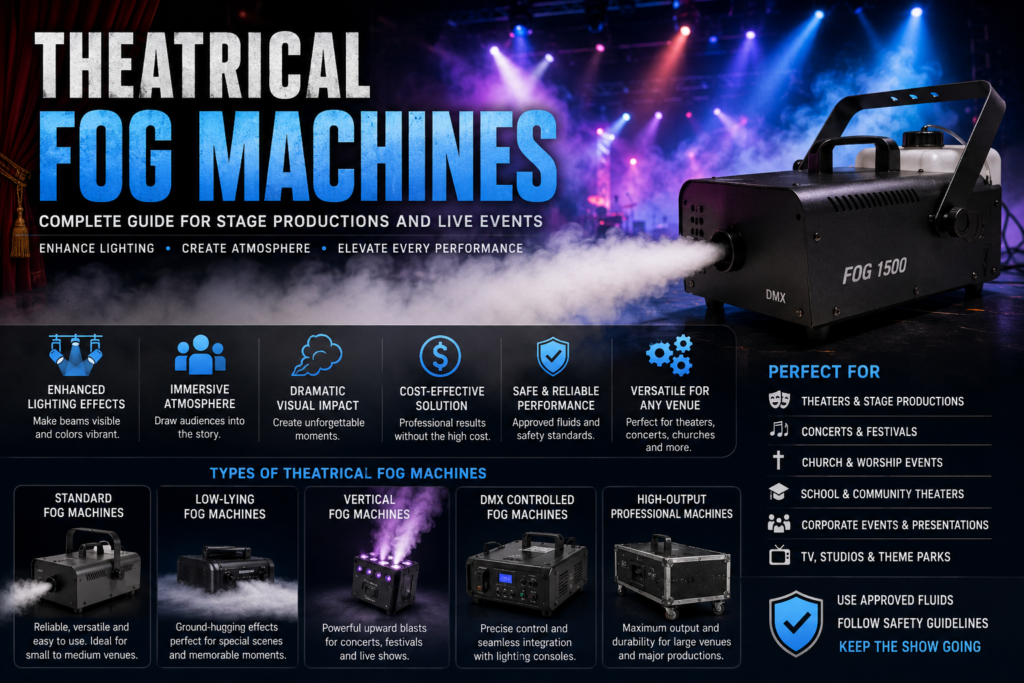
By producing atmospheric effects that enhance lighting beams and create depth, theatrical fog machines contribute significantly to modern stage design. From subtle atmospheric haze to dense clouds of smoke, these systems allow directors and technicians to achieve stunning visual effects without expensive special-effects setups.
In this comprehensive guide, you’ll learn everything about theatrical fog machines, including how they work, their different types, buying considerations, maintenance procedures, safety guidelines, and expert recommendations for selecting the right system for your venue.
What Are Theatrical Fog Machines?
Theatrical fog machines are specialized devices designed to generate visible atmospheric effects by heating and vaporizing specially formulated fog fluid. These machines are widely used in entertainment venues to create dramatic stage atmosphere effects and enhance lighting visibility.
Unlike actual smoke, modern theatrical smoke machines produce safe, controlled effects using approved fluids specifically designed for indoor environments.
How Fog Machines Work
Most fog machines operate using a relatively simple process:
- Fog fluid is stored in a reservoir.
- A pump pushes the fluid into a heated chamber.
- The fluid rapidly vaporizes when exposed to high temperatures.
- The vapor exits through a nozzle.
- Upon contact with cooler air, the vapor condenses into visible fog.
The resulting effect can vary from light atmospheric haze to dense fog clouds depending on the machine’s output capabilities.
Components of a Fog Machine
Typical theater fog machines include:
- Fluid tank
- Fluid pump
- Heating element
- Heat exchanger
- Control system
- Output nozzle
- Power supply
- DMX interface (on advanced models)
- Wireless or wired remote controls
Each component plays an important role in ensuring reliable performance during productions.
Types of Fog Produced
Theatrical fog machines can produce several atmospheric effects:
- Dense fog
- Light mist
- Low lying fog effects
- Vertical smoke bursts
- Continuous atmospheric fog
- Beam-enhancing haze effects
The choice depends on the specific visual requirements of the production.
Benefits of Using Theatrical Fog Machines
The popularity of stage fog machines continues to grow because they offer numerous advantages.
Enhanced Lighting Effects
Fog allows light beams to become visible in the air. Moving heads, spotlights, lasers, and colored wash lights appear significantly more dramatic when used alongside fog.
Improved Audience Immersion
Atmospheric effects help transport audiences into the story, creating emotional engagement and realism.
Dramatic Visual Atmosphere
Whether recreating a haunted forest, mystical landscape, battlefield, or dream sequence, fog creates powerful visual environments.
Cost-Effective Special Effects
Compared to large-scale scenic effects, theatrical fog machines offer a highly affordable method for enhancing productions.
Versatility Across Productions
Professional fog machines can be used in:
- Theater productions
- Concerts
- Churches
- Dance performances
- Corporate presentations
- Television studios
- Theme parks
This versatility makes them valuable investments for entertainment professionals.
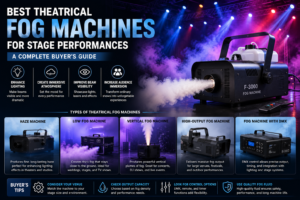
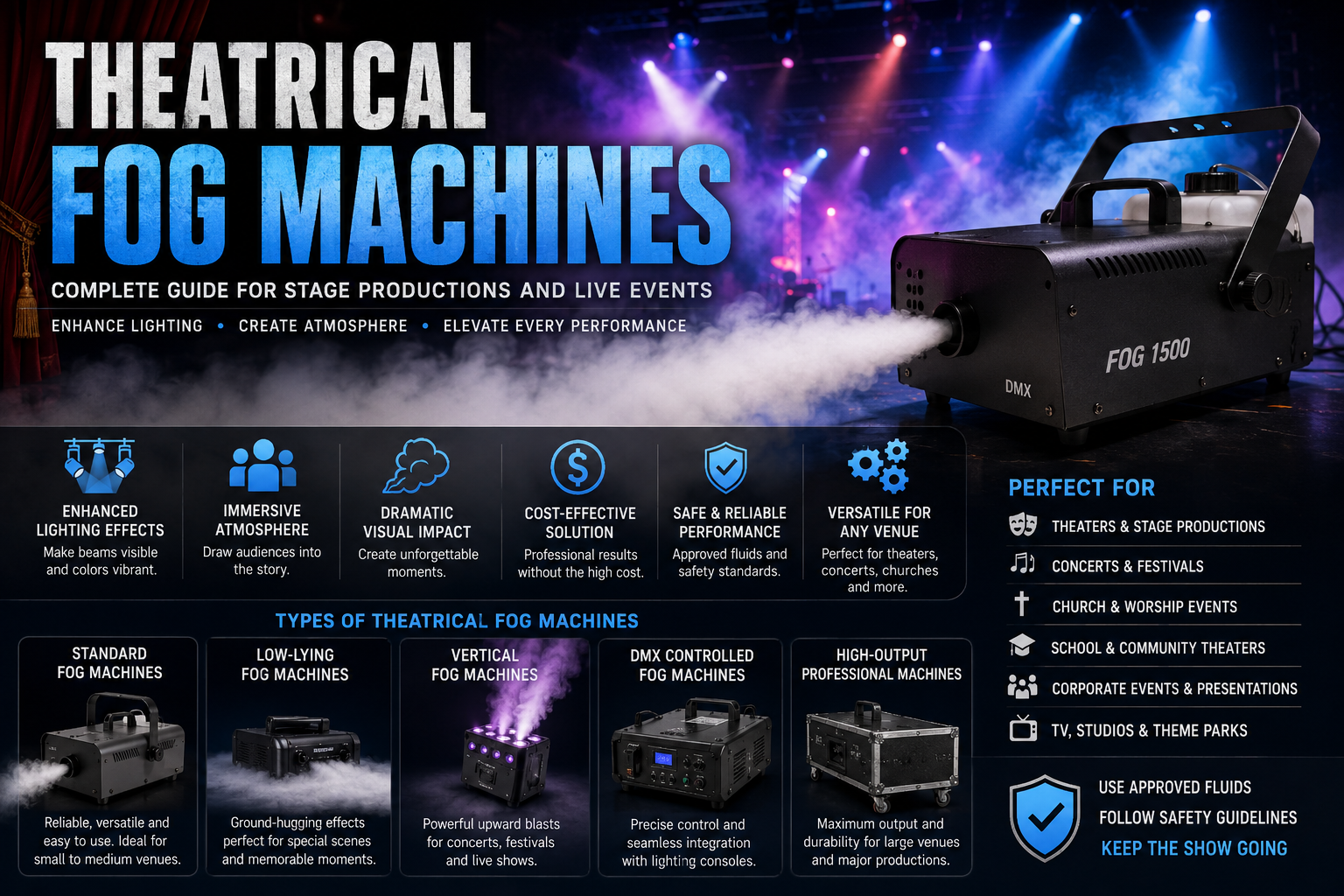
Types of Theatrical Fog Machines
Different productions require different atmospheric effects. Understanding available options helps buyers make informed decisions.
Standard Fog Machines
Features
- Moderate output
- Portable design
- Simple controls
- Affordable pricing
Best Use Cases
- School productions
- Small theaters
- Churches
- Event venues
Advantages
- Easy operation
- Budget-friendly
- Widely available
Limitations
- Limited output volume
- Shorter continuous run times
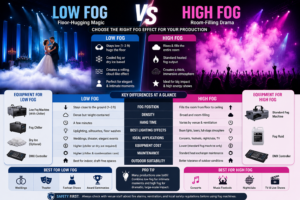
Low-Lying Fog Machines
Features
- Produce ground-hugging fog
- Specialized cooling systems
- Dense fog generation
Best Use Cases
- Wedding entrances
- Dance performances
- Theatrical scenes
- Special reveals
Advantages
- Stunning visual effects
- Professional appearance
- Enhanced stage depth
Limitations
- Higher cost
- Additional setup requirements
Vertical Fog Machines
Features
- Upward fog projection
- LED integration
- Fast response times
Best Use Cases
- Concerts
- Festivals
- Live performances
Advantages
- Dynamic visual impact
- Audience excitement
- Quick activation
Limitations
- High fluid consumption
- Not ideal for continuous atmosphere
DMX Controlled Fog Machines
Features
- DMX controlled fog machine functionality
- Programmable operation
- Integration with lighting consoles
Best Use Cases
- Professional theaters
- Touring productions
- Broadcast events
Advantages
- Precise timing
- Automation capabilities
- Advanced show control
Limitations
- Requires programming knowledge
- Higher initial investment
High-Output Professional Fog Machines
Features
- Large fluid reservoirs
- Powerful output
- Continuous operation capability
Best Use Cases
- Arenas
- Large theaters
- Outdoor events
- Major productions
Advantages
- Massive coverage
- Reliable performance
- Professional-grade construction
Limitations
- Larger size
- Increased power requirements
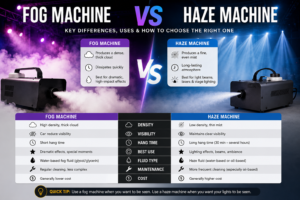
Theatrical Fog Machines vs Haze Machines
Many buyers struggle to understand the difference between haze and fog systems.
| Feature | Fog Machine | Haze Machine |
| Effect | Thick visible clouds | Fine atmospheric layer |
| Density | High | Low |
| Visibility | Highly visible | Subtle |
| Ideal Applications | Special effects scenes | Lighting enhancement |
| Maintenance | Moderate | Moderate to High |
| Cost | Generally lower | Often higher |
When to Choose Fog
Choose fog machines for theater when you need:
- Dramatic effects
- Scene transitions
- Dense atmospheric visuals
- Special theatrical moments
When to Choose Haze
Choose haze machines when you need:
- Continuous atmosphere
- Enhanced light beams
- Concert lighting support
- Long-duration productions
Key Features to Consider Before Buying
Before investing in professional entertainment equipment, evaluate the following factors.
Output Volume
Higher output machines cover larger venues more effectively.
Heat-Up Time
Shorter heat-up times reduce waiting between fog bursts.
Tank Capacity
Larger tanks minimize refilling during performances.
DMX Compatibility
DMX support enables integration with lighting and show-control systems.
Remote Control Options
Look for:
- Wired remotes
- Wireless remotes
- Timer controls
- Mobile app integration
Safety Certifications
Choose products that meet recognized safety standards and electrical regulations.
Fluid Compatibility
Most machines utilize:
- Water based fog fluid
- Fast dissipating fluid
- Long-lasting fog fluid
- Low-fog fluid
Always use manufacturer-approved fluids.
Best Applications of Theatrical Fog Machines
Theaters
Theatrical productions frequently use fog to enhance storytelling and atmosphere.
Concerts
Concert fog machines dramatically improve lighting visibility and stage energy.
Churches
Modern worship productions often incorporate atmospheric effects to enhance presentations.
School Auditoriums
Educational productions benefit from affordable stage effects equipment.
Corporate Events
Product launches and presentations become more engaging with controlled atmospheric effects.
Rental Companies
Rental businesses benefit from versatile equipment that serves multiple event types.
Theme Parks
Immersive attractions frequently depend on theatrical special effects including fog.
Television Productions
Broadcast environments use fog to create depth and visual interest on camera.
Safety Tips for Using Stage Fog Machines
Safety should always be a top priority.
Proper Ventilation
Ensure venues have adequate airflow to prevent excessive atmospheric buildup.
Approved Fog Fluids
Only use fluids recommended by the manufacturer.
Electrical Safety
- Inspect cables regularly
- Avoid overloaded circuits
- Use proper grounding
Audience Considerations
Inform guests when heavy fog effects are planned, especially in enclosed environments.
Maintenance Schedules
Routine maintenance reduces equipment failure and enhances safety.
Maintenance and Cleaning Guide
Proper fog machine maintenance extends equipment lifespan.
Step 1: Empty Remaining Fluid
Remove unused fluid after productions whenever possible.
Step 2: Flush the System
Run manufacturer-approved cleaning solution through the machine.
Step 3: Clean the Exterior
Remove dust and debris from vents and controls.
Step 4: Inspect Components
Check:
- Pumps
- Hoses
- Connectors
- Heating elements
Step 5: Store Properly
Keep machines in clean, dry environments.
Step 6: Test Before Events
Always perform operational testing before show day.
Common Problems and Troubleshooting
| Problem | Possible Cause | Solution |
| No fog output | Empty tank | Refill fluid |
| No fog output | Heater not ready | Allow warm-up time |
| Weak fog production | Low fluid level | Add approved fluid |
| Weak fog production | Partial blockage | Clean system |
| Fluid leaks | Damaged hose | Replace hose |
| Fluid leaks | Loose connection | Tighten fittings |
| Clogged heater block | Residue buildup | Use cleaning solution |
| Remote control issues | Signal interference | Reconnect remote |
| Remote control issues | Battery failure | Replace batteries |
| Intermittent operation | Overheating protection | Allow cooling period |
How to Choose the Best Theatrical Fog Machine
Small Venues
Recommended Features:
- 500–1000W output
- Portable design
- Basic remote control
Best for:
- Schools
- Small churches
- Community theaters
Medium Venues
Recommended Features:
- 1000–1500W output
- DMX support
- Larger fluid capacity
Best for:
- Regional theaters
- Event halls
- Mid-size productions
Large Productions
Recommended Features:
- High-output systems
- Advanced DMX control
- Continuous operation capability
Best for:
- Arenas
- Concert tours
- Professional theaters
Touring Events
Prioritize:
- Rugged construction
- Lightweight transportability
- Fast setup
Permanent Installations
Prioritize:
- Reliability
- Automation
- Long-term durability
Frequently Asked Questions
What is the best theatrical fog machine?
The best theatrical fog machine depends on venue size, output requirements, and control needs. Professional DMX-compatible units are typically preferred for theaters.
Are theatrical fog machines safe?
Yes. When used correctly with approved fluids and proper ventilation, they are generally safe for audiences and performers.
What fluid do fog machines use?
Most use water based fog fluid specifically formulated for theatrical applications.
How long do fog machines last?
Quality professional fog machines often last five to ten years or longer with proper maintenance.
Can fog machines trigger smoke alarms?
Yes. Dense fog may activate some smoke detection systems. Always coordinate with venue management.
What is the difference between haze and fog?
Fog creates dense visible clouds, while haze produces a subtle atmospheric layer primarily used to reveal lighting beams.
Are DMX fog machines worth it?
For professional productions, DMX-controlled systems provide precise control and seamless integration with lighting consoles.
How much fog fluid is required for a show?
Usage varies significantly based on machine output and show duration. Large productions may consume several liters per event.
Can fog machines be used outdoors?
Yes, but wind conditions can reduce effectiveness. Higher-output machines are generally preferred for outdoor applications.
How often should fog machines be cleaned?
Routine cleaning after every major production and periodic flushing significantly improves performance and longevity.
Conclusion
Theatrical fog machines have become essential tools for creating immersive stage atmosphere effects across theaters, concerts, churches, schools, television productions, and live events. From enhancing stage lighting effects to delivering dramatic visual moments, these systems provide a cost-effective solution for elevating production quality.
By understanding the various types of theater fog machines, evaluating key buying factors, following proper maintenance practices, and prioritizing safety, production teams can maximize performance and reliability. Whether you’re purchasing your first fog machine for stage performances or upgrading existing stage effects equipment, investing in the right system will significantly improve audience engagement and visual impact.
Explore professional stage effect solutions today and discover how the right theatrical fog machine can transform your next production into an unforgettable experience.