Modern kitchens have evolved far beyond simple cooking spaces. They are now social hubs, entertainment zones, dining areas, and focal points of home design. One of the most effective ways to transform a kitchen is through strategic lighting. Today, kitchen LED strip lights have become one of the most popular lighting solutions because they combine functionality, aesthetics, and energy efficiency in a single package.
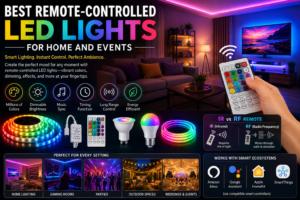
Color changing LED technology has revolutionized how homeowners illuminate their kitchens. Instead of relying solely on traditional overhead fixtures, homeowners can now create customized lighting scenes for cooking, dining, entertaining, or relaxing. Whether you want bright white illumination for food preparation or vibrant colors for hosting guests, modern LED lighting systems provide exceptional flexibility. The growing popularity of smart kitchen lighting has also made it easier than ever to control lighting through mobile apps, voice assistants, and automated schedules. By combining task lighting, accent lighting, and mood-enhancing effects, Color Changing LED Lights strips can dramatically improve both the appearance and functionality of any kitchen.
Why Choose Kitchen LED Strip Lights?
Kitchen lighting should serve multiple purposes. It must provide sufficient brightness for food preparation while also creating a welcoming atmosphere. Traditional lighting fixtures often struggle to accomplish both objectives simultaneously. This is where LED tape lights and RGB LED strip lights excel.
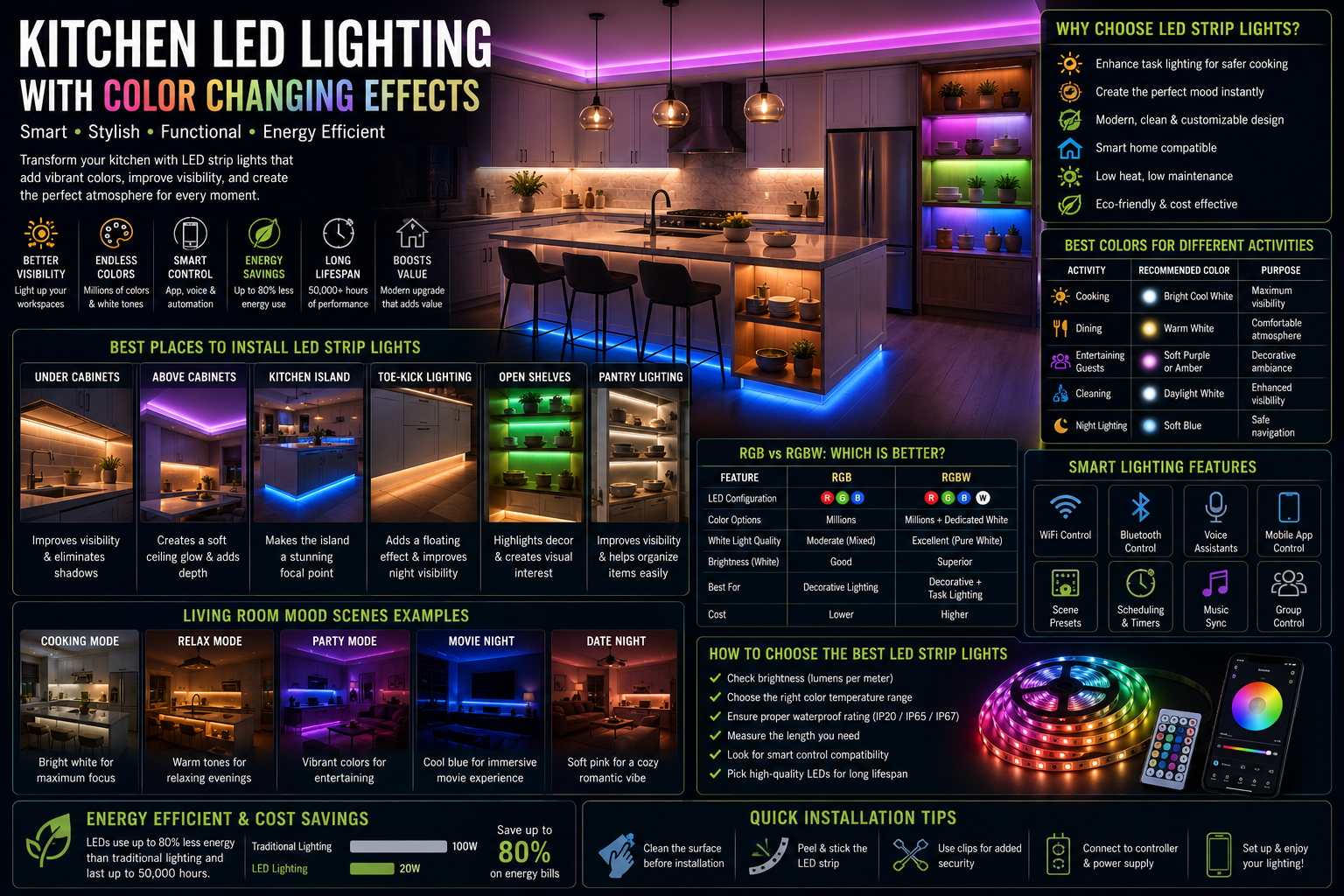
LED strip lights offer flexible installation options that allow homeowners to illuminate areas that conventional fixtures cannot easily reach. Under cabinets, above cabinets, inside pantries, around kitchen islands, and beneath toe-kicks are all ideal installation locations. These lighting solutions help eliminate shadows on countertops, making meal preparation safer and more efficient. They also add architectural depth and visual interest that can instantly modernize an outdated kitchen.
Another major advantage is energy efficiency. Compared with older incandescent or halogen fixtures, LED lighting consumes significantly less electricity while producing excellent brightness. Many smart systems also allow scheduling and dimming functions, helping homeowners reduce energy usage even further. Combined with easy installation and smart home compatibility, kitchen LED strip lights provide one of the highest returns on investment among kitchen upgrades.
Benefits of Color Changing LED Lighting in Kitchens
Better Task Lighting
Food preparation requires clear visibility. Cutting vegetables, measuring ingredients, and handling sharp kitchen tools become safer when work surfaces are properly illuminated. Color changing LEDs often include bright white task-light settings that improve visibility while reducing eye strain. Unlike central ceiling fixtures that can create shadows, strategically placed strips provide direct illumination exactly where it is needed most.
Enhanced Kitchen Ambiance
Lighting affects mood more than many homeowners realize. Warm tones can create a cozy atmosphere for family dinners, while cooler tones can energize the space during busy mornings. Color changing LED lights allow users to instantly adjust the mood based on the occasion. Hosting a dinner party? Choose elegant amber tones. Enjoying a movie night nearby? Switch to subtle blue accent lighting.
Modern Design Appeal
Modern kitchens emphasize clean lines, layered lighting, and visual depth. RGB kitchen lighting adds sophistication that traditional fixtures often lack. Hidden LED strips can create floating effects beneath cabinets and islands, making the entire space feel more luxurious and contemporary.
Energy Efficiency
LED technology converts more energy into light and less into heat. This efficiency reduces electricity consumption while maintaining excellent performance. Many LED strips are rated to operate for tens of thousands of hours, minimizing replacement costs and maintenance requirements.
Smart Control Features
Today’s smart LED lights integrate seamlessly with smart home ecosystems. Homeowners can adjust brightness, colors, and schedules using smartphones or voice commands. Automation features can activate specific scenes during meal preparation, dining hours, or nighttime navigation.
Increased Home Value
Kitchen upgrades consistently rank among the most valuable home improvements. Professionally installed LED accent lighting creates a premium appearance that can increase buyer appeal. Potential homeowners often appreciate smart home functionality and modern lighting enhancements when evaluating properties.
Best Places to Install Kitchen LED Strip Lights
Under Cabinet Lighting
LED under cabinet lighting remains the most popular application. It directly illuminates countertops, reducing shadows and improving food preparation safety. Under-cabinet strips are especially effective near sinks, cutting stations, and cooking areas where detailed visibility is essential.
Above Cabinet Lighting
Installing LED strips above upper cabinets creates a soft ceiling glow that adds depth and elegance. This approach works particularly well in kitchens with high ceilings. The indirect illumination produces an upscale ambiance without overwhelming the room.
Kitchen Island Lighting
Kitchen islands often serve as multifunctional spaces for cooking, dining, and socializing. LED strips integrated beneath countertops or around island bases provide both decorative and functional benefits. Color changing effects can transform the island into a focal point for entertaining.
Toe-Kick Lighting
Toe-kick lighting is installed beneath lower cabinets at floor level. This subtle illumination improves nighttime visibility and creates a floating cabinet effect often seen in luxury kitchen designs.
Open Shelving Lighting
Open shelves offer an excellent opportunity for decorative LED accent lighting. Hidden strips can highlight dishes, glassware, plants, and decorative objects while adding visual warmth.
Pantry Lighting
Pantries frequently suffer from poor illumination. Installing LED strips along shelves and door frames improves visibility and organization while making stored items easier to locate.
Best Color Effects for Different Kitchen Activities
| Activity | Recommended Color | Purpose |
| Cooking | Bright Cool White | Maximum visibility |
| Dining | Warm White | Comfortable atmosphere |
| Entertaining Guests | Soft Purple or Amber | Decorative ambiance |
| Cleaning | Daylight White | Enhanced visibility |
| Night Lighting | Soft Blue | Safe navigation |
Different colors serve different functions. Bright white tones increase concentration and visibility, while warmer shades encourage relaxation. Accent colors can create memorable experiences during gatherings without affecting functionality.
RGB vs RGBW Kitchen LED Strip Lights
| Feature | RGB | RGBW |
| Color Options | Millions | Millions Plus Dedicated White |
| White Light Quality | Moderate | Excellent |
| Brightness | Good | Superior |
| Cost | Lower | Higher |
| Best Kitchen Applications | Decorative Lighting | Decorative + Task Lighting |
RGB strips mix red, green, and blue LEDs to create colors. While capable of producing white light, the result may appear slightly tinted. RGBW strips include an additional dedicated white LED, delivering cleaner white illumination and better performance for task lighting. For homeowners seeking both decorative effects and functional kitchen lighting, RGBW systems are often the preferred option.
Not sure whether to choose RGB or RGBW LED lights for your living room? Understanding the difference can help you achieve better brightness, color accuracy, and ambiance. Read our detailed RGB vs RGBW guide to learn which option is best for mood lighting, smart homes, and everyday use.
Smart Kitchen Lighting Features to Consider
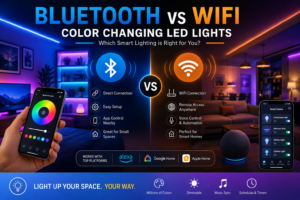
WiFi Control
WiFi-enabled systems allow remote access from anywhere. Users can adjust lighting settings, monitor schedules, and activate scenes using smartphone applications.
Bluetooth Control
Bluetooth systems offer direct local control without relying on internet connectivity. They are often simpler to install and ideal for smaller kitchens.
Voice Assistants
Integration with Amazon Alexa, Google Assistant, and Apple HomeKit enables hands-free operation. Simple voice commands can activate cooking scenes, dim lights, or change colors instantly.
Scheduling and Automation
Automation features improve convenience and energy savings. Lights can automatically turn on during meal preparation times and switch to low-level illumination at night.
Scene Presets
Custom scenes allow homeowners to save preferred lighting combinations for specific activities such as cooking, dining, entertaining, or cleaning.
Mobile App Control
Advanced applications provide extensive customization options, including brightness adjustment, color selection, timers, and synchronization across multiple lighting zones.
Choosing the Best Kitchen LED Strip Lights
When shopping for kitchen LED lighting, consider these essential factors:
- Brightness measured in lumens
- Color temperature range
- Waterproof protection ratings
- Length requirements
- Smart control compatibility
- Installation complexity
A practical buyer’s checklist should prioritize brightness first, followed by smart features and installation requirements. For food preparation areas, select strips capable of producing bright white illumination. For decorative installations, focus on color quality and customization options.
Conclusion
Kitchen LED strip lights offer one of the most versatile and impactful upgrades available for modern kitchens. They improve visibility, enhance design aesthetics, reduce energy consumption, and introduce advanced smart home functionality. Whether installed under cabinets, around islands, above shelving, or along toe-kicks, color changing LEDs create a perfect balance between practicality and ambiance. Homeowners looking to modernize their kitchens can benefit significantly from combining task lighting with customizable RGB or RGBW lighting effects.
FAQs
1. Are kitchen LED strip lights worth it?
Yes. They improve visibility, enhance aesthetics, reduce energy consumption, and support smart home automation.
2. Where should LED strip lights be installed in a kitchen?
Popular locations include under cabinets, above cabinets, kitchen islands, toe-kicks, open shelves, and pantries.
3. What color LED lights are best for kitchens?
Cool white works best for cooking, while warm white creates a comfortable dining atmosphere.
4. Should I choose RGB or RGBW for my kitchen?
RGBW is typically better because it includes dedicated white LEDs for superior task lighting.
5. Are LED strip lights bright enough for food preparation?
Yes, provided they offer sufficient lumen output and are installed correctly.