Introduction
Lighting can completely change how a living room feels, and that is exactly why LED lighting ideas for living room design have become such a popular search topic. A room that feels flat in the daytime can suddenly feel warm, modern, and inviting at night with the right mix of color, brightness, and placement. According to the U.S. Department of Energy, residential LEDs use at least 75% less energy and last up to 25 times longer than incandescent lighting, while ENERGY STAR notes that LED products can produce light up to 90% more efficiently than incandescent bulbs. That combination of style and efficiency makes color changing LED lights a smart upgrade for everyday homes.
The best part is that modern lighting is no longer just about “on” and “off.” Today’s smart LED lights can help you set a movie-night scene, brighten the room for family time, or add a gentle glow when you want a calm evening. ENERGY STAR says smart lighting can use less energy when it is on and even while it is in standby, and the Department of Energy notes that LEDs are not harmed by frequent switching, which makes scene changes and automation especially practical. In other words, your living room lighting can work like a mood board that changes with your day.
Why Use Color Changing LED Lights in Your Living Room?
Color changing lighting gives you more control than a traditional bulb ever could. Instead of one fixed tone, you can shift the room from bright and energetic to soft and cozy in seconds, which is why living room LED lighting is now such a big part of modern home design. It is not just about looking stylish; it is about making one room do more jobs without adding clutter. A single setup can support reading, entertaining, relaxing, and watching TV without needing a different fixture for each moment.
Enhanced Ambiance
A living room often needs to feel different at different times of day. Bright white light can help during the afternoon, while a warmer amber or soft orange tone can make the room feel like a calm retreat in the evening. That flexibility is one reason ambient lighting is so important; it creates the base layer that shapes the whole mood of the room. When you use color-changing LEDs thoughtfully, your living room stops feeling like a simple box and starts feeling like a designed experience.
Flexible Lighting Scenes
One of the biggest advantages of RGB LED lights is the ability to create scenes. You can build a “reading” preset, a “guest” preset, a “movie” preset, and a “late-night” preset, then switch between them with a tap. This is where smart lighting automation becomes really useful, because the room begins to respond to your habits instead of forcing you to adjust everything manually. Since LEDs are built to handle frequent on-and-off use, switching scenes does not carry the same penalty you might expect from older lighting technologies.
Smart Home Integration
If your home already uses voice assistants or app controls, color changing LEDs fit in naturally. Philips Hue’s current compatibility pages show support for Amazon Alexa, Apple Home and Siri, Google Assistant, and Matter, which makes it easier to bring the lights into a wider smart home setup. That means your living room lights can join the same ecosystem as your speakers, routines, and entertainment devices. Once your lighting is part of that system, the room becomes more convenient, more responsive, and honestly a lot more fun.
Best Living Room Lighting Ideas with Color Changing LEDs
The best modern living room lighting usually combines hidden light, decorative light, and task light. That layered approach lets you shape the room instead of blasting it with a single overhead source. Color changing LEDs are especially useful here because they can be tucked away in places where the light looks softer and more architectural. The result is a cleaner, more polished room that still feels practical for real life.
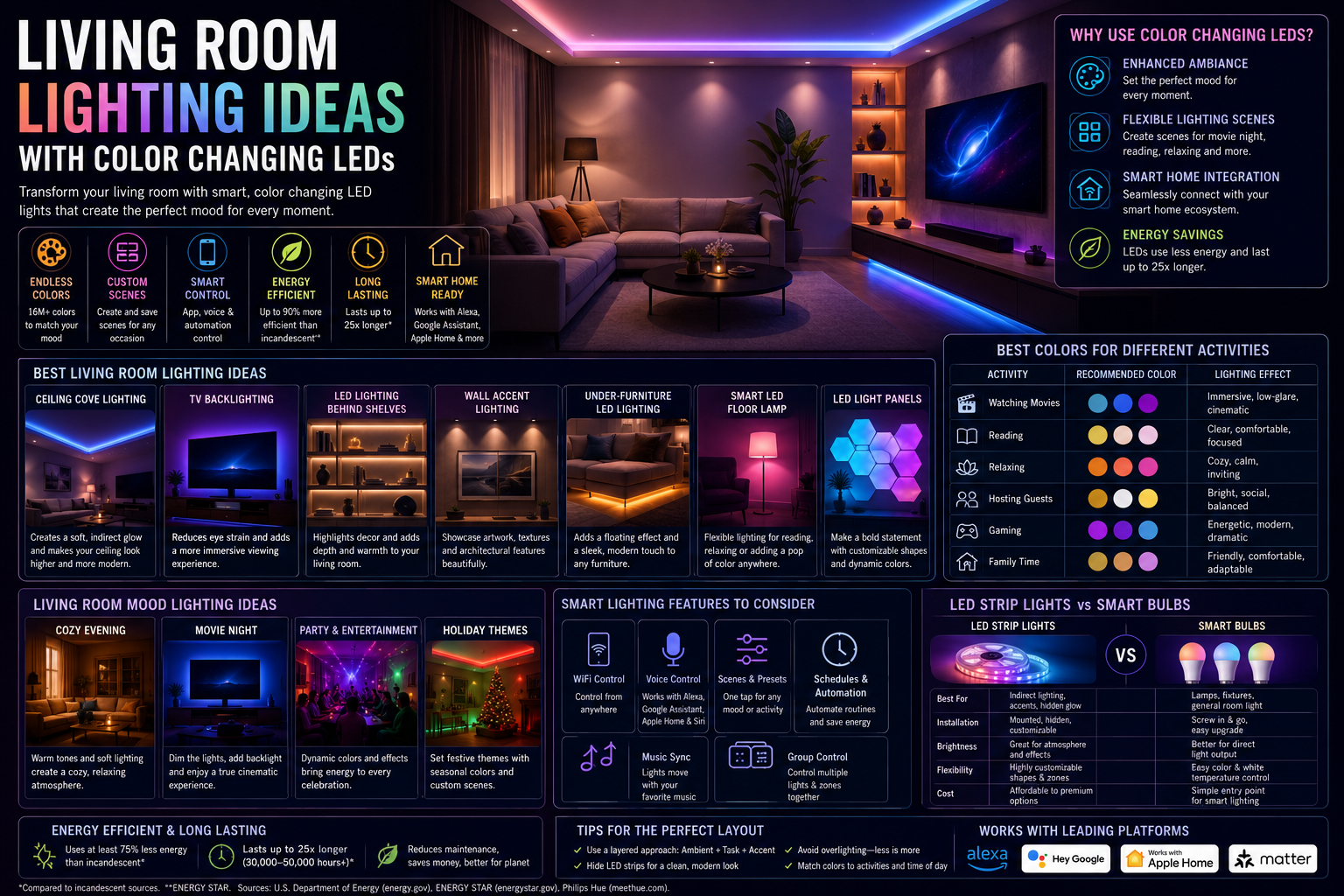
Ceiling Cove Lighting
Ceiling cove lighting is one of the most elegant ways to use LED strip lights for living room design. By hiding strips in a recess, tray ceiling, or crown molding line, you get a smooth indirect glow that looks modern without feeling flashy. It is a great choice if you want the ceiling to appear taller and the room to feel larger. This kind of installation works especially well in minimalist homes because the light itself becomes the decoration.
TV Backlighting
TV backlighting is a simple upgrade with a big visual payoff. A soft glow behind the screen can make the entertainment area feel more balanced, especially in darker rooms where the TV otherwise becomes the only bright object. If your living room doubles as a media space, this is one of the most practical forms of entertainment room lighting because it creates a more immersive viewing corner. Many people also find that a backlit screen feels less harsh than a black rectangle floating in a dark wall.
LED Lighting Behind Shelves
Lighting behind shelves is a smart way to make your décor look intentional instead of crowded. Whether you are highlighting books, framed photos, ceramics, or collectibles, hidden LEDs add depth and draw the eye to the objects you actually want people to notice. This works beautifully for display cabinets, floating shelves, and built-in units. If your goal is to make a living room feel curated rather than busy, shelf lighting is one of the easiest wins.
Wall Accent Lighting
Accent lighting is where your room starts to look designed, not just illuminated. Use LED wall lighting to spotlight artwork, textured walls, stone panels, wood slats, or any feature surface that deserves attention. A narrow beam or a subtle wash of light can turn a plain wall into a focal point. This is especially effective in contemporary homes where clean lines and strong surfaces do a lot of the visual work.
Under-Furniture LED Lighting
Under-furniture lighting adds a floating effect that feels sleek and modern. A strip under a sofa base, sideboard, console, or entertainment unit creates the illusion that the furniture is hovering just above the floor. That little bit of separation can make a room feel lighter and less crowded. It is a subtle touch, but subtle is often what makes a room feel expensive.
Smart LED Floor Lamps
A smart floor lamp is a flexible option when you do not want to commit to a full installation. It can fill a dark corner, support reading in a chair zone, or add a splash of color during gatherings. In smaller rooms, a lamp can act like a portable lighting anchor, giving you both task light and mood light in one piece. If you rent your home or simply want a low-hassle solution, this is a great place to start.
LED Light Panels
LED light panels are for homeowners who want the lighting itself to become part of the décor. Geometric panels, modular wall pieces, and decorative light tiles can create a bold, contemporary effect that feels more like art than utility. They are a strong fit for gaming corners, lounge walls, and homes that lean into a futuristic design language. Because they are customizable, you can keep the pattern simple or build something more expressive over time.
Best Colors for Different Living Room Activities
Different activities call for different tones, and the right color can change how a room feels instantly. The goal is not to chase every color on the wheel just because you can. Instead, think about the emotional job each scene needs to do. For contemporary living room lighting, color is most effective when it supports the activity rather than distracting from it.
| Activity | Recommended Color | Lighting Effect |
| Watching Movies | Deep blue, dim warm white, or soft amber | Immersive, low-glare, cinematic |
| Reading | Neutral white or warm white | Clear, comfortable, focused |
| Relaxing | Warm amber, soft orange, muted pink | Cozy, calm, inviting |
| Hosting Guests | Soft white, gold, gentle color blend | Bright, social, balanced |
| Gaming | Blue, purple, teal, or RGB gradient | Energetic, modern, dramatic |
| Family Time | Warm white or soft pastel tones | Friendly, comfortable, adaptable |
Warm colors tend to feel more relaxed and intimate, while cooler tones can feel cleaner and more energetic. For living room mood lighting, the best choice usually depends on how active or quiet the room needs to be. If the room is being used for conversation, keep colors soft and bright enough to keep faces visible. If it is a quiet evening, dimmer tones usually feel more natural and less intrusive.
Living Room Mood Lighting Ideas
Mood lighting is where RGB lighting ideas become truly useful. A great living room does not need one permanent look, because real life changes hour by hour. The same room can be a reading nook in the afternoon, a movie den after dinner, and a party space on the weekend. Color changing LEDs let you shift the atmosphere without bringing in extra furniture or clutter.
Cozy Evening Lighting
For a cozy evening, keep the light low and warm. Think soft amber, candle-like gold, or a muted peach tone that wraps the room in a gentle glow. Place the brightest light behind the seating area or around the room’s edges, not directly in people’s eyes. That creates the feeling of warmth without making the room look washed out.
Movie Night Lighting
Movie night lighting should support the screen, not compete with it. A dim glow behind the TV, soft strip lighting along a media cabinet, and a low level of side illumination are usually enough. This kind of setup makes the screen feel like the star of the room while still keeping the space comfortable. It is a simple trick, but it makes a big difference when the lights go down and the movie starts.
Party and Entertainment Lighting
For entertaining, the room can be more playful. Use color transitions, subtle pulses, or synchronized tones that match the vibe of the gathering. The key is to keep the effect stylish rather than chaotic, because a living room should still feel like a living room, not a nightclub. A controlled splash of color around shelves, furniture bases, or a feature wall creates energy without overwhelming the space.
Holiday Lighting Themes
Holiday lighting works best when it feels like part of the room, not a temporary add-on. Soft red and green for festive gatherings, icy white and blue for winter, or pastel combinations for spring events can make the room feel seasonally fresh. The beauty of color changing LEDs is that you can change the theme without buying a new set of decorations every few weeks. That makes them ideal for homeowners who like variety but still want a clean look.
Smart Living Room Lighting Features to Consider
When you choose smart LED lights, the fixtures are only half the story. The controls matter just as much because they determine how easy the system is to use every day. ENERGY STAR says smart lighting can reduce energy use when lights are on and in standby, and lighting controls such as occupancy sensors can automatically turn lights on or down when a space is occupied or empty. That makes smart lighting useful for both comfort and efficiency.
For most living rooms, the features worth prioritizing are WiFi control, voice control, scene presets, scheduling and automation, music synchronization, and group lighting control. Compatibility with Alexa, Google Assistant, and Apple Home and Siri makes the system much easier to live with, especially if the room already contains smart speakers or a streaming setup. Philips Hue’s current support pages also show Matter support, which helps connect lights across major smart home platforms. If you are building a room that should feel effortless, these features matter more than flashy extras.
LED Strip Lights vs Smart Bulbs for Living Rooms
Both options are useful, but they solve different problems. LED strip lights for living room design are best when you want indirect glow, hidden accents, or architectural effects. Smart bulbs are better when you want to replace a lamp bulb or control a standard fixture without changing the room structure. In many homes, the smartest solution is not choosing one or the other, but using both in different zones.
| Feature | LED Strip Lights | Smart Bulbs |
| Installation | Best for hidden or mounted placement | Easiest in existing lamps and fixtures |
| Decorative Effects | Strong for indirect glow and accents | Limited, but clean and simple |
| Brightness | Great for layered atmosphere | Better for direct room light |
| Cost | Can be affordable or premium depending on setup | Often the simpler entry point |
| Flexibility | Excellent for custom shapes and zones | Excellent for quick room-wide control |
Choose strip lights when the room needs visual drama, like behind a TV, below shelves, or along cove trim. Choose smart bulbs when your goal is convenience, such as controlling a reading lamp or a ceiling fixture from your phone. If you are starting from scratch, a mix of both often gives the best balance of style and practicality.
Living Room Lighting Layout Tips
Good lighting design is about layers, not just brightness. A solid living room setup usually includes ambient lighting for the overall glow, task lighting for reading or hobbies, and accent lighting for style and visual depth. That layered method keeps the room flexible and avoids the harsh, one-note look that comes from relying on a single ceiling fixture. In larger rooms, layering also helps the space feel connected instead of scattered.
For small living rooms, keep the light airy and avoid heavy contrast that chops the room into pieces. Use soft wall washes, slim strip lights, and a lamp or two instead of too many bright points. In open-concept spaces, think of lighting as a map: each zone should have its own identity, but the colors and brightness should still feel related. The smartest rooms are the ones where the eye moves naturally from one area to the next without hitting dark corners or overlit hotspots.
Common Living Room Lighting Mistakes to Avoid
One of the biggest mistakes is overlighting the room. Too much brightness can flatten texture, erase mood, and make a comfortable room feel more like a waiting area. Another common issue is poor LED placement, especially when strips are visible instead of hidden. If the source itself becomes the main thing you notice, the effect usually feels less polished.
It is also easy to overuse color changes. Just because you can cycle through every hue does not mean you should. Too many fast changes can make the room feel restless instead of relaxing. The safest approach is to treat color like seasoning: use enough to improve the dish, not enough to overpower it. Natural light matters too, so make sure your LED plan works with windows during the day instead of fighting them.
Budget-Friendly Living Room LED Lighting Ideas
A beautiful living room does not need a huge lighting budget. A simple starter setup can begin with one smart lamp, one strip behind the TV, and one or two smart bulbs in existing fixtures. That gives you immediate mood control without rewiring the room or buying a full smart ecosystem on day one. Because LEDs are efficient and long-lasting, even a modest setup can feel like a serious upgrade.
For a mid-range approach, add cove strips, shelf lighting, or a more advanced smart lighting brand that supports scenes and automation. This is where you begin to build a room that changes for different uses instead of staying locked into one look. For a premium setup, combine hidden architectural lighting, app control, voice control, and synchronized entertainment features. That level of control turns the living room into a flexible design system rather than a fixed arrangement.
If you are keeping costs low, the smartest trick is to start with the surfaces that reflect light the best. Painted walls, white ceilings, and glossy décor can make a small amount of light look richer and more expensive. That means you do not always need more fixtures; sometimes you just need better placement.
Energy Efficiency and Long-Term Benefits
LEDs are not just stylish; they are practical over the long run. The Department of Energy says residential LEDs use at least 75% less energy and last up to 25 times longer than incandescent lighting, while ENERGY STAR notes that LED products can be up to 90% more efficient than incandescent bulbs. The DOE also says a good-quality white LED product can have a useful life of 30,000 to 50,000 hours or longer. That means fewer replacements, less waste, and less money spent over time.
Smart automation can push the savings even further. When your lights turn down automatically in the evening or switch off when a room is empty, you stop wasting energy on lighting you are not using. The Department of Energy notes that occupancy sensors save energy by turning lights on when someone enters and off or down when the space is unoccupied. Over time, that kind of quiet efficiency adds up, especially in a room that gets used every day.
Conclusion
The best LED lighting ideas for living room design are the ones that make the space feel flexible, comfortable, and personal. With color changing LED lights, you can create ambient glow, accent key features, support movie nights, and make everyday life feel a little more polished. When you combine hidden strips, smart bulbs, floor lamps, and scene presets, the room starts to work like a living system instead of a static box. That is the real power of smart home lighting.
The smartest approach is to layer your lights, choose colors that match the activity, and use automation to make the room easier to live in. If you want a clean, modern result, focus on indirect light, careful placement, and a few reliable scenes instead of too many dramatic effects. Once the basics are right, the living room becomes easier to relax in, easier to entertain in, and much more enjoyable to come home to.
FAQ Section
1. What are the best LED lighting ideas for living rooms?
The best ideas usually include ceiling cove lighting, TV backlighting, shelf lighting, wall accent lighting, smart floor lamps, and hidden LED strips. A layered setup creates more depth and gives you different moods for different activities.
2. Are color changing LED lights suitable for living rooms?
Yes. They are especially useful in living rooms because the space often serves multiple purposes, from relaxing to entertaining. Color changing lighting makes it easier to match the room to the moment.
3. What color LED lights make a living room feel cozy?
Warm amber, soft orange, and dim warm white usually feel the coziest. These tones are gentle, inviting, and better suited to evening relaxation than bright cool colors.
4. Are LED strip lights good for living rooms?
Yes. They are excellent for indirect lighting, especially behind TVs, under furniture, inside shelves, or along ceiling coves. They add style without taking up floor space.
5. Can I control living room LED lights with my phone?
Yes. Many smart LED systems support app control, scene presets, timers, and voice assistants. Philips Hue, for example, shows compatibility with Alexa, Apple Home and Siri, Google Assistant, and Matter.