Lighting is one of the most important elements of a successful retail environment. It affects how products look, how customers feel, and how long shoppers stay inside a store. Well-designed retail LED lighting can improve product presentation, strengthen brand identity, and create a more enjoyable shopping experience.
Introduction
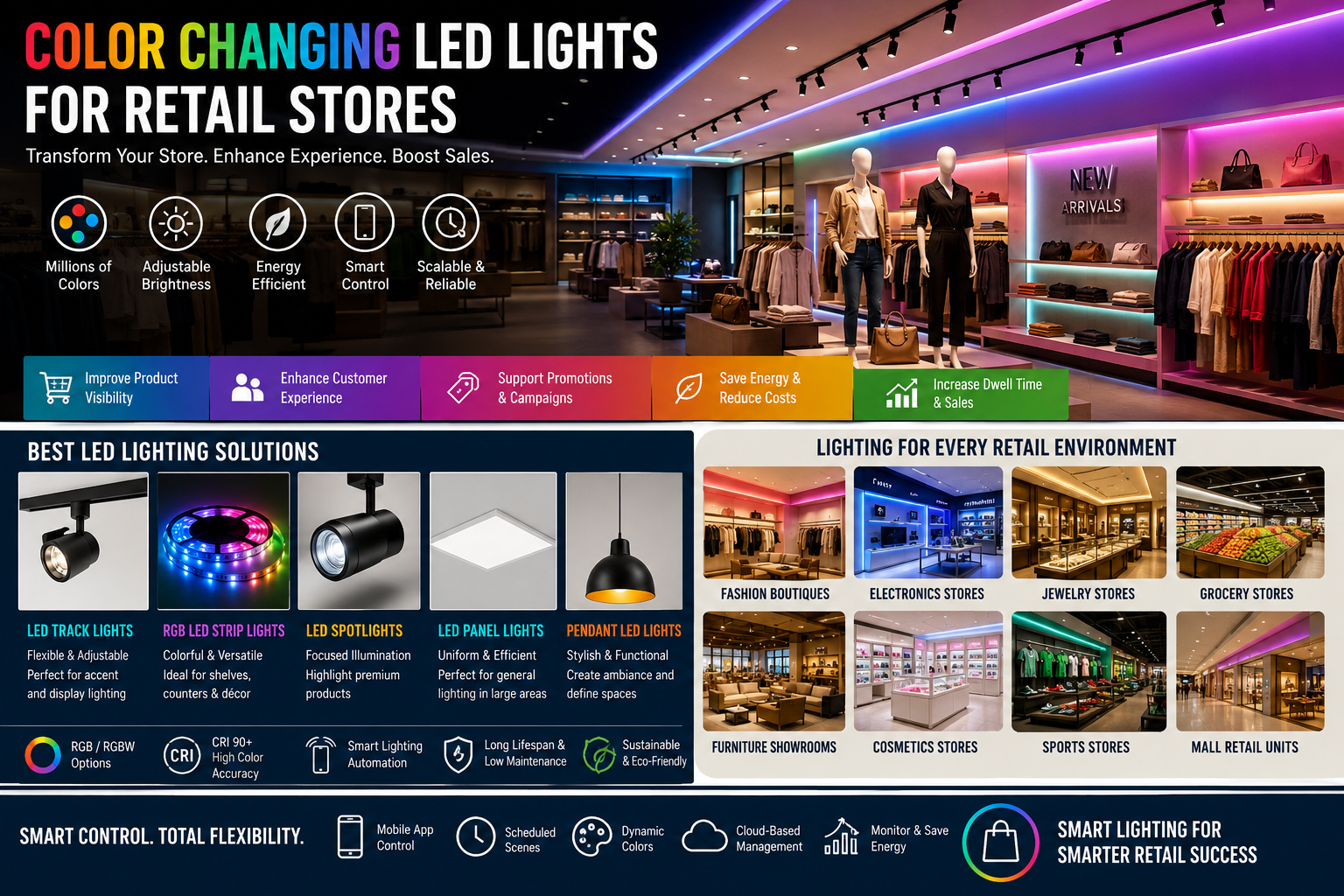
Modern color changing LED lights for retail stores offer even greater flexibility. Retailers can adjust colors, brightness, and lighting scenes to match seasonal promotions, product launches, or brand themes. This helps stores create engaging displays while reducing energy consumption and maintenance costs.
In this guide, you’ll learn how commercial LED lighting improves customer experience, supports visual merchandising, and helps you choose the best lighting system for different retail environments.
Color changing LED lights make it easy to transform the look and feel of any space with customizable colors, adjustable brightness, and dynamic lighting effects. Whether used in homes, retail stores, hospitality venues, or entertainment spaces, these versatile lighting solutions enhance ambiance, highlight key features, and improve energy efficiency. Learn more in our complete guide to Color Changing LED Lights to discover the best options, features, and applications for your next lighting project.
Why Retail LED Lighting Matters
Improving Product Visibility
Good lighting helps customers see products clearly and appreciate their true colors and details. Proper illumination also makes displays more attractive and encourages shoppers to explore the store.
Benefits include:
- Highlights product colors and textures
- Reduces shadows and dark areas
- Improves display visibility
- Makes products easier to compare
- Encourages purchase decisions
Enhancing Customer Experience
Comfortable lighting creates a welcoming atmosphere that encourages customers to stay longer. Bright yet balanced lighting also makes shopping more enjoyable and less tiring.
Key advantages:
- Creates a welcoming environment
- Improves shopping comfort
- Makes store navigation easier
- Builds customer confidence
- Encourages repeat visits
Strengthening Brand Identity
Lighting reflects your brand’s personality and helps create a memorable shopping experience. Different lighting styles can communicate luxury, innovation, or warmth depending on your business.
Examples include:
- Warm lighting for luxury boutiques
- Cool white lighting for electronics stores
- RGB lighting for modern retail spaces
- Accent lighting for premium products
- Dynamic colors for promotional events
Increasing Dwell Time
Customers tend to spend more time in stores with attractive lighting. Longer visits often lead to increased product interaction and higher sales opportunities.
Benefits include:
- Encourages customers to browse
- Improves product engagement
- Supports impulse purchases
- Increases average shopping time
- Helps improve conversion rates
Supporting Promotional Campaigns
Color-changing lighting allows retailers to quickly update the store atmosphere for different events and marketing campaigns without replacing decorations.
Popular applications:
- Holiday promotions
- Seasonal collections
- Flash sales
- Product launches
- Brand campaigns
Benefits of Color Changing LED Lights in Retail Stores
Flexible Store Atmosphere
Color-changing LEDs make it easy to transform the mood of a retail space. Retailers can create different lighting scenes throughout the day or for special events.
Advantages include:
- Creates unique shopping experiences
- Matches seasonal themes
- Supports brand identity
- Refreshes store appearance
- Improves customer engagement
Seasonal Promotions
Retailers can quickly change lighting colors to match holidays or promotional campaigns, making displays more eye-catching.
Ideal for:
- Christmas displays
- Black Friday sales
- Valentine’s Day promotions
- Summer campaigns
- New product launches
Product Highlighting
Accent lighting directs customer attention toward featured products. Combining spotlights with RGB lighting creates attractive displays that stand out.
Best applications:
- Window displays
- Promotional tables
- Premium merchandise
- New arrivals
- Limited-edition products
Energy Efficiency
LED technology consumes significantly less electricity than traditional lighting while providing excellent brightness and performance.
Business benefits:
- Lower electricity bills
- Reduced heat output
- Longer operating life
- Lower carbon footprint
- Improved sustainability
Reduced Maintenance Costs
LED fixtures have a long lifespan, reducing the need for frequent replacements and lowering maintenance expenses.
Benefits include:
- Fewer lamp replacements
- Reduced labor costs
- Less business disruption
- Longer fixture life
- Lower maintenance budgets
Smart Lighting Automation
Modern smart retail lighting systems allow businesses to automate lighting schedules and adjust scenes with minimal effort.
Automation features:
- Scheduled lighting scenes
- Mobile app control
- Brightness adjustment
- Holiday lighting programs
- Remote monitoring
- Energy-saving schedules
Best Types of LED Lighting for Retail Stores
LED Track Lights
LED track lights are ideal for highlighting products and creating flexible retail displays. Their adjustable design makes them popular in boutiques and showrooms.
Best for:
- Fashion stores
- Art galleries
- Electronics stores
- Furniture showrooms
- Promotional displays
Advantages:
- Adjustable direction
- Easy repositioning
- Excellent accent lighting
- Professional appearance
RGB LED Strip Lights
RGB LED strip lights add colorful effects to shelves, counters, display cases, and architectural features.
Ideal applications:
- Shelf lighting
- Display cabinets
- Store counters
- Window displays
- Wall features
Advantages:
- Millions of color options
- Flexible installation
- Low energy consumption
- Great visual impact
LED Spotlights
Spotlights provide focused illumination that draws attention to premium products and featured displays.
Common uses:
- Jewelry stores
- Cosmetics displays
- Luxury products
- Window displays
- Promotional items
Benefits:
- High brightness
- Precise beam control
- Excellent product emphasis
LED Panel Lights
LED panel lights provide uniform general lighting for larger retail spaces.
Suitable for:
- Supermarkets
- Grocery stores
- Pharmacies
- Department stores
- Shopping malls
Advantages:
- Even illumination
- Energy efficient
- Low glare
- Modern appearance
Pendant LED Lighting
Pendant lights combine decorative style with functional lighting. They help define shopping areas while enhancing interior design.
Best for:
- Boutiques
- Cafés
- Lifestyle stores
- Furniture showrooms
Benefits:
- Stylish appearance
- Creates focal points
- Enhances store atmosphere
Display Cabinet Lighting
Integrated cabinet lighting highlights valuable merchandise without creating glare.
Perfect for:
- Jewelry
- Watches
- Luxury accessories
- Collectibles
Advantages:
- Premium presentation
- Better product visibility
- Elegant appearance
Shelf Lighting
Shelf lighting improves visibility and helps products stand out, especially in supermarkets and convenience stores.
Benefits include:
- Brightens shelves
- Improves product visibility
- Supports impulse buying
- Creates a clean retail look
Retail Lighting Comparison Table
| Lighting Type | Best For | Main Advantages | Limitations |
| LED Track Lights | Boutiques, showrooms | Adjustable and flexible | Higher installation cost |
| RGB LED Strip Lights | Shelves, displays | Color-changing effects | Not primary lighting |
| LED Spotlights | Premium products | Focused illumination | Limited coverage |
| LED Panel Lights | Large retail stores | Uniform lighting | Less decorative |
| Pendant LED Lighting | Boutiques | Decorative and functional | Requires ceiling height |
| Display Cabinet Lighting | Jewelry displays | Premium presentation | Small coverage area |
| Shelf Lighting | Retail shelving | Better product visibility | Additional wiring required |
Retail Lighting Strategies by Store Type
Different retail businesses have different lighting requirements. Choosing the right retail LED lighting helps improve product presentation, customer engagement, and sales performance.
Fashion Boutiques
Fashion stores need lighting that accurately shows clothing colors, fabrics, and textures. Layered lighting creates an inviting shopping atmosphere while highlighting featured collections.
Recommended lighting:
- LED track lights
- Adjustable spotlights
- RGB LED accent lighting
- Warm white ambient lighting
Lighting goals:
- Showcase fabric details
- Create a premium atmosphere
- Highlight new arrivals
- Improve fitting room lighting
Electronics Stores
Electronics stores benefit from bright, modern lighting that complements technology products. Dynamic RGB lighting can also create an innovative shopping environment.
Recommended lighting:
- Cool white LED panels
- RGB LED strip lights
- Spotlights for featured products
- Smart lighting systems
Lighting goals:
- Enhance product displays
- Create a modern appearance
- Highlight new technology
- Support interactive demonstrations
Jewelry Stores
Jewelry requires precise lighting to maximize brilliance and sparkle. High-quality fixtures with excellent color rendering are essential.
Recommended lighting:
- High-CRI LED spotlights
- Display cabinet lighting
- Accent lighting
- Adjustable beam fixtures
Lighting goals:
- Increase gemstone brilliance
- Highlight precious metals
- Reduce unwanted reflections
- Create a luxury shopping experience
Grocery Stores
Grocery stores require bright, uniform lighting that makes products appear fresh while providing comfortable visibility throughout the store.
Recommended lighting:
- LED panel lights
- Shelf lighting
- Display case lighting
- Energy-efficient ceiling fixtures
Lighting goals:
- Improve product visibility
- Enhance food freshness
- Reduce energy costs
- Create a clean shopping environment
Furniture Showrooms
Furniture stores use layered lighting to recreate real-life living spaces. Warm lighting helps customers imagine products in their own homes.
Recommended lighting:
- Pendant LED lights
- Track lighting
- LED floor lamps
- RGB accent lighting
Lighting goals:
- Create realistic room settings
- Highlight furniture textures
- Improve customer comfort
- Enhance premium displays
Beauty & Cosmetics Stores
Cosmetic products require accurate lighting that reflects true skin tones and product colors.
Recommended lighting:
- High-CRI LED lighting
- Mirror lighting
- Shelf lighting
- Display lighting
Lighting goals:
- Improve color accuracy
- Enhance product testing
- Create an elegant atmosphere
- Increase customer confidence
Sports Equipment Stores
Sports retailers often use bright lighting combined with dynamic RGB effects to create an energetic shopping experience.
Recommended lighting:
- LED track lights
- RGB LED strips
- Spotlights
- Smart lighting controls
Lighting goals:
- Create excitement
- Highlight featured products
- Improve product visibility
- Reinforce an active brand image
Shopping Mall Retail Units
Mall stores require flexible lighting that attracts customers from busy walkways while supporting frequent promotional changes.
Recommended lighting:
- Track lights
- Window display lighting
- RGB accent lighting
- Smart lighting systems
Lighting goals:
- Increase storefront visibility
- Attract passing shoppers
- Support seasonal campaigns
- Strengthen brand identity
Choosing the Right Color Changing LED Lighting System
Selecting the right lighting system depends on your store layout, product type, budget, and business objectives.
Brightness (Lumens)
Choose brightness based on the retail environment. General lighting should provide comfortable visibility, while accent lighting should emphasize featured products.
Consider:
- Store size
- Ceiling height
- Product displays
- Natural daylight
- Customer comfort
Color Temperature
Different color temperatures create different shopping experiences.
| Color Temperature | Best For |
| 2700K–3000K | Luxury boutiques, furniture stores |
| 3500K–4000K | Clothing and cosmetics |
| 5000K–6500K | Electronics, supermarkets |
RGB vs RGBW
Both systems offer color-changing capabilities, but they serve different purposes.
| RGB | RGBW |
| Millions of colors | Colors plus pure white light |
| Decorative lighting | Decorative and functional lighting |
| Lower cost | Better product visibility |
| Best for effects | Best for retail displays |
Color Rendering Index (CRI)
A high CRI helps products appear natural and attractive under artificial lighting.
Recommended CRI:
- CRI 90+ for fashion stores
- CRI 95+ for jewelry
- CRI 90+ for cosmetics
- CRI 80–90 for supermarkets
Smart Lighting Controls
Smart controls simplify daily lighting management while improving energy efficiency.
Useful features:
- Mobile app control
- Scene selection
- Scheduling
- Remote access
- Brightness adjustment
DMX & Automation
DMX lighting control allows retailers to create synchronized lighting scenes across multiple fixtures.
Ideal for:
- Shopping malls
- Large showrooms
- Window displays
- Product launches
- Promotional events
Energy Efficiency
Modern LED systems reduce electricity consumption without sacrificing brightness.
Benefits include:
- Lower operating costs
- Reduced heat generation
- Longer fixture lifespan
- Improved sustainability
Installation Budget
Balance your budget with long-term performance and maintenance savings.
Budget considerations:
- Lighting fixtures
- Controllers
- Power supplies
- Installation costs
- Future expansion
Buyer’s Checklist
Before purchasing a commercial LED lighting system, consider the following:
✔ Define your lighting goals
✔ Measure your retail space
✔ Choose the right fixture types
✔ Select suitable brightness levels
✔ Choose the correct color temperature
✔ Compare RGB and RGBW systems
✔ Look for CRI 90 or higher
✔ Select smart lighting controls
✔ Verify energy efficiency ratings
✔ Plan for future expansion
✔ Calculate maintenance costs
✔ Purchase from a trusted manufacturer
Smart Lighting for Retail Stores
Smart lighting allows retailers to automate lighting scenes, reduce operating costs, and deliver a consistent shopping experience.
Scheduled Lighting Scenes
Automatic schedules ensure lighting changes throughout the day without manual adjustments.
Examples:
- Opening hours
- Peak shopping periods
- Evening ambience
- Closing time dimming
Holiday Promotions
Retailers can instantly activate seasonal lighting themes for marketing campaigns.
Popular themes:
- Christmas
- Halloween
- Valentine’s Day
- Black Friday
- Summer promotions
Dynamic Window Displays
Animated lighting attracts attention and encourages more customers to enter the store.
Benefits:
- Increases foot traffic
- Highlights featured products
- Creates memorable displays
- Improves brand visibility
Customer Engagement
Interactive lighting creates a more enjoyable shopping experience and encourages customers to spend more time in-store.
Advantages:
- Enhances store atmosphere
- Supports visual merchandising
- Creates memorable experiences
- Encourages social media sharing
Mobile App Control
Many smart systems allow retailers to control lighting directly from a smartphone or tablet.
Features include:
- Brightness adjustment
- Color selection
- Scene activation
- Remote management
- Multi-store control
Cloud-Based Management
Cloud platforms simplify lighting management across multiple retail locations.
Benefits:
- Remote monitoring
- Automatic updates
- Performance tracking
- Centralized management
- Consistent brand lighting
Installation Best Practices
Proper installation ensures your retail LED lighting delivers consistent performance, energy efficiency, and long-term reliability.
Fixture Placement
Place fixtures where they provide balanced illumination without creating glare or harsh shadows. Layering ambient, task, and accent lighting produces the best results.
Best practices:
- Space fixtures evenly
- Aim spotlights at featured products
- Avoid dark corners
- Minimize glare
- Balance ambient and accent lighting
Display Lighting
Display lighting should draw attention to key products without overwhelming the customer.
Recommended tips:
- Highlight featured displays
- Use adjustable spotlights
- Keep lighting consistent
- Avoid excessive brightness
- Refresh lighting with seasonal displays
Accent Lighting
Accent lighting creates focal points and adds depth to the retail environment.
Ideal applications:
- Window displays
- Promotional areas
- Premium products
- Brand signage
- Feature walls
Power Supply Planning
Choose reliable power supplies that match the voltage and wattage requirements of your LED lighting system.
Remember to:
- Calculate total power load
- Add 20–30% capacity for safety
- Use quality LED drivers
- Plan for future expansion
- Protect against power surges
Cable Management
Organized wiring improves safety and simplifies maintenance.
Best practices:
- Hide cables whenever possible
- Use cable trays or conduits
- Label electrical connections
- Separate power and control cables
- Allow easy access for maintenance
Safety Considerations
Always follow local electrical regulations and manufacturer recommendations during installation.
Safety checklist:
- Use certified components
- Install proper circuit protection
- Ensure adequate ventilation
- Prevent moisture exposure
- Test the system before opening the store
Installation Planning Checklist
Before installation, make sure you have completed the following:
✔ Measure the retail space accurately
✔ Create a lighting layout
✔ Select appropriate fixtures
✔ Confirm power requirements
✔ Plan lighting zones
✔ Choose smart controllers
✔ Verify cable routing
✔ Test fixture placement
✔ Program lighting scenes
✔ Inspect the entire system before operation
Common Retail Lighting Mistakes to Avoid
Avoiding common mistakes helps improve customer experience and protects your investment.
Uneven Lighting
Dark areas and overly bright spots make stores look unprofessional.
Solution:
- Distribute fixtures evenly
- Combine ambient and accent lighting
- Test illumination before opening
Excessive Brightness
Too much brightness can cause discomfort and reduce product appeal.
Avoid by:
- Selecting the correct lumen output
- Using dimmers when needed
- Balancing natural and artificial light
Poor Color Rendering
Low-quality lighting can distort product colors and reduce customer confidence.
Recommendation:
- Choose LED fixtures with CRI 90 or higher
- Test lighting with actual products
- Match lighting to product type
Ignoring Product Colors
Different products require different lighting temperatures.
Examples:
- Warm lighting for furniture
- Neutral lighting for clothing
- Cool lighting for electronics
- High-CRI lighting for cosmetics
Lack of Lighting Zones
Using the same lighting throughout the store limits flexibility.
Create separate zones for:
- Window displays
- Checkout counters
- Promotional areas
- General shopping
- Premium displays
Overcomplicated Control Systems
Complex controls can confuse staff and reduce efficiency.
Choose systems that offer:
- Easy scheduling
- Simple mobile control
- User-friendly interfaces
- Reliable automation
Poor Maintenance Planning
Ignoring maintenance can reduce lighting quality over time.
Best practices:
- Clean fixtures regularly
- Replace damaged components promptly
- Inspect wiring periodically
- Monitor lighting performance
Measuring the Success of Retail LED Lighting
Tracking performance helps determine whether your lighting investment is delivering measurable business value.
Customer Dwell Time
Customers who stay longer often purchase more products.
Monitor:
- Average visit duration
- Time spent in display areas
- Customer movement patterns
Product Visibility
Evaluate whether products are easier to find and more visually appealing.
Look for improvements in:
- Display quality
- Customer interaction
- Product engagement
- Window display performance
Energy Consumption
Compare electricity usage before and after upgrading to LED lighting.
Track:
- Monthly energy bills
- Power consumption
- Operating efficiency
- Return on investment
Maintenance Costs
LED systems typically require fewer replacements than traditional lighting.
Measure:
- Replacement frequency
- Maintenance expenses
- Labor costs
- Fixture lifespan
Customer Feedback
Customer opinions provide valuable insight into lighting performance.
Collect feedback through:
- Online reviews
- Surveys
- Staff observations
- Social media comments
Sales Performance
Good lighting can positively influence purchasing decisions.
Key metrics:
- Sales revenue
- Conversion rate
- Average transaction value
- Promotional campaign results
Frequently Asked Questions
1. Why is retail LED lighting important?
Retail LED lighting improves product visibility, enhances customer experience, reduces energy costs, and supports stronger visual merchandising.
2. Are color changing LED lights suitable for retail stores?
Yes. They allow retailers to adjust lighting for promotions, seasonal campaigns, and different shopping experiences.
3. What is the best lighting for product displays?
LED track lights, spotlights, and display cabinet lighting are excellent choices for highlighting products.
4. How does RGB lighting improve customer experience?
RGB lighting creates engaging atmospheres, highlights promotions, and helps stores deliver memorable shopping experiences.
5. What CRI is recommended for retail lighting?
A CRI of 90 or higher is recommended for most retail environments, while jewelry and cosmetics stores often benefit from CRI 95+.
6. Can smart LED lighting reduce operating costs?
Yes. Smart controls optimize energy usage through scheduling, dimming, and automation.
7. Are LED strip lights suitable for shelves?
Yes. LED strip lights provide attractive shelf illumination and improve product visibility.
8. How often should retail lighting be maintained?
Inspect lighting systems every few months and clean fixtures regularly to maintain optimal performance.
9. Which LED lights are best for clothing stores?
LED track lights with high CRI and adjustable spotlights provide excellent lighting for fashion retail.
10. Is RGBW better than RGB for retail?
RGBW is generally better because it provides vibrant colors along with high-quality white light for everyday retail operations.
11. Can retail lighting be automated?
Yes. Smart lighting systems support scheduling, remote control, mobile apps, and cloud-based management.
12. How do I choose the right retail lighting system?
Consider your store layout, product type, brightness, CRI, color temperature, control system, energy efficiency, and budget.
Conclusion
Modern retail LED lighting is more than just illumination—it is a powerful business tool that enhances product presentation, improves customer engagement, and strengthens brand identity. By combining color changing LED lights for retail stores, smart controls, and a well-planned lighting design, retailers can create flexible shopping environments that adapt to seasonal promotions, marketing campaigns, and evolving customer expectations.
Choosing the right fixtures, color temperatures, and automation features helps improve energy efficiency, reduce maintenance costs, and deliver a consistent shopping experience across every area of the store. Whether you’re upgrading a boutique, supermarket, electronics store, or showroom, investing in high-quality commercial LED lighting can provide long-term operational and financial benefits.