What Is a Beam Light?
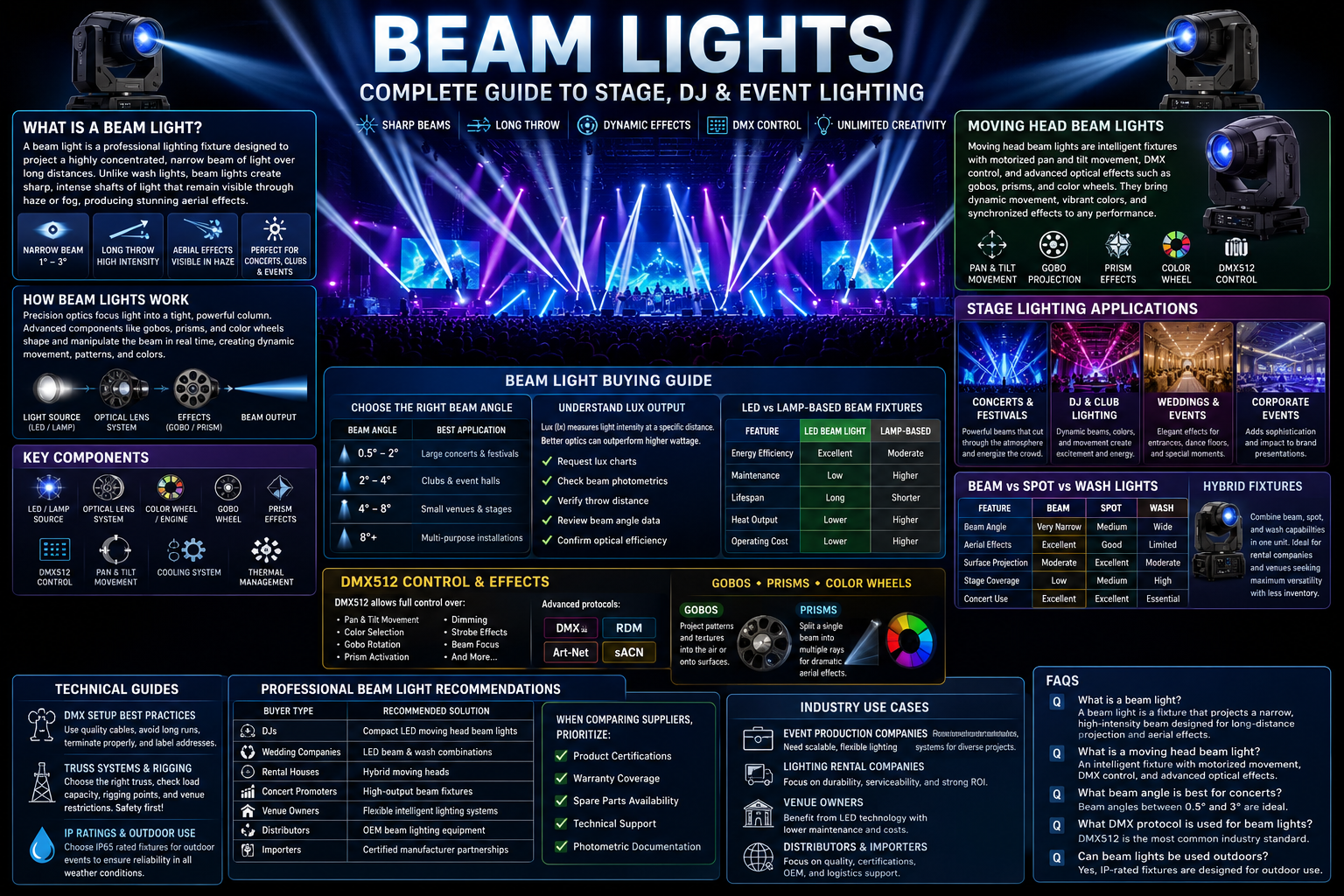
A beam light is a professional lighting fixture designed to project a highly concentrated, narrow beam of light over long distances. Unlike wash lights that spread illumination across a wide area, beam lights create sharp, intense shafts of light that remain visible through haze, fog, or atmospheric effects. Modern beam fixtures are widely used in concert lighting, festivals, DJ productions, theaters, corporate events, and large-scale event productions.
Professional beam lights typically use advanced optics, narrow beam angles, intelligent movement systems, and DMX control protocols to create dynamic visual effects. Industry guides indicate that professional beam fixtures commonly feature beam angles between 1° and 3°, allowing them to produce the iconic aerial effects seen in concerts and live events.
The popularity of beam lighting continues to grow because audiences increasingly expect immersive experiences rather than simple illumination. Today’s lighting designers use beam fixtures as visual storytelling tools, creating movement, energy, and emotional impact throughout a performance. Whether it’s a rock concert, nightclub show, wedding reception, or corporate launch event, beam lights help transform ordinary spaces into unforgettable environments.
How Beam Lights Work
Professional beam lights rely on precision optics to focus light into an extremely narrow and powerful column. Instead of spreading illumination broadly, the fixture concentrates light energy into a tight beam that travels long distances while maintaining clarity. When haze or fog is introduced into the environment, these beams become dramatically visible, creating the aerial effects audiences associate with modern stage productions.
Most professional fixtures include advanced optical systems featuring specialized lenses, gobos, prisms, and color wheels. These components shape and manipulate the beam in real time. A single fixture can create rotating patterns, split beams into multiple rays, project textures, and rapidly change colors. According to recent professional lighting guides, beam fixtures often integrate prisms, gobos, and intelligent movement systems to maximize creative flexibility while reducing the number of fixtures needed in a rig.
Key Components of Professional Beam Lights
Professional beam lighting equipment typically includes:
- High-output LED or discharge light source
- Precision optical lens system
- Color wheel or color-mixing engine
- Gobo wheel
- Prism effects
- DMX512 control system
- Motorized pan and tilt movement
- Cooling and thermal management system
These components work together to deliver the brightness, movement, and visual effects demanded by modern productions.
Beam Light Buying Guides
Choosing the right beam light for events requires understanding several technical specifications. Buyers often focus exclusively on wattage, but experienced lighting professionals know that optics, beam angle, and lux output matter just as much as raw power. Recent industry discussions emphasize that beam quality and optical design frequently have a greater impact than fixture wattage alone.
Beam Light Buying Guides provide detailed information to help you choose the right lighting solution for different events and applications. Explore expert tips on beam angles, features, brightness, and performance to make the best buying decision. Our guides cover everything from beginner tips to professional stage lighting requirements.
Choosing the Right Beam Angle
Beam angle determines how tightly light is focused. A narrower beam produces greater intensity and longer throw distances. Most professional beam fixtures use beam angles ranging from 0.5° to 3°. This narrow focus creates the dramatic aerial effects seen in festivals and arena concerts. Professional buying guides consistently recommend ultra-narrow beam angles for large venues and long-distance projection.
| Beam Angle | Best Application |
| 0.5°–2° | Large concerts and festivals |
| 2°–4° | Clubs and event halls |
| 4°–8° | Small venues and stages |
| 8°+ | Multi-purpose installations |
Understanding Lux Output and Brightness
Brightness isn’t just about lumens. Professional lighting designers often evaluate lux output, which measures light intensity at a specific distance. A fixture with superior optics may outperform a higher-wattage competitor because it delivers more concentrated illumination.
When comparing beam lighting systems, always request:
- Lux charts
- Beam photometrics
- Throw distance specifications
- Beam angle data
- Optical efficiency ratings
LED vs Lamp-Based Beam Fixtures
The industry is increasingly shifting toward LED beam lights because of improved efficiency, reduced maintenance, and longer lifespan. LED technology now powers many professional moving head fixtures while delivering excellent brightness and color performance. Recent industry reports show strong adoption of LED-based intelligent lighting due to energy efficiency and lower operating costs.
| Feature | LED Beam Light | Lamp-Based Beam Light |
| Energy Efficiency | Excellent | Moderate |
| Maintenance | Low | Higher |
| Lifespan | Long | Shorter |
| Heat Output | Lower | Higher |
| Operating Cost | Lower | Higher |
Moving Head Beam Lights
What Is a Moving Head Beam Light?
A moving head beam light is an intelligent fixture capable of motorized movement across horizontal and vertical axes. These fixtures can rapidly reposition beams, change colors, rotate gobos, and create synchronized effects throughout a performance.
Modern moving head fixtures have become the backbone of professional stage lighting because they replace multiple static fixtures with a single intelligent unit. Industry experts describe moving heads as programmable fixtures capable of real-time positioning, color changes, and effect generation through digital control systems.
DMX512 Control and Intelligent Lighting
DMX512 remains the industry-standard protocol for professional lighting control. Through DMX, operators can manage:
- Pan and tilt movement
- Color selection
- Gobo rotation
- Prism activation
- Dimming
- Strobe effects
- Beam focus
Professional installations increasingly combine DMX512 with advanced protocols such as RDM, Art-Net, and sACN to improve scalability and network management.
Gobos, Prisms, and Color Wheels
Gobos act like templates placed inside a fixture to project patterns onto surfaces or through the air. Prisms split a single beam into multiple rays, creating dramatic aerial effects. Color wheels allow rapid transitions between colors, while advanced fixtures may use CMY color-mixing systems.
These technologies give lighting designers immense creative freedom and help produce the complex looks expected in modern event production.
Our Moving Head Beam Lights guide explains types, benefits, performance features, and how to select the right fixture for your lighting needs.
Stage Lighting Applications
Concert Lighting Systems
Concert environments represent one of the most demanding applications for beam stage lights. Large venues require fixtures capable of projecting powerful beams across long distances while remaining visible under intense ambient conditions.
Beam fixtures excel because they create strong visual architecture in the air. Combined with haze, synchronized movement, and music cues, they transform performances into immersive spectacles. Touring productions frequently rely on moving head beam lights because of their versatility and impact.
DJ and Club Lighting
Nightclubs and DJs depend heavily on beam lighting systems because audience engagement often depends on visual energy. Fast-moving beams, color changes, and aerial effects help create excitement and reinforce musical dynamics.
A typical club setup may combine:
- Moving head beam lights
- LED PAR lights
- Wash fixtures
- Laser effects
- DMX controllers
The result is a dynamic visual environment that enhances the overall entertainment experience.
Wedding and Event Lighting
Wedding stage lighting increasingly incorporates beam fixtures for entrances, dance floors, and stage presentations. Event planners use beam spotlights to highlight key moments while creating elegant atmospheric effects.
Corporate events also benefit from beam lighting because it adds sophistication and visual impact without overwhelming presentations or branding elements.
Stage Lighting Applications explore how professional lighting solutions are used in concerts, events, theaters, and entertainment setups. Discover the best lighting techniques, equipment choices, and creative ways to enhance stage visuals and audience experiences. Learn how different lights create impactful performances.
Product Comparisons
Beam vs Spot vs Wash Lights
One of the most common questions buyers ask is: Which fixture type should I choose?
| Feature | Beam | Spot | Wash |
| Beam Angle | Very Narrow | Medium | Wide |
| Aerial Effects | Excellent | Good | Limited |
| Surface Projection | Moderate | Excellent | Moderate |
| Stage Coverage | Low | Medium | High |
| Concert Use | Excellent | Excellent | Essential |
Industry comparisons consistently identify beam, spot, and wash fixtures as the three primary categories of intelligent lighting, each serving distinct functions within a professional rig.
Hybrid Fixtures Explained
Hybrid fixtures combine beam, spot, and wash capabilities into a single unit. These fixtures are increasingly popular among rental companies and venue operators because they reduce inventory requirements while increasing flexibility.
For venues seeking maximum versatility, hybrids often provide the best long-term investment.
Product Comparisons help you evaluate different lighting solutions by comparing features, performance, brightness, and applications. Explore detailed comparisons to understand the differences between beam lights, moving head lights, and other stage lighting products. Make informed decisions with expert insights and recommendations.
Technical Guides
DMX Setup Best Practices
Reliable DMX communication is essential for professional lighting performance.
Best practices include:
- Use quality DMX cables
- Avoid excessive cable lengths
- Utilize DMX splitters when necessary
- Properly terminate DMX chains
- Label fixture addresses clearly
A well-designed DMX infrastructure minimizes troubleshooting and ensures consistent performance during live events.
Truss Systems and Rigging
The lighting rig is just as important as the fixtures themselves. Proper truss selection impacts safety, coverage, and maintenance access.
Professional installers should evaluate:
- Load capacity
- Fixture weight
- Rigging points
- Venue restrictions
- Power distribution
Never compromise safety to reduce installation costs.
IP Ratings and Outdoor Use
Outdoor event beam lights require adequate environmental protection. Modern fixtures increasingly offer IP65-rated designs that resist rain, dust, and harsh weather conditions. Industry trends show growing demand for weather-resistant fixtures in outdoor productions and touring applications.
Technical Guides provide detailed information about stage lighting technology, features, specifications, and setup processes. Explore expert resources to understand beam angles, power requirements, lighting effects, and technical factors for choosing the right equipment.
Professional Beam Light Recommendations
Different buyers require different solutions.
| Buyer Type | Recommended Solution |
| DJs | Compact LED moving head beam lights |
| Wedding Companies | LED beam and wash combinations |
| Rental Houses | Hybrid moving heads |
| Concert Promoters | High-output beam fixtures |
| Venues | Flexible intelligent lighting systems |
| Distributors | OEM beam lighting equipment |
| Importers | Certified manufacturer partnerships |
When comparing suppliers, prioritize:
- Product certifications
- Warranty coverage
- Spare parts availability
- Technical support
- Photometric documentation
Professional Beam Light Recommendations help you choose the best lighting solutions for concerts, events, and professional stage setups. Explore expert advice on performance, features, reliability, and applications to find the right beam light for your requirements.
Industry Use Cases
Event Production Companies
Event production firms require scalable lighting systems capable of adapting to diverse projects. Beam fixtures offer flexibility, portability, and strong visual impact.
Lighting Rental Companies
Rental houses prioritize durability, serviceability, and ROI. Hybrid fixtures and professional moving head systems often provide the best long-term value.
Venue Owners
Permanent installations benefit from LED technology because of lower maintenance requirements and reduced operating costs.
Distributors and Importers
Importers should focus on manufacturing quality, certification compliance, OEM capabilities, and logistics support when selecting beam light manufacturers.
What is a Beam Light?
A beam light is a professional lighting fixture that projects a narrow, high-intensity beam designed for long-distance projection and aerial lighting effects.
What Is a Moving Head Beam Light?
A moving head beam light is an intelligent lighting fixture with motorized movement, DMX control, and advanced optical effects such as gobos, prisms, and color wheels.
What Beam Angle Is Best for Concert Lighting?
For concerts, beam angles between 0.5° and 3° are commonly preferred because they create powerful aerial effects visible over long distances.
Discover how Beam Lights for Events are used across churches, schools, entertainment venues, and festivals to create impactful lighting experiences. Learn about different applications, setup requirements, and why professional beam lighting is essential for modern event production. Explore industry insights to choose the right beam lights for your venue and event needs.
Conclusion
Beam lights have become essential tools in modern stage and event production. From intimate wedding venues to massive concert tours, these fixtures create visual excitement that audiences immediately recognize and remember. Advances in LED technology, DMX control, intelligent movement systems, and weather-resistant construction have made professional beam lights more versatile and accessible than ever before. Whether you’re a venue owner, rental company, event producer, distributor, or lighting designer, understanding beam angles, optics, control systems, and fixture categories will help you make smarter purchasing decisions. The right beam lighting system doesn’t simply illuminate a space—it shapes the audience experience and elevates every performance.
FAQs
1. What is the difference between a beam light and a spotlight?
A beam light creates a narrow aerial beam, while a spotlight focuses on illuminating performers or objects.
2. Are LED beam lights better than traditional lamp fixtures?
For most applications, LED beam lights offer lower maintenance, greater efficiency, and longer lifespan.
3. What DMX protocol is used for beam lights?
DMX512 is the most common industry-standard control protocol.
4. Can beam lights be used outdoors?
Yes, IP-rated fixtures designed for outdoor use can operate safely in various weather conditions.
5. What beam angle is ideal for concerts?
Most concert productions use beam angles between 0.5° and 3°.