Introduction
Lighting is one of the most influential design elements in any hospitality space. It shapes the atmosphere, enhances food presentation, guides customer movement, and strengthens a restaurant’s brand identity. Whether guests are enjoying a fine dining experience, grabbing a quick coffee, or relaxing with friends at a rooftop lounge, the right lighting plays a major role in how they perceive the environment.
Modern restaurant LED lighting has become the preferred choice for restaurants, cafés, bars, bakeries, and hospitality venues because it combines energy efficiency with exceptional design flexibility. From warm ambient lighting in dining areas to colorful RGBW accent lighting for bars, LED technology allows businesses to create memorable customer experiences while lowering operating costs.
In this guide, you’ll learn why LED lighting for restaurants is essential, the benefits it offers, the best fixture types for different hospitality settings, and how to choose the right lighting solutions to enhance your restaurant’s atmosphere and long-term efficiency.
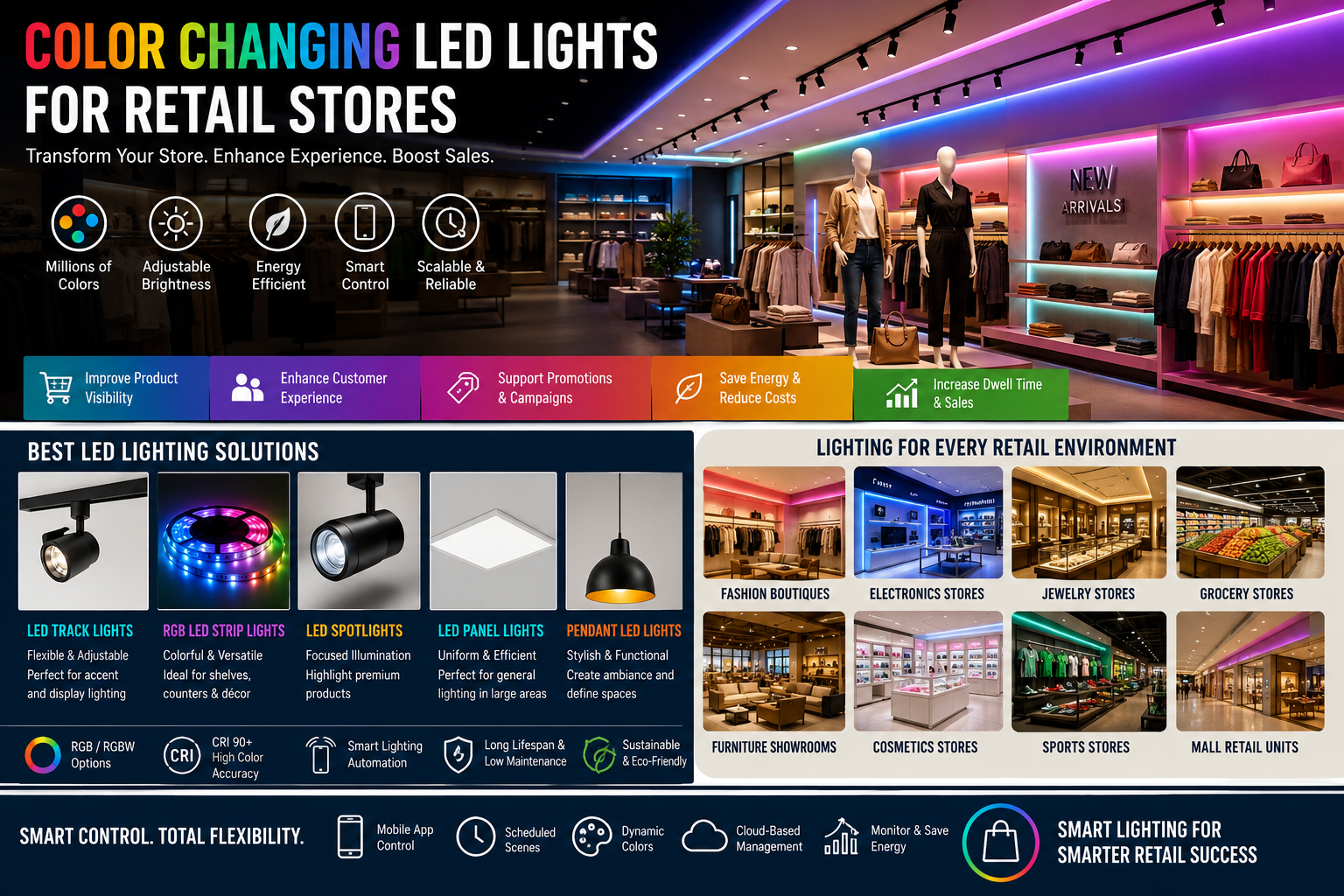
Color changing LED lights make it easy to transform the look and feel of any space with customizable colors, adjustable brightness, and dynamic lighting effects. Whether used in homes, retail stores, hospitality venues, or entertainment spaces, these versatile lighting solutions enhance ambiance, highlight key features, and improve energy efficiency. Learn more in our complete guide to Color Changing LED Lights to discover the best options, features, and applications for your next lighting project.
Why Restaurant LED Lighting Matters
Well-designed lighting does much more than illuminate a room. It directly affects customer satisfaction, staff productivity, energy consumption, and the overall success of a hospitality business.
Customer Experience
Lighting influences how comfortable guests feel from the moment they enter your restaurant. A welcoming environment encourages customers to relax, stay longer, and enjoy their dining experience.
For example:
- Warm lighting creates a cozy atmosphere for intimate dining.
- Balanced brightness makes menus easier to read.
- Accent lighting naturally draws attention to featured areas and décor.
- Comfortable lighting reduces eye strain during evening meals.
A thoughtfully designed lighting plan helps create positive first impressions and encourages repeat visits.
Dining Atmosphere
Every restaurant has its own personality, and lighting is one of the strongest tools for expressing it.
Different lighting styles create different moods:
- Soft warm lighting for romantic restaurants
- Bright neutral lighting for casual dining
- Modern RGBW lighting for bars and entertainment venues
- Relaxing ambient lighting for cafés
- Elegant pendant lighting for upscale dining
By combining multiple lighting layers, restaurant owners can create inviting spaces that reflect their brand identity throughout the day.
Food Presentation
Customers often “eat with their eyes first.” Lighting significantly affects how fresh, colorful, and appetizing food appears.
High-quality LED fixtures with an excellent Color Rendering Index (CRI) accurately reproduce food colors, making dishes appear:
- More vibrant
- More natural
- More appealing in photographs
- More attractive for social media sharing
Poor lighting can make even premium dishes look dull or unappetizing, negatively affecting the overall dining experience.
Brand Identity
Lighting helps communicate a restaurant’s unique style and personality.
For example:
- Industrial restaurants often use exposed filament LED fixtures.
- Luxury restaurants prefer elegant pendant lighting with warm tones.
- Coffee shops frequently incorporate decorative LED strip lighting and wooden accents.
- Modern restaurants may use programmable color changing LED lights for seasonal promotions or special events.
Consistent lighting design strengthens brand recognition and creates memorable customer experiences.
Energy Savings
Restaurants typically operate long hours, making lighting one of the largest contributors to electricity costs.
Modern commercial restaurant lighting systems use significantly less electricity than traditional lighting technologies while producing superior illumination.
Benefits include:
- Lower monthly utility bills
- Reduced cooling costs because LEDs generate less heat
- Higher energy efficiency
- Lower environmental impact
Many hospitality businesses recover their lighting investment through long-term energy savings.
Operational Efficiency
LED lighting improves daily restaurant operations in several ways.
Examples include:
- Longer operating life reduces replacement frequency.
- Smart lighting schedules automate opening and closing routines.
- Dimmable fixtures adjust brightness throughout the day.
- Different lighting scenes support breakfast, lunch, dinner, and evening events.
- Maintenance staff spend less time replacing failed bulbs.
The result is smoother operations and lower maintenance expenses.
Benefits of LED Lighting for Restaurants and Cafes
Modern LED lighting solutions offer much more than energy efficiency. They provide flexibility, reliability, and intelligent control that help hospitality businesses improve customer satisfaction while reducing operating costs.
Adjustable Color and Brightness
Different times of day require different lighting conditions.
For example:
- Bright lighting during breakfast
- Neutral lighting for lunchtime
- Warm, dim lighting for evening dining
- Dynamic RGBW effects for special events
Adjustable brightness allows restaurants to create the perfect atmosphere without replacing fixtures.
Lower Energy Costs
LED technology consumes significantly less electricity than halogen or incandescent lighting.
Restaurants that operate lighting for 12–18 hours daily can benefit from:
- Lower electricity bills
- Reduced energy consumption
- Faster return on investment
- Sustainable business operations
Energy-efficient restaurant lighting also supports environmental initiatives without compromising visual quality.
Long Lifespan
Commercial LED fixtures are designed for continuous operation.
Compared with traditional lighting, LEDs offer:
- Longer service life
- Consistent brightness
- Minimal lumen depreciation
- Reliable long-term performance
This makes them an excellent investment for busy hospitality environments.
Reduced Maintenance
Replacing bulbs in high ceilings, dining rooms, or decorative fixtures can be disruptive and costly.
LED systems require less frequent maintenance because they:
- Last longer
- Produce less heat
- Resist vibration
- Maintain stable performance over time
Reduced maintenance helps restaurants minimize downtime and labor costs.
Smart Lighting Automation
Smart restaurant lighting allows operators to automate daily lighting routines.
Popular features include:
- Scheduled on/off times
- Automatic dimming
- Holiday lighting scenes
- Mobile app control
- Remote management
- Multi-zone lighting adjustments
Automation improves operational efficiency while ensuring consistent customer experiences.
Flexible Interior Design
LED lighting integrates seamlessly into virtually every restaurant design style.
Popular applications include:
- Pendant lighting over dining tables
- LED strip lights beneath counters
- Wall wash lighting for feature walls
- Track lighting for artwork
- Decorative RGBW lighting for bars
- Outdoor patio lighting
This flexibility enables designers to combine functionality with aesthetics.
Best Types of LED Lighting for Restaurants
Different fixtures serve different purposes. Combining multiple lighting types creates a layered lighting design that is both practical and visually appealing.
Pendant LED Lights
Pendant fixtures are ideal for creating intimate dining spaces. They provide focused illumination while adding decorative value, making them a popular choice for fine dining restaurants, cafés, and boutique eateries.
LED Downlights
LED downlights deliver clean, even illumination across dining areas, entrances, and service zones. Their minimalist appearance blends well with modern restaurant interiors while providing excellent general lighting.
LED Strip Lights
LED strip lights are highly versatile and can be installed under counters, shelves, seating, staircases, or cabinets. They are commonly used to add ambient or accent lighting and are available in single-color, tunable white, and RGBW options.
Track Lighting
Track lighting is perfect for highlighting artwork, menu boards, display shelves, wine collections, or architectural features. Adjustable fixtures allow lighting to be redirected whenever the restaurant layout changes.
Wall Wash Lighting
Wall wash lighting evenly illuminates textured walls, murals, decorative panels, and branding elements. It creates visual depth and helps make dining spaces feel larger and more inviting.
Decorative RGB/RGBW Lighting
Color-changing RGB and RGBW LED lighting is widely used in bars, lounges, themed restaurants, and entertainment venues. These systems allow operators to change colors for special events, seasonal promotions, or different moods while RGBW adds dedicated white light for everyday use.
Outdoor Patio Lighting
Outdoor dining areas benefit from weather-resistant LED fixtures, including pathway lights, wall-mounted luminaires, string lights, bollards, and landscape lighting. These fixtures improve visibility, enhance safety, and create a welcoming atmosphere after sunset.
Restaurant LED Lighting Comparison Table
| Lighting Type | Best Applications | Advantages | Limitations |
| Pendant LED Lights | Dining tables, cafés | Decorative, warm atmosphere, focused lighting | Limited coverage area |
| LED Downlights | Dining rooms, entrances | Uniform illumination, clean appearance | Less decorative |
| LED Strip Lights | Counters, shelves, bars | Flexible, hidden installation, ambient lighting | Requires quality power supply |
| Track Lighting | Artwork, displays, wine walls | Adjustable beam direction | Higher installation cost |
| Wall Wash Lighting | Feature walls, branding | Adds depth and elegance | Best for vertical surfaces |
| RGB/RGBW LED Lighting | Bars, themed restaurants | Dynamic color effects and scene changes | Should be used in moderation |
| Outdoor LED Lighting | Patios, terraces, walkways | Weather-resistant and energy efficient | Requires IP-rated fixtures |
Lighting Recommendations by Restaurant Type
Every hospitality venue has unique lighting requirements based on its concept, target audience, operating hours, and interior design. A customized restaurant lighting design creates the right mood while improving customer comfort and operational efficiency.
Fine Dining Restaurants
Fine dining establishments focus on creating an elegant and intimate atmosphere.
Recommended lighting strategy:
- Warm white lighting (2700K–3000K)
- Decorative pendant lighting above tables
- Soft wall wash lighting for architectural features
- Dimmable LED fixtures for evening service
- Accent lighting for artwork and wine displays
Goal: Encourage guests to relax, enjoy longer meals, and experience a luxurious environment.
Casual Dining Restaurants
Casual restaurants require lighting that feels comfortable, welcoming, and practical.
Recommended lighting strategy:
- Neutral warm lighting (3000K–3500K)
- LED downlights for general illumination
- Pendant lights above booths
- LED strip lighting under counters
- Accent lighting around decorative elements
Goal: Create a friendly environment suitable for families, groups, and everyday dining.
Cafés and Coffee Shops
A café should feel warm, inviting, and comfortable enough for customers to enjoy coffee, work remotely, or socialize.
Recommended lighting strategy:
- Warm ambient lighting
- Decorative pendant fixtures
- LED strip lighting on shelving
- Accent lighting for menu boards
- Soft wall lighting for seating areas
Goal: Encourage longer visits while maintaining a cozy atmosphere.
Fast Food Restaurants
Fast-food venues prioritize visibility, cleanliness, and efficient customer flow.
Recommended lighting strategy:
- Bright neutral lighting (3500K–4000K)
- High-output LED downlights
- Illuminated menu boards
- Uniform ceiling lighting
- Bright service counters
Goal: Improve visibility, speed up ordering, and support quick customer turnover.
Bakeries
Fresh baked goods should appear warm, colorful, and appetizing.
Recommended lighting strategy:
- High-CRI LED lighting
- Display case lighting
- Warm white spotlights
- Pendant lighting over seating
- Accent lighting for featured products
Goal: Highlight product freshness and encourage impulse purchases.
Bars and Lounges
Bars often require dynamic lighting that changes throughout the evening.
Recommended lighting strategy:
- RGBW LED lighting
- LED strip lighting beneath counters
- Decorative wall lighting
- Programmable lighting scenes
- Dimmable fixtures
Goal: Create an energetic atmosphere while maintaining comfortable visibility.
Rooftop Restaurants
Outdoor rooftop venues combine architectural lighting with safety.
Recommended lighting strategy:
- Weather-resistant LED fixtures
- Decorative string lights
- Landscape lighting
- Pathway lighting
- Adjustable RGBW accent lighting
Goal: Enhance the evening atmosphere while ensuring guest safety.
Outdoor Dining Areas
Outdoor seating should remain comfortable and functional after sunset.
Recommended lighting strategy:
- IP65-rated fixtures
- Bollard lighting
- Wall-mounted lights
- LED strip lighting beneath seating
- Landscape accent lighting
Goal: Improve visibility, safety, and curb appeal.
Choosing the Right Restaurant LED Lighting System
Selecting the right LED lighting solutions involves balancing aesthetics, functionality, energy efficiency, and budget.
Brightness (Lumens)
Instead of focusing only on wattage, compare fixtures by their lumen output.
General recommendations:
| Area | Recommended Brightness |
| Dining Area | Medium brightness |
| Kitchen | High brightness |
| Bar Counter | Medium to high |
| Reception | Bright |
| Outdoor Patio | Moderate |
| Walkways | Safety-focused illumination |
Choose lighting levels that create comfort without causing glare.
Color Temperature
Color temperature influences the atmosphere.
| Color Temperature | Best Applications |
| 2700K | Fine dining |
| 3000K | Restaurants |
| 3500K | Casual dining |
| 4000K | Kitchens |
| 5000K | Food preparation areas |
Warm lighting feels comfortable, while cooler lighting supports productivity in work areas.
RGB vs RGBW
Both lighting systems offer color-changing capabilities but serve different purposes.
RGB
- Red, Green, Blue LEDs
- Millions of colors
- Decorative applications
- Entertainment venues
RGBW
- Includes dedicated white LED
- Better everyday illumination
- More natural white light
- Greater flexibility
For most hospitality businesses, RGBW provides the best balance between decorative effects and functional lighting.
Color Rendering Index (CRI)
CRI measures how accurately colors appear under lighting.
Recommended CRI:
- Dining Areas: 90+
- Food Displays: 95+
- Kitchens: 80–90
- Bakeries: 90+
A high CRI ensures meals look vibrant, fresh, and appealing.
Dimming Capabilities
Restaurants rarely require the same lighting level throughout the day.
Dimmable LED fixtures allow businesses to:
- Adjust brightness by time
- Create different moods
- Save energy
- Improve customer comfort
Smart Lighting Controls
Modern smart restaurant lighting systems offer advanced management features.
Popular options include:
- Mobile app control
- Wireless scheduling
- Occupancy sensors
- Daylight sensors
- Scene presets
- Remote monitoring
Smart controls simplify daily operations and improve consistency.
Energy Efficiency
Energy-efficient fixtures help restaurants reduce operational expenses.
Look for fixtures with:
- High lumens per watt
- Long lifespan
- Low heat output
- Reliable drivers
- Energy certifications where applicable
Efficient lighting reduces both electricity usage and cooling costs.
Budget Planning
A lighting project should consider both initial investment and long-term savings.
Include costs for:
- LED fixtures
- Controllers
- Drivers and power supplies
- Installation
- Smart control systems
- Future maintenance
Investing in quality components often results in lower lifetime operating costs.
Restaurant LED Lighting Buyer’s Checklist
Before purchasing a commercial lighting system, confirm the following:
✔ Define your restaurant concept and atmosphere.
✔ Choose the appropriate color temperature.
✔ Select high-CRI fixtures for food presentation.
✔ Verify brightness requirements for each area.
✔ Decide whether RGB or RGBW lighting is needed.
✔ Ensure fixtures support dimming.
✔ Choose energy-efficient commercial LED fixtures.
✔ Select weatherproof lighting for outdoor spaces.
✔ Plan for future maintenance access.
✔ Compare product warranties and expected lifespan.
✔ Confirm compatibility with smart lighting controls.
✔ Work with experienced commercial lighting professionals.
Smart Lighting for Restaurants and Cafes
Smart lighting enables hospitality businesses to adapt their environment throughout the day while improving efficiency and reducing manual work.
Automated Lighting Schedules
Restaurants can automatically switch lighting based on operating hours.
Examples include:
- Morning preparation
- Lunch service
- Dinner ambiance
- Closing procedures
Automation eliminates the need for manual adjustments.
Day-to-Night Scene Changes
Different times of day require different moods.
Typical schedule:
- Bright morning lighting
- Comfortable afternoon lighting
- Warm evening ambiance
- Decorative night scenes
Scene transitions create a consistent customer experience.
Holiday and Seasonal Themes
Color-changing LED lighting makes seasonal promotions more engaging.
Examples include:
- Christmas
- Valentine’s Day
- Halloween
- National celebrations
- Restaurant anniversaries
Lighting themes enhance the guest experience and strengthen brand identity.
Mobile App Control
Restaurant managers can control lighting remotely using smartphones or tablets.
Features often include:
- Brightness adjustment
- Color selection
- Scheduling
- Scene activation
- Energy monitoring
This flexibility is especially useful for multi-location hospitality businesses.
Voice Control
Compatible smart systems can integrate with voice assistants, allowing quick adjustments for selected lighting zones or predefined scenes. This convenience is particularly useful during setup or special events.
Multi-Zone Lighting
Restaurants typically have multiple functional areas that require different lighting settings.
Examples include:
- Dining room
- Private dining rooms
- Bar
- Kitchen
- Outdoor patio
- Reception
- Hallways
- Waiting area
Independent zone control improves efficiency while creating the right atmosphere throughout the venue.
Installation Best Practices
Proper installation is essential for achieving attractive, efficient, and reliable restaurant lighting.
Dining Area Lighting
- Use layered lighting with ambient, accent, and decorative fixtures.
- Install dimmable controls for flexibility.
- Avoid direct glare above dining tables.
- Maintain consistent illumination across seating areas.
Bar Lighting
- Highlight bottles and shelving with LED strip lights.
- Add accent lighting beneath counters.
- Use RGBW lighting for themed events.
- Ensure bartenders have adequate task lighting.
Kitchen Considerations
- Install bright, high-CRI lighting.
- Use moisture-resistant fixtures where needed.
- Eliminate shadows over food preparation areas.
- Choose durable commercial-grade luminaires.
Outdoor Lighting
- Select IP-rated weatherproof fixtures.
- Illuminate walkways and entrances.
- Highlight landscaping and architectural elements.
- Reduce glare while maintaining visibility.
Emergency Lighting
Ensure emergency exits, evacuation routes, and backup lighting comply with local building and safety regulations. Regular testing helps maintain readiness during power outages.
Power Supply Planning
- Size drivers correctly for connected loads.
- Allow capacity for future expansion.
- Use quality commercial-grade power supplies.
- Protect wiring from moisture and heat.
Maintenance Access
Design the system so fixtures, drivers, and controllers remain easy to inspect and replace. Accessible installations reduce maintenance time and minimize disruptions to restaurant operations.
Installation Planning Checklist
✔ Develop a lighting layout for every zone.
✔ Select appropriate fixture types.
✔ Determine required lumen levels.
✔ Choose suitable color temperatures.
✔ Specify high-CRI fixtures for dining areas.
✔ Plan dimming and smart controls.
✔ Install dedicated lighting circuits where appropriate.
✔ Use weatherproof fixtures outdoors.
✔ Verify emergency lighting coverage.
✔ Ensure easy maintenance access.
✔ Test all lighting scenes before opening.
✔ Schedule routine inspections and cleaning.
Common Restaurant Lighting Mistakes to Avoid
Even premium LED fixtures cannot deliver the desired results if the lighting plan is poorly designed. Avoiding these common mistakes will help create a comfortable dining environment while maximizing the return on your lighting investment.
Excessively Bright Dining Areas
Lighting that is too bright can make customers feel uncomfortable and reduce the cozy atmosphere many restaurants aim to create.
Recommendation:
- Use dimmable LED fixtures.
- Layer ambient, accent, and decorative lighting.
- Adjust brightness based on the time of day.
Poor CRI Affecting Food Appearance
Low-quality lighting can distort food colors, making dishes appear dull or less appetizing.
Recommendation:
- Choose LED fixtures with a CRI of 90 or higher for dining areas and food displays.
- Test lighting with actual menu items before installation.
Uneven Lighting
Dark corners and overly bright areas create an inconsistent customer experience.
Recommendation:
- Develop a professional lighting layout.
- Combine ceiling lighting with wall wash and accent lighting.
- Eliminate harsh shadows in seating areas.
Ignoring Dimming Controls
Restaurants operate differently during breakfast, lunch, dinner, and special events.
Recommendation:
- Install dimmable LED fixtures.
- Create multiple lighting scenes for different operating hours.
Overusing Colored Lighting
While color changing LED lights create exciting effects, excessive use can distract customers and affect food presentation.
Recommendation:
- Use RGBW lighting primarily in bars, lounges, or event spaces.
- Maintain warm white lighting in dining areas for everyday service.
Poor Outdoor Visibility
Outdoor seating requires a balance between ambiance and safety.
Recommendation:
- Install pathway lighting.
- Illuminate entrances and steps.
- Use weather-resistant fixtures with appropriate IP ratings.
Inadequate Maintenance Planning
Difficult-to-access fixtures increase maintenance costs and downtime.
Recommendation:
- Choose long-life commercial LED fixtures.
- Ensure drivers and controllers are accessible.
- Schedule regular inspections and cleaning.
Measuring the Success of Restaurant LED Lighting
Installing a new lighting system is only the first step. Measuring its performance helps determine whether it is improving customer experience and operational efficiency.
Customer Satisfaction
Monitor customer feedback through:
- Online reviews
- Surveys
- Social media comments
- Repeat customer rates
Positive feedback often reflects a comfortable and visually appealing dining environment
Average Dining Time
Well-designed lighting can encourage customers to stay longer, particularly in cafés and fine dining restaurants.
Track:
- Average table occupancy time
- Customer dwell time
- Repeat visits
Longer stays may lead to higher spending per customer.
Energy Consumption
Compare electricity usage before and after upgrading to LED lighting.
Measure:
- Monthly utility bills
- Energy usage by lighting systems
- Peak consumption periods
Lower energy consumption demonstrates the efficiency of modern LED technology.
Maintenance Costs
Track maintenance expenses, including:
- Bulb replacements
- Fixture repairs
- Labor costs
- Downtime
A quality LED system should significantly reduce ongoing maintenance requirements.
Staff Feedback
Restaurant employees interact with the lighting system every day.
Ask staff about:
- Visibility in work areas
- Ease of operating lighting controls
- Comfort during long shifts
- Maintenance concerns
Their feedback can identify opportunities for further improvements.
Brand Experience
Lighting should reinforce your restaurant’s identity and create memorable experiences.
Evaluate:
- Customer photos shared on social media
- Brand consistency across locations
- Event atmosphere
- Overall visual appeal
A strong lighting design enhances brand recognition and customer loyalty.
Frequently Asked Questions
1. Why is restaurant LED lighting important?
Restaurant LED lighting improves ambiance, enhances food presentation, reduces energy consumption, and supports a positive customer experience while lowering long-term operating costs.
2. What color temperature is best for restaurants?
Warm white lighting between 2700K and 3000K is ideal for most dining areas because it creates a comfortable and inviting atmosphere.
3. Are RGB LED lights suitable for cafés?
Yes, but they should be used selectively for decorative accents or special events. Everyday café lighting is generally more effective with warm white or tunable white LEDs.
4. What CRI is recommended for food presentation?
A CRI of 90 or higher is recommended to ensure food appears vibrant, natural, and visually appealing.
5. Can smart lighting improve restaurant operations?
Yes. Smart lighting systems automate schedules, support scene changes, reduce energy use, and simplify day-to-day lighting management.
6. Which LED lights are best for outdoor dining?
Weather-resistant LED wall lights, pathway lights, bollards, string lights, and landscape fixtures are excellent choices for outdoor dining areas.
7. Are LED strip lights suitable for bars?
Yes. LED strip lights are widely used beneath counters, shelving, and bottle displays to create attractive accent lighting.
8. How much energy can restaurants save with LED lighting?
Depending on the existing system and operating hours, many restaurants significantly reduce lighting energy consumption after switching from traditional lighting to high-efficiency LED fixtures.
9. How often should restaurant lighting be maintained?
Inspect lighting systems every few months, clean fixtures regularly, and replace damaged components as needed. Preventive maintenance helps maintain consistent performance.
10. Is RGBW better than RGB for hospitality lighting?
Yes. RGBW fixtures include a dedicated white LED, providing both vibrant color effects and high-quality white light for everyday restaurant operations.
11. How do I choose the right restaurant lighting system?
Consider your restaurant concept, required brightness, color temperature, CRI, fixture types, dimming capabilities, smart controls, and overall budget.
12. What are the best lighting options for coffee shops?
Coffee shops often benefit from warm ambient lighting, decorative pendant lights, LED strip lighting, accent lighting, and dimmable fixtures that create a welcoming atmosphere.
13. What is layered restaurant lighting?
Layered lighting combines ambient, task, accent, and decorative lighting to create a balanced, functional, and visually appealing dining environment.
14. Are LED lights suitable for commercial kitchens?
Yes. High-output, high-CRI LED fixtures provide bright, reliable illumination while consuming less energy and requiring less maintenance than traditional lighting.
15. How long do commercial LED fixtures typically last?
Quality commercial LED fixtures can provide tens of thousands of hours of operation, making them a cost-effective choice for restaurants with long daily operating hours.
Conclusion
Modern restaurant LED lighting is far more than a source of illumination—it is an essential element of hospitality design that influences customer comfort, food presentation, operational efficiency, and brand identity. By selecting the right combination of ambient, accent, and decorative lighting, restaurant owners can create memorable dining experiences while reducing energy consumption and maintenance costs.
Whether you operate a fine dining restaurant, café, bakery, bar, or outdoor dining venue, choosing the appropriate fixture types, color temperatures, CRI ratings, dimming capabilities, and smart lighting controls will help you achieve a functional and visually engaging environment.
As LED technology continues to evolve, investing in high-quality LED lighting solutions is a smart long-term decision that enhances customer satisfaction, supports sustainable operations, and strengthens your business’s competitive advantage.
If you’re planning a hospitality lighting upgrade, work with experienced lighting professionals to design a system tailored to your space, brand, and operational needs.