Introduction
Lighting is one of the first design elements guests notice when they enter a hotel. Before they appreciate the architecture, furniture, artwork, or service, they experience the atmosphere created by light. A warm, inviting lobby can make travelers feel instantly comfortable, while a poorly lit reception area may leave a lasting negative impression. This is why hotel lighting solutions have become a strategic investment rather than simply another construction expense. Modern hospitality businesses understand that lighting influences guest satisfaction, online reviews, operational efficiency, employee productivity, and even brand recognition.
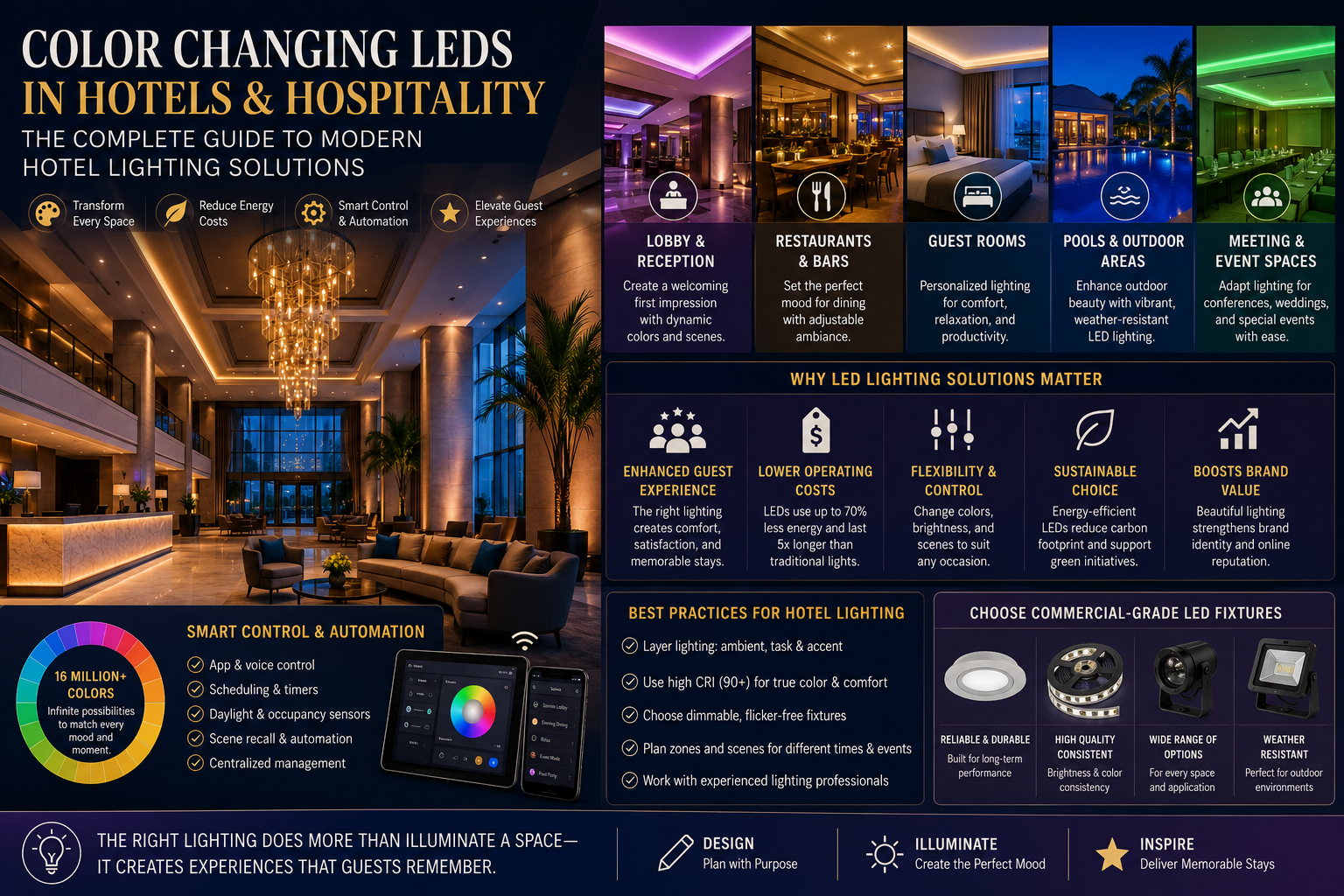
Today’s hotels compete on experience as much as accommodation. Luxury resorts, boutique hotels, convention centers, business hotels, restaurants, and spas all seek to create memorable environments that encourage repeat visits. Color changing LED lights have emerged as one of the most versatile technologies available for achieving these goals. Unlike traditional lighting systems that remain static, RGB and RGBW LED lighting can instantly transform the mood of a space with programmable colors, dynamic scenes, and intelligent automation. From elegant warm-white lighting during breakfast to vibrant colors for evening events, hotels can easily adapt their atmosphere throughout the day.
Beyond aesthetics, hospitality LED lighting offers measurable business benefits. LED technology consumes significantly less electricity than conventional lighting, lasts much longer, and requires less maintenance. Smart controls further enhance efficiency by adjusting brightness based on occupancy, daylight availability, or scheduled operating hours. Hotel owners also appreciate the flexibility to highlight seasonal celebrations, corporate events, weddings, and promotional campaigns without replacing fixtures or investing in temporary decorative lighting.
This guide explains how hotel LED lighting, RGB LED lighting, and intelligent automation improve guest experiences while reducing operating costs. You’ll also learn where color changing LEDs perform best, how to select commercial-grade fixtures, and the planning strategies that deliver long-term value for hospitality properties.
Why Hotel Lighting Solutions Matter
Guest Experience
Exceptional guest experiences begin with comfort, and lighting plays a surprisingly large role in shaping that comfort. Every hotel area serves a different purpose, which means every space requires its own lighting strategy. Guests entering a lobby expect an elegant and welcoming environment, while restaurant visitors prefer intimate lighting that encourages relaxation. In guest rooms, travelers want lighting that supports productivity during work hours and relaxation before sleep. A one-size-fits-all lighting system rarely delivers these varied experiences effectively.
Modern hotel lighting design addresses these changing needs through layered illumination and programmable LED technology. Adjustable lighting scenes allow staff to create welcoming morning environments, sophisticated evening ambiance, or vibrant settings for celebrations without replacing fixtures. Smart controls also let guests personalize room lighting to suit their preferences, creating a sense of luxury and comfort that contributes to higher satisfaction scores and positive reviews.
Lighting also affects perceived cleanliness, spatial quality, and emotional well-being. Soft, balanced illumination makes interiors feel more spacious and inviting, while harsh or uneven lighting can create discomfort. Hotels that invest in carefully designed LED lighting solutions consistently provide guests with a more enjoyable experience that supports both relaxation and productivity.
Brand Identity
Every hotel brand tells a story, and lighting is one of its strongest visual languages. Luxury hotels often use warm architectural lighting to create elegance and exclusivity, while boutique properties may incorporate vibrant accent lighting that reflects a distinctive design identity. Business hotels generally emphasize clean, professional illumination that promotes productivity and comfort. Whatever the brand, lighting should reinforce its personality at every guest touchpoint.
Color changing LED lights for hotels make branding more dynamic and adaptable. Hotels can display signature brand colors in reception areas, illuminate building facades during special campaigns, or create customized lighting scenes for weddings, conferences, and holiday celebrations. This flexibility helps hospitality businesses stand out in an increasingly competitive market while strengthening visual consistency across their properties.
Guests frequently photograph attractive hotel interiors for social media, making lighting an important marketing tool. A beautifully illuminated lobby, restaurant, rooftop lounge, or swimming pool naturally encourages user-generated content that expands brand visibility without additional advertising costs. In this way, thoughtful lighting design supports both guest engagement and long-term marketing objectives.
Visual Comfort
Comfortable lighting is about much more than brightness. Excessive glare, inconsistent color temperatures, and poorly positioned fixtures can lead to eye strain and reduce the overall guest experience. Successful hospitality lighting design balances brightness with softness while maintaining excellent color rendering so furniture, artwork, finishes, and décor appear natural and appealing.
High-quality LED fixtures with strong Color Rendering Index (CRI) values accurately display interior materials, enhancing the perceived quality of hotel spaces. Warm-white lighting often creates a cozy atmosphere in guest rooms and restaurants, while cooler white tones may be more suitable for conference rooms or workspaces where concentration is important. Combining these approaches within a smart lighting system allows hotels to adapt each area according to its intended function.
Visual comfort also contributes to safety. Well-lit corridors, stairways, entrances, and outdoor walkways reduce accident risks while improving guest confidence when navigating the property during evening hours.
Energy Efficiency
Electricity represents one of the largest operating expenses for hotels because lighting operates across guestrooms, restaurants, meeting spaces, kitchens, parking areas, landscapes, and public spaces every day. Replacing outdated fixtures with energy-efficient hotel lighting significantly reduces electricity consumption while maintaining or improving illumination quality.
LED technology typically consumes much less power than incandescent or halogen alternatives while delivering comparable or superior brightness. Combined with occupancy sensors, daylight harvesting, dimming controls, and centralized management systems, hotels can further reduce unnecessary energy use. These savings become especially valuable for large hospitality properties with hundreds of guest rooms and extensive public areas.
Energy efficiency also supports corporate sustainability initiatives. Many travelers now consider environmental responsibility when choosing accommodations, making efficient lighting an important part of a hotel’s environmental strategy. Lower energy consumption translates into reduced operating costs and a smaller carbon footprint, benefiting both business performance and environmental goals.
Operational Flexibility
Modern hotels rarely serve a single purpose throughout the day. A ballroom may host a business conference in the morning, a wedding reception in the afternoon, and a gala dinner in the evening. Restaurants transition from breakfast service to casual lunches and elegant dinners, while lounges frequently change their atmosphere to match entertainment schedules. Traditional lighting systems often require manual adjustments or additional temporary fixtures to accommodate these changing environments.
With smart hotel lighting powered by RGB and RGBW LED technology, these transitions become seamless. Staff can activate pre-programmed lighting scenes with a touchscreen, mobile application, or centralized building management system. Colors, brightness, and lighting effects can all be adjusted within seconds, reducing setup time while ensuring a consistent presentation for every event. This operational flexibility improves efficiency, minimizes labor requirements, and enables hotels to respond quickly to guest expectations without investing in multiple lighting systems for different occasions.
Long-Term Cost Savings
Although advanced LED lighting systems may require a higher initial investment, they typically provide significant long-term financial benefits. Commercial LED fixtures generally have much longer operating lifespans than traditional lighting technologies, reducing replacement frequency and maintenance labor. Hotels also benefit from lower electricity bills, fewer service interruptions, and reduced inventory requirements for replacement lamps.
Smart monitoring systems further improve maintenance by identifying fixture failures before they affect guest experiences. Predictive maintenance helps engineering teams schedule repairs efficiently instead of responding to emergency outages during peak occupancy periods. When these operational savings are combined with energy efficiency and improved guest satisfaction, the return on investment for modern commercial LED lighting becomes increasingly attractive for hospitality businesses of every size.
Benefits of Color Changing LED Lighting in Hotels
Modern hospitality is built around delivering memorable experiences rather than simply providing accommodation. Guests expect hotel environments to adapt to different occasions, whether they are traveling for business, celebrating a wedding, attending a conference, or enjoying a family vacation. This growing demand for flexibility has made color changing LED lights for hotels one of the most valuable investments in contemporary hotel lighting solutions. Unlike traditional lighting systems that offer only fixed illumination, programmable RGB and RGBW lighting enables hotels to create unique atmospheres that enhance comfort, improve operational efficiency, and strengthen brand identity.
Beyond aesthetics, advanced LED technology supports sustainability goals, reduces operating expenses, and simplifies facility management. Smart lighting systems integrate with automation platforms, occupancy sensors, and centralized building controls to optimize energy consumption without compromising guest comfort. As competition within the hospitality industry continues to increase, hotels that invest in intelligent LED lighting solutions are better positioned to differentiate themselves while improving long-term profitability.
Personalized Guest Experiences
Today’s travelers value personalization, and lighting plays a significant role in creating customized guest experiences. Guests have different preferences depending on the purpose of their stay. A business traveler may prefer bright, cool-white lighting for working comfortably in the evening, while couples celebrating an anniversary often appreciate warm, relaxing lighting that creates a luxurious atmosphere. Families with young children may require brighter illumination during bedtime routines and softer lighting during nighttime hours.
Modern smart hotel lighting systems allow guests to adjust brightness, color temperature, and even RGB accent lighting through wall panels, mobile applications, or voice-controlled devices. Hotels can also create preset lighting scenes such as “Relax,” “Work,” “Reading,” “Movie,” or “Sleep” that instantly transform the room environment. This level of personalization increases guest comfort while enhancing perceptions of luxury and technological sophistication.
Personalized lighting also supports accessibility by allowing elderly guests or individuals with visual sensitivities to adjust lighting according to their specific needs. The result is a hospitality experience that feels more comfortable, inclusive, and memorable.
Dynamic Mood Lighting
Lighting directly influences human emotions, making mood lighting one of the most powerful tools available to hotel designers. Warm amber tones encourage relaxation in spas and guest rooms, while vibrant RGB colors create excitement in rooftop bars, lounges, and entertainment venues. Hotels no longer need separate decorative installations for every occasion because programmable LED systems can instantly produce the desired ambiance.
Throughout the day, hotel lighting can gradually transition to match natural human circadian rhythms. Bright neutral-white lighting works well during breakfast hours, while warmer tones become more appropriate as evening approaches. Restaurants may use subtle lighting transitions between lunch and dinner service to create distinctly different dining experiences without changing furniture or décor.
Dynamic lighting also contributes to storytelling. Boutique hotels frequently use carefully designed lighting scenes to reinforce cultural themes, local architecture, or luxury branding. Guests often remember these immersive environments long after their stay, making lighting an important contributor to customer loyalty and positive online reviews.
Event and Conference Lighting
Hotels increasingly rely on conferences, exhibitions, weddings, and corporate events as major revenue sources. Event organizers expect venues to provide flexible environments capable of supporting different presentation styles and entertainment requirements. Traditional fixed lighting often limits venue versatility, requiring temporary equipment rentals that increase operational costs.
RGB LED lighting enables conference halls and ballrooms to transform quickly between business presentations, gala dinners, product launches, fashion shows, and wedding receptions. Adjustable color schemes help reinforce corporate branding during conferences while elegant warm-white lighting creates sophisticated wedding settings. Lighting scenes can also synchronize with audiovisual systems, stage effects, and presentation schedules to deliver professional event experiences.
This flexibility reduces setup time, minimizes equipment rentals, and allows hotels to host multiple event types using the same venue. Consequently, hotels maximize space utilization while improving customer satisfaction among event planners.
Seasonal and Holiday Themes
Hotels frequently decorate their properties for holidays, festivals, cultural celebrations, and promotional campaigns. Traditional decorative lighting often involves significant installation labor, temporary equipment, and additional maintenance. Color changing LED systems simplify these seasonal transformations through programmable lighting scenes that require little more than software adjustments.
For example, hotels can illuminate building facades with festive colors during Christmas, use patriotic lighting during national holidays, display corporate branding for conferences, or celebrate awareness campaigns using customized lighting themes. Swimming pools, fountains, entrance canopies, gardens, and reception areas can all participate in coordinated seasonal displays.
These visual transformations create memorable guest experiences while generating social media content that strengthens hotel marketing. Dynamic lighting displays frequently become popular photography locations, encouraging guests to share images that increase brand visibility organically.
Sustainability and Energy Savings
Environmental sustainability has become a major consideration within the hospitality industry. Hotels face increasing pressure from guests, investors, and regulatory authorities to reduce energy consumption while maintaining exceptional service standards. Hospitality LED lighting directly supports these objectives by offering high efficiency and intelligent energy management capabilities.
LED fixtures consume substantially less electricity than traditional incandescent or halogen lighting while providing superior brightness and longer operating life. Smart controls further reduce consumption by automatically dimming lights in unoccupied areas, responding to daylight availability, and following programmed operating schedules. Large hotel properties with hundreds of guestrooms often realize significant reductions in annual electricity costs after upgrading to comprehensive LED systems.
Sustainable lighting also supports green building initiatives, helping hotels pursue certifications while strengthening environmentally responsible brand positioning. Guests increasingly appreciate businesses that actively reduce their environmental impact without sacrificing comfort or luxury.
Reduced Maintenance Costs
Maintenance is often overlooked when evaluating lighting investments, yet it represents a significant operational expense for hotels operating around the clock. Frequent lamp replacements disrupt guest experiences, require engineering staff, and increase inventory management costs. Hotels with extensive public spaces may maintain thousands of individual lighting fixtures across guestrooms, corridors, restaurants, landscapes, and parking facilities.
Commercial-grade LED fixtures offer exceptionally long service lives, dramatically reducing replacement frequency compared to conventional technologies. Many smart lighting systems also provide remote monitoring capabilities that notify maintenance teams of fixture failures or performance issues before guests notice any problems.
Reduced maintenance translates into lower labor costs, fewer room disruptions, and improved operational efficiency. Engineering departments can focus on preventive maintenance rather than emergency repairs, contributing to smoother hotel operations and consistently high service standards.
Best Applications for Color Changing LEDs in Hotels
Successful hotel lighting design requires selecting the appropriate lighting strategy for each functional area. Every space within a hotel serves a unique purpose and therefore benefits from different lighting objectives, fixture types, and control systems. Color changing LED technology provides remarkable flexibility by allowing hotels to customize lighting according to guest expectations, operational requirements, and branding goals.
Hotel Lobbies
The lobby creates the hotel’s first impression. Elegant architectural lighting, decorative chandeliers, RGBW accent lighting, and illuminated reception desks establish a welcoming atmosphere while reinforcing the property’s brand identity. Dynamic lighting scenes can change throughout the day to reflect different guest activities and seasonal events.
Guest Rooms
Guest rooms benefit from layered lighting that combines ambient illumination, reading lights, bedside fixtures, wardrobe lighting, and subtle accent lighting. Smart controls allow guests to personalize brightness and color temperature while preset scenes improve convenience and comfort.
Suites
Luxury suites often incorporate premium lighting features including RGB accent lighting behind headboards, illuminated shelving, indirect ceiling lighting, decorative pendants, and automated mood scenes. Personalized lighting significantly enhances perceptions of luxury accommodation.
Restaurants and Bars
Restaurants require adaptable lighting throughout breakfast, lunch, and dinner service. Warm lighting creates intimacy during evening dining, while brighter settings improve daytime visibility. Bars frequently utilize RGB lighting to create energetic atmospheres for entertainment and nightlife.
Ballrooms and Event Spaces
Large event venues benefit greatly from programmable lighting capable of supporting conferences, exhibitions, weddings, concerts, and corporate functions. Color changing LEDs eliminate the need for many temporary decorative fixtures while enabling rapid scene changes.
Conference Rooms
Business meetings require balanced white lighting with high color rendering for presentations and video conferencing. Adjustable brightness helps maintain attendee comfort during long sessions while RGB accents can reinforce corporate branding during special events.
Swimming Pools and Spas
Pools and wellness facilities use waterproof RGBW fixtures to create tranquil environments that promote relaxation. Soft blue, turquoise, and warm amber tones are particularly effective for spa environments and evening pool experiences.
Building Facades
Exterior architectural lighting strengthens hotel visibility while enhancing nighttime aesthetics. Programmable façade lighting supports branding campaigns, national celebrations, seasonal events, and promotional activities without additional decorative installations.
Outdoor Landscaping
Landscape lighting highlights pathways, gardens, water features, sculptures, and outdoor seating areas. Carefully designed illumination improves guest safety while enhancing the overall luxury appearance of the property after sunset.
Corridors and Public Areas
Hallways require consistent, comfortable illumination that supports guest navigation without excessive brightness. Motion sensors and automated dimming further improve energy efficiency while maintaining safety standards.
Hotel Lighting Comparison Table
| Hotel Area | Primary Lighting Objective | Recommended LED Fixture | Smart Control Option |
| Lobby | Create strong first impression | RGBW Downlights & Linear LEDs | Centralized Scene Control |
| Guest Rooms | Personalized comfort | Tunable White LED Fixtures | Mobile App & Wall Panels |
| Suites | Luxury ambiance | RGBW Cove Lighting | Smart Scene Automation |
| Restaurant | Dining atmosphere | Pendant LEDs & LED Strips | Time-Based Scheduling |
| Bar | Entertainment | RGB LED Fixtures | DMX Lighting Controller |
| Ballroom | Flexible events | RGBW Wash Lights | Central Scene Controller |
| Conference Room | Presentation quality | High CRI LED Panels | Occupancy Sensors |
| Swimming Pool | Relaxation | IP-rated RGBW Underwater LEDs | Wireless Controller |
| Spa | Wellness ambiance | Warm White & RGB Accent LEDs | Programmable Scenes |
| Building Facade | Brand visibility | Outdoor RGBW Floodlights | Astronomical Timer |
| Landscaping | Safety & aesthetics | Spike Lights & Linear LEDs | Photocell + Timer |
| Corridors | Guest navigation | LED Downlights | Motion Sensors |
Commercial Buyer’s Checklist
Before investing in hotel lighting solutions, commercial buyers should evaluate the following:
- Choose commercial-grade LED fixtures with high reliability.
- Prioritize RGBW LED lighting for greater flexibility.
- Select fixtures with a CRI above 90 for premium hospitality interiors.
- Verify IP ratings for outdoor, pool, and spa installations.
- Ensure compatibility with Building Management Systems (BMS).
- Evaluate warranty coverage and manufacturer support.
- Confirm dimming compatibility.
- Assess energy efficiency certifications.
- Plan for future expansion and software updates.
- Calculate total ownership cost instead of focusing solely on purchase price.
Choosing the Right Hotel LED Lighting System
Selecting the right hotel lighting solutions requires balancing aesthetics, functionality, operational efficiency, and long-term return on investment. A lighting system should do more than illuminate a space—it should support guest comfort, reinforce the hotel’s brand, reduce operating costs, and integrate seamlessly with modern building technologies. Every hotel has unique requirements depending on its size, target market, architecture, and daily operations, making careful planning essential before purchasing fixtures or control systems.
The following factors should guide every commercial lighting investment.
Brightness (Lumens)
Brightness should be measured in lumens rather than watts. Different hotel areas require different illumination levels.
Typical recommendations include:
- Lobby: 300–500 lux
- Guest Rooms: 150–300 lux
- Restaurants: 100–250 lux
- Conference Rooms: 300–500 lux
- Corridors: 100–200 lux
- Spa Areas: 50–150 lux
Proper lumen selection prevents spaces from feeling either too dim or uncomfortably bright while reducing unnecessary energy consumption.
Color Temperature
Color temperature significantly influences how guests perceive a space.
General guidelines include:
| Area | Recommended Color Temperature |
| Guest Rooms | 2700K–3000K |
| Lobby | 3000K |
| Restaurant | 2700K–3000K |
| Conference Room | 4000K |
| Spa | 2700K |
| Corridors | 3000K |
Warm lighting creates relaxation, while neutral or cool lighting supports concentration and productivity.
RGB vs RGBW vs Tunable White
Choosing the appropriate LED technology depends on the intended application.
RGB Lighting
- Best for decorative lighting
- Millions of color combinations
- Suitable for events and entertainment
RGBW Lighting
- Includes a dedicated white LED
- Better white light quality
- Ideal for luxury hotels and hospitality environments
Tunable White
- Adjusts white color temperature
- Supports circadian lighting
- Excellent for guestrooms and wellness spaces
For most premium hospitality applications, RGBW LED lighting offers the greatest flexibility because it combines vibrant color effects with superior white illumination.
Color Rendering Index (CRI)
CRI measures how accurately lighting displays colors.
Recommended standards include:
- Minimum CRI 80 for general areas
- CRI 90+ for luxury hotels
- CRI 95 for premium restaurants, art displays, and suites
High CRI lighting ensures that furniture, fabrics, artwork, and interior finishes appear natural and attractive.
Dimming Capabilities
Smooth dimming allows hotels to create different moods throughout the day.
Applications include:
- Evening restaurant ambiance
- Wedding receptions
- Movie mode in suites
- Conference presentations
- Spa relaxation sessions
Modern dimming systems also contribute to energy savings by operating fixtures only at the brightness levels required.
Smart Lighting Controls
Today’s smart hotel lighting systems provide centralized management across the property.
Common control options include:
- Touchscreen wall panels
- Mobile applications
- Wireless controllers
- Cloud-based monitoring
- Voice assistants
- Building Management System (BMS) integration
These technologies improve operational efficiency while giving guests greater control over their environment.
Energy Efficiency
Energy efficiency remains one of the strongest reasons hotels upgrade to LED lighting.
Commercial buyers should prioritize:
- ENERGY STAR® certified products (where applicable)
- High lumens-per-watt ratings
- Intelligent scheduling
- Occupancy sensing
- Daylight harvesting
- Low standby power consumption
Together, these features significantly reduce operating expenses.
Maintenance Requirements
Commercial hospitality properties operate continuously, making maintenance planning essential.
Choose fixtures with:
- Long operating lifespan
- Easily replaceable drivers
- Quality thermal management
- Strong manufacturer warranties
- Available replacement components
Reducing maintenance interruptions improves guest satisfaction and lowers engineering costs.
Budget Planning
Instead of focusing only on fixture pricing, evaluate the Total Cost of Ownership (TCO).
Include:
- Equipment cost
- Installation
- Controls
- Programming
- Maintenance
- Energy savings
- Warranty support
- Future upgrades
Higher-quality systems often provide better long-term financial value despite larger initial investments.
Hotel Lighting Planning Checklist
Before installation, every hospitality project should complete the following planning checklist:
✅ Define lighting objectives for every hotel area.
✅ Establish brand lighting standards.
✅ Select appropriate color temperatures.
✅ Choose RGB, RGBW, or Tunable White systems.
✅ Verify CRI requirements.
✅ Plan dimming zones.
✅ Integrate occupancy sensors.
✅ Coordinate with the Building Management System.
✅ Select waterproof fixtures for outdoor installations.
✅ Develop future maintenance schedules.
Smart Lighting Automation in Hospitality
Automation has transformed how hotels manage lighting across guestrooms, public spaces, restaurants, meeting facilities, and outdoor environments. Rather than relying on manual switching, modern hospitality LED lighting systems respond intelligently to occupancy, schedules, daylight availability, and guest preferences. Automation improves operational efficiency while creating more personalized guest experiences.
Guest Room Automation
Smart guestrooms allow visitors to control lighting with wall panels, mobile apps, or bedside controls.
Guests can activate scenes such as:
- Welcome
- Relax
- Reading
- Work
- Sleep
- Night Light
Automation remembers preferred settings during the stay, creating a more personalized experience.
Occupancy Sensors
Occupancy sensors automatically switch lights off when rooms are vacant.
Common installation areas include:
- Corridors
- Public restrooms
- Storage rooms
- Parking garages
- Staff offices
- Meeting rooms
This simple technology significantly reduces unnecessary energy consumption.
Time-Based Scheduling
Hotels operate on predictable daily routines.
Scheduling automatically adjusts lighting for:
- Sunrise
- Breakfast service
- Evening dining
- Conference schedules
- Night security
- Landscape illumination
Automation eliminates manual adjustments while ensuring consistency.
Centralized Building Management Systems (BMS)
Large hotels often connect lighting to centralized BMS platforms.
Advantages include:
- Real-time monitoring
- Remote diagnostics
- Energy reporting
- Automatic scheduling
- Fault detection
- Multi-building management
Centralized control simplifies operations across large hospitality properties.
Mobile App Controls
Many luxury hotels now allow guests to control lighting directly from their smartphones.
Guests can:
- Adjust brightness
- Select mood scenes
- Change RGB colors
- Schedule wake-up lighting
- Activate sleep mode
Mobile integration supports modern expectations for convenience and personalization.
Voice-Controlled Room Lighting
Voice assistants continue to expand within hospitality.
Guests can simply request:
- Turn on reading lights
- Dim bedroom lights
- Change lighting color
- Activate relaxation mode
- Switch off all lights
Hands-free control improves convenience while supporting accessibility.
Multi-Zone Lighting Scenes
Large suites, restaurants, spas, and conference facilities benefit from multiple lighting zones.
Separate control allows independent adjustment of:
- Ceiling lighting
- Accent lighting
- Decorative fixtures
- Cove lighting
- Landscape lighting
- Feature walls
Multi-zone control enables sophisticated lighting environments using a single integrated system.
Hotel Lighting Design Best Practices
Excellent hotel lighting design combines architecture, psychology, engineering, and hospitality operations. Rather than relying on a single type of fixture, successful hotels use multiple lighting layers to create comfortable, functional, and visually engaging environments.
Layered Lighting Design
The most effective hotel environments combine:
- Ambient lighting
- Task lighting
- Accent lighting
- Decorative lighting
Layering creates depth while allowing spaces to support different guest activities.
Accent Lighting
Accent lighting highlights:
- Artwork
- Reception desks
- Architectural features
- Decorative walls
- Sculptures
- Luxury finishes
These subtle details elevate perceived quality throughout the property.
Architectural Lighting
Architectural lighting emphasizes building geometry through concealed fixtures, wall washing, grazing effects, and cove lighting.
This approach strengthens the property’s visual identity without overwhelming guests.
Decorative Lighting
Decorative fixtures act as both lighting and interior design features.
Popular options include:
- Chandeliers
- Pendant lighting
- Artistic fixtures
- Statement installations
- Crystal lighting
Decorative lighting often becomes a focal point in hotel lobbies and restaurants.
Outdoor Landscape Lighting
Exterior lighting should improve both beauty and safety.
Key applications include:
- Walkways
- Gardens
- Water features
- Trees
- Outdoor seating
- Entrance signage
Balanced landscape lighting enhances nighttime curb appeal while supporting guest navigation.
Emergency and Safety Lighting
Safety should never be overlooked.
Every hotel should include:
- Emergency exits
- Backup lighting
- Stairwell illumination
- Fire escape lighting
- Generator-supported emergency circuits
Reliable emergency lighting protects guests while supporting regulatory compliance.
Common Hotel Lighting Mistakes to Avoid
Even expensive lighting systems can fail if poorly planned. Avoiding common design mistakes helps maximize investment while improving guest satisfaction.
The most frequent issues include:
Overly Bright Guest Rooms
Excessive brightness creates discomfort rather than luxury.
Use layered lighting and dimming instead of relying solely on high-output ceiling fixtures.
Poor Color Consistency
Mixing different color temperatures within the same space creates an unprofessional appearance.
Maintain consistent specifications across fixture families.
Ignoring CRI
Low-CRI fixtures make furniture, artwork, fabrics, and finishes appear dull.
Premium hospitality projects should generally specify CRI 90 or higher.
Inadequate Lighting Controls
Without intelligent controls, hotels lose opportunities for energy savings, personalization, and operational efficiency.
Uneven Façade Lighting
Poor fixture placement creates distracting bright spots and shadows.
Professional lighting simulations help achieve balanced architectural illumination.
Excessive Maintenance Complexity
Installing multiple incompatible fixture types increases maintenance challenges.
Standardize equipment whenever practical.
Poor Integration with Building Automation
Lighting systems should communicate seamlessly with HVAC, security, access control, and BMS platforms.
Integrated systems simplify facility management while improving operational efficiency.
Measuring the Success of Hotel LED Lighting
Installing modern hotel lighting solutions is only the first step. To maximize return on investment, hotel owners and facility managers should regularly evaluate how well the lighting system performs. Measuring success requires tracking both operational metrics and guest satisfaction to ensure the lighting strategy aligns with business objectives.
Guest Satisfaction Scores
Guest feedback is one of the clearest indicators of lighting performance. Hotels can gather insights through post-stay surveys, online reviews, and direct guest comments. Positive feedback about room comfort, lobby ambiance, restaurant atmosphere, and event spaces often reflects an effective lighting design. Monitoring guest satisfaction scores before and after a lighting upgrade helps determine whether the investment has enhanced the overall guest experience.
Energy Consumption
One of the primary goals of upgrading to hospitality LED lighting is reducing energy usage. Hotels should compare electricity bills and energy consumption reports before and after installation. Many smart lighting systems provide real-time dashboards that display energy usage by zone, making it easier to identify additional opportunities for savings.
Maintenance Costs
Traditional lighting systems require frequent lamp replacements and ongoing maintenance. Commercial LED fixtures typically have much longer lifespans, reducing labor costs and minimizing disruptions to guests. Tracking maintenance requests, replacement schedules, and engineering hours provides valuable insight into the long-term financial benefits of LED technology.
Occupancy Experience
Hotels should assess how lighting supports guest comfort throughout their stay. Smart lighting controls, adjustable brightness, and personalized lighting scenes can improve room functionality and create a more enjoyable environment. Occupancy analytics combined with guest feedback help determine whether lighting automation is enhancing the overall experience.
Event Flexibility
Conference centers, ballrooms, and banquet halls benefit greatly from programmable lighting. Measuring the time required to prepare venues for different events, along with feedback from event planners and corporate clients, helps evaluate how well the lighting system supports operational flexibility.
Brand Perception
Lighting contributes significantly to a hotel’s visual identity. Hotels should monitor social media engagement, guest photography, online reviews, and brand recognition to determine whether upgraded lighting is creating memorable spaces that encourage repeat visits and positive recommendations.
Sustainability and Green Building Benefits
Sustainability has become a strategic priority for hotels around the world. Modern LED lighting solutions support environmental initiatives while helping hospitality businesses reduce operating costs and strengthen their corporate responsibility programs.
Lower Energy Consumption
LED fixtures consume considerably less electricity than traditional incandescent, halogen, or fluorescent lighting. Combined with occupancy sensors, daylight harvesting, and automated scheduling, hotels can significantly reduce their overall energy consumption while maintaining high-quality illumination throughout the property.
Longer Product Lifespan
Commercial LED fixtures often operate for tens of thousands of hours before requiring replacement. Their extended lifespan reduces maintenance frequency, lowers replacement costs, and minimizes disruptions to hotel operations. Fewer replacements also mean less material waste over the life of the building.
Reduced Carbon Footprint
Lower electricity consumption directly reduces greenhouse gas emissions associated with energy production. Hotels that switch to energy-efficient lighting demonstrate a commitment to environmental stewardship while supporting broader sustainability goals. These improvements can also appeal to environmentally conscious travelers who increasingly consider sustainability when selecting accommodations.
Support for Green Building Certifications
Efficient lighting systems contribute to several internationally recognized green building standards, including:
- LEED (Leadership in Energy and Environmental Design)
- BREEAM (Building Research Establishment Environmental Assessment Method)
- Green Globe Certification
- WELL Building Standard
High-performance lighting, intelligent controls, and energy monitoring can help hotels earn valuable sustainability credits during certification processes.
Waste Reduction
LED technology contains no mercury and generally requires fewer replacements than traditional lamps. This reduces landfill waste, transportation requirements, and disposal costs. Choosing recyclable fixtures and environmentally responsible manufacturers further strengthens a hotel’s sustainability strategy.
Conclusion
Effective hotel lighting solutions do much more than illuminate a building—they shape guest experiences, strengthen brand identity, improve operational efficiency, and support long-term business growth. From welcoming hotel lobbies and relaxing guest rooms to vibrant restaurants, conference centers, and outdoor landscapes, color changing LED lights for hotels provide the flexibility needed to create memorable environments that adapt to every occasion.
Smart controls, RGBW technology, lighting automation, and energy-efficient fixtures enable hospitality businesses to reduce operating costs while delivering exceptional comfort and convenience. By selecting high-quality commercial lighting products, integrating intelligent control systems, and following professional lighting design principles, hotels can maximize their return on investment while enhancing guest satisfaction and sustainability performance.
Whether you are building a new luxury resort, renovating an existing hotel, or upgrading a boutique property, investing in modern hotel LED lighting is a strategic decision that delivers lasting value. Thoughtfully designed lighting creates inviting spaces, improves operational efficiency, and helps hospitality businesses stand out in an increasingly competitive marketplace.
Frequently Asked Questions (FAQs)
1. Why are hotel lighting solutions important?
Hotel lighting solutions improve guest comfort, enhance brand identity, increase safety, reduce energy costs, and create memorable experiences throughout the property.
2. Are color changing LED lights suitable for hotels?
Yes. Color changing LED lights are ideal for hotels because they provide flexible lighting scenes for guest rooms, lobbies, restaurants, ballrooms, spas, and outdoor spaces.
3. What color temperature is best for hotel rooms?
A warm color temperature between 2700K and 3000K is generally recommended because it creates a comfortable and relaxing atmosphere.
4. What CRI is recommended for hospitality lighting?
A CRI of 90 or higher is recommended for premium hospitality environments to ensure natural color rendering of furnishings, artwork, and interior finishes.
5. Can smart LED lighting improve guest experiences?
Yes. Smart lighting allows guests to customize brightness, color temperature, and lighting scenes, creating a more personalized and luxurious stay.
6. How can hotels reduce energy costs with LED lighting?
Hotels can reduce energy costs by using energy-efficient LED fixtures, occupancy sensors, daylight harvesting, dimming controls, and automated scheduling.
7. Are RGBW lights better than RGB for hotels?
In most hospitality applications, RGBW lighting is preferred because it provides both vibrant colors and high-quality white illumination.
8. What lighting is best for hotel lobbies?
Layered lighting that combines ambient, accent, decorative, and architectural lighting creates an inviting and luxurious lobby environment.
9. How do hotels automate lighting systems?
Hotels use occupancy sensors, programmable schedules, mobile apps, centralized Building Management Systems (BMS), and voice controls to automate lighting.
10. Are LED lights suitable for outdoor hotel landscapes?
Yes. Weather-resistant LED fixtures are ideal for pathways, gardens, pools, building facades, parking areas, and landscape features.
11. How often should hotel LED lighting systems be maintained?
Commercial LED systems generally require minimal maintenance. Regular inspections every six to twelve months help ensure optimal performance.
12. What factors should be considered when upgrading hotel lighting?
Hotels should evaluate brightness, color temperature, CRI, energy efficiency, smart controls, maintenance requirements, fixture quality, warranty, and overall lifecycle cost.
13. How do LED lights improve hotel sustainability?
LED lighting reduces electricity consumption, lowers carbon emissions, decreases maintenance waste, and supports green building certification programs.
14. Can lighting influence guest reviews?
Absolutely. Comfortable, attractive, and well-designed lighting contributes to positive guest experiences, higher review scores, and increased customer loyalty.
15. Is lighting automation worth the investment for hotels?
Yes. Lighting automation improves operational efficiency, reduces energy consumption, simplifies facility management, and enhances guest comfort, providing long-term financial benefits.